Beauty in the Mud
Pardeep Singh
01-08-2024
 · Animal Team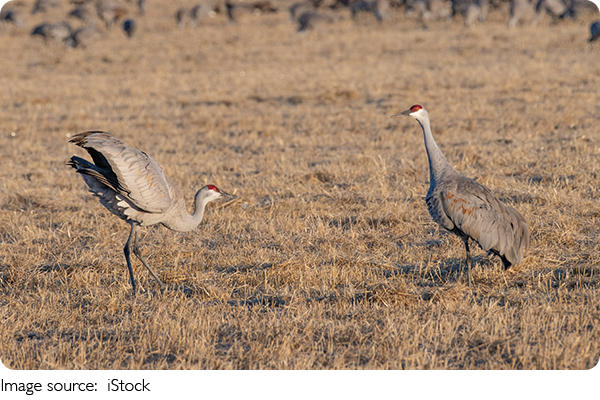
The natural world is full of amazing wonders, and animals often display colorful behaviors and characteristics to survive and reproduce.
Among these fascinating creatures, the Sandhill Crane stands out with its unique behaviors, including a practice that can be likened to "hair dyeing."
Yes, you read that right—these birds engage in a form of "dyeing" their feathers, a behavior that goes beyond aesthetic appeal and carries profound survival significance.
Appearance and Habits of Sandhill Cranes
Sandhill Cranes are large wading birds widely distributed across North America. They are notable for their long legs and necks, which give them a distinctive tall and graceful appearance. Adult Sandhill Cranes can reach heights of up to 1,2 meters.
From cheetahs to elks, speed shapes survival in nature's race for life, with antelopes leading the charge.
Meet the Ruby-throated hummingbird, a tiny marvel defying nature's challenges with astonishing migratory prowess.
Gyps rueppellii, the highest-flying bird, embodies aerial grace and ecological importance in Africa's skies.
Giraffe markings are vital for camouflage, defense, and thermoregulation.
Birds' vision surpasses most animals, with ultra-sensitive color detection, motion sensing, and wide fields of view.
Birds' chirping is vital for courtship, territory, and communication, reflecting their complex behaviors.
Known for their elegant flight and loud, resonant calls that can carry for several kilometers, these cranes are a remarkable sight and sound in their natural habitats.
They primarily reside in wetlands, grasslands, and farmlands, and their diet is diverse, including plant roots, seeds, small invertebrates, and even small vertebrates.
The Unique "Hair Dyeing" Behavior
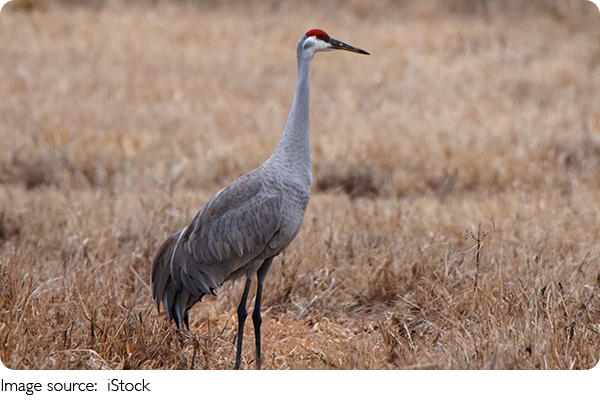
Typically, Sandhill Cranes have gray feathers. However, during the breeding season, their feathers take on a brown hue. This transformation is not due to a change in the pigment of the feathers themselves but is achieved through a behavior akin to "hair dyeing."
The cranes smear their feathers with iron oxide-rich mud and wetland plants, giving them a brownish tint. This phenomenon is rare among birds and is particularly intriguing.
Reasons Behind the "Hair Dyeing"
The reasons for this feather-dyeing behavior have been widely debated. Although many theories have been proposed, there is no definitive answer yet.
One of the earliest explanations came from D.O. Hyde in 1968, who suggested that Sandhill Cranes dye their feathers as a conscious behavior aimed at influencing the bond and happiness of the pair during the breeding season.
This theory posits that the change in feather color could play a role in the birds' courtship rituals and pair bonding.
However, a paper published in the Florida Field Naturalist in 1975 questioned the "couple happiness" theory. The paper observed that Sandhill Cranes with access to iron-rich soil would dye their feathers outside the breeding season as well, which challenges the idea that this behavior is solely linked to reproductive activities.
The author, Stephen A. Nesbitt, proposed another possibility: the cranes might dye their feathers for cosmetic purposes or as a substitute for dust bathing, a common behavior in other bird species to maintain feather health and reduce parasites.
Despite these varying theories, the feather-dyeing behavior remains one of the most fascinating natural phenomena observed in North American wildlife.
Conclusion
The "hair dyeing" behavior of Sandhill Cranes is a captivating example of nature's ingenuity, showcasing the complex and ingenious adaptations animals develop to survive.
Through in-depth research and observation, we gain a better understanding of the Sandhill Crane's lifestyle and a deeper appreciation for the magic and beauty of nature.
The accumulation and dissemination of this knowledge not only enrich our scientific understanding but also inspire efforts to cherish and protect every species on Earth and their unique survival strategies.
By fostering a greater awareness of the natural world's wonders, we can contribute to the preservation of biodiversity and the continued flourishing of remarkable species like the Sandhill Crane.
In doing so, we ensure that future generations can marvel at the incredible behaviors and adaptations that make our planet so extraordinary.