Hoofed Hurricanes

Arjun Mehta
01-08-2024
 · Animal Team
In the realm of the animal kingdom, swiftness often stands as a decisive factor in the competition for survival.
From the sprawling grasslands to the dense jungles and expansive oceans, myriad creatures have evolved remarkable running abilities, either to pursue prey or to evade predators.
Among these champions of speed, the antelope stands out prominently, frequently securing a place in the world's top ten fastest animals with its exceptional running prowess, epitomizing the monarchs of velocity.
1. Cheetah
The cheetah, a majestic large cat, predominantly roams the eastern and southern regions of Africa. It currently reigns as the fastest land animal globally, boasting speeds of up to 112 kilometers per hour.
Meet the Ruby-throated hummingbird, a tiny marvel defying nature's challenges with astonishing migratory prowess.
Gyps rueppellii, the highest-flying bird, embodies aerial grace and ecological importance in Africa's skies.
Giraffe markings are vital for camouflage, defense, and thermoregulation.
Birds' vision surpasses most animals, with ultra-sensitive color detection, motion sensing, and wide fields of view.
Birds' chirping is vital for courtship, territory, and communication, reflecting their complex behaviors.
Pursue of happiness: what we can learn from cats.
Tragically, the cheetah faces the looming threat of extinction due to relentless hunting driven by the allure of its prized fur.
2. Pronghorn
Native to North America, the pronghorn emerges as a swift contender, clocking speeds of up to 100 kilometers per hour. This fleet-footed creature possesses keen eyesight, capable of discerning objects from thousands of meters away, albeit struggling with nearsightedness.
3. Thomson's Gazelle
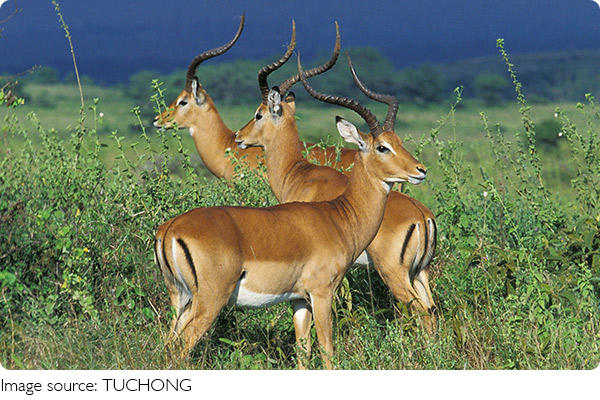
As the runner-up in the sprinting spectacle across the African grasslands, Thomson's Gazelle reaches remarkable speeds of 90 kilometers per hour when fleeing from impending danger, showcasing its unparalleled agility in evasive maneuvers.
4. Black-tailed Wildebeest
The black-tailed wildebeest, a sizable antelope species, grazes predominantly on grass, leaves, and flower buds. Racing at speeds ranging between 80 to 90 kilometers per hour, this herbivore exemplifies nature's swift marvels.
5. Springbok
Hailing from South Africa, the springbok, with its slender limbs and remarkable leaping prowess, attains speeds of 88 kilometers per hour, earning its place as the national emblem of its homeland.
6. Lion
Despite its hefty stature, the lion, revered as the king of the jungle, showcases surprising agility, achieving speeds of up to 80 kilometers per hour. A member of the Felidae family, the lion's impressive swiftness adds to its formidable reputation as a predator.
7. Grant's Gazelle
Grant's Gazelle, a distinguished member of the gazelle family, sustains itself on short grass and shrub leaves, drawing vitality from its surroundings. In its bid to evade carnivorous predators, this graceful creature dashes at speeds matching 80 kilometers per hour.
8. European Hare
As its name implies, the European hare thrives as a herbivorous inhabitant across Europe, Mongolia, and China. In the absence of natural predators, hare populations surge, posing significant environmental challenges. This species darts at speeds exceeding 72 kilometers per hour.
9. Red Fox
With a vast distribution spanning Europe, North America, Asian grasslands, and North Africa, the red fox maintains a formidable presence throughout the northern hemisphere.
However, its burgeoning numbers in Australia pose a grave threat to indigenous mammals. The red fox dashes at speeds of 72 kilometers per hour, navigating diverse landscapes with agility.
10. Elk
Feeding primarily on plants, leaves, and grass, the elk, a species of deer, surges forward at speeds of 72 kilometers per hour. Once subjected to extensive hunting due to its valuable antlers, the elk now enjoys protected status as a prized emblem of wildlife conservation efforts.
In the relentless pursuit of survival, speed serves as a cornerstone for countless species, enabling them to thrive amidst the unforgiving landscapes of our planet.
As guardians of biodiversity, we must acknowledge and preserve the extraordinary abilities of these swift denizens, ensuring their continued existence in the tapestry of life.