The King of Altitude

Sofia Alvarez
01-08-2024
 · Animal Team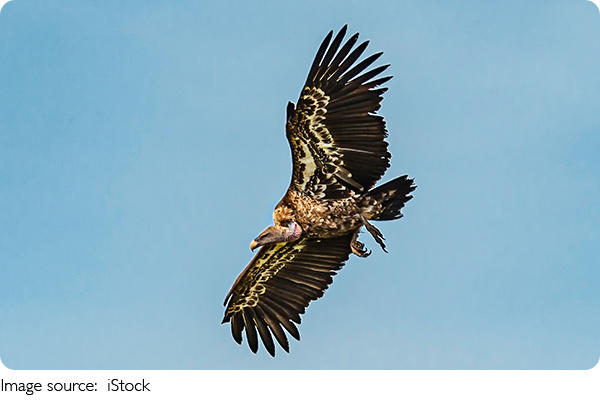
Birds are synonymous with grace in flight and remarkable adaptability in nature. Each species boasts unique flying capabilities and preferred altitudes.
Among these aerial acrobats, Gyps rueppellii, stands out with its record-breaking flying altitude, earning the title of the highest-flying bird.
Overview of Gyps Rueppellii
The Gyps rueppellii is a formidable bird of prey predominantly found in the Sahel region of Africa, spanning from Senegal to Sudan and Ethiopia.
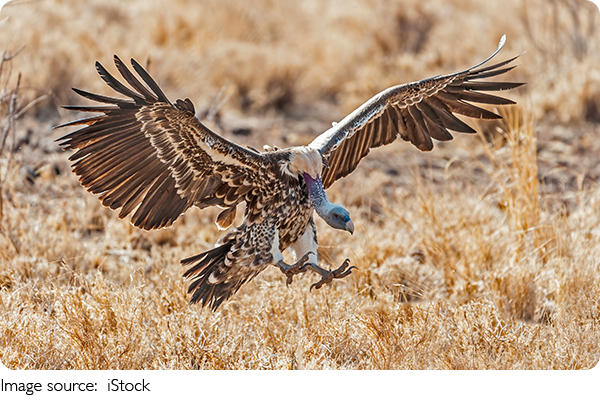
These vultures belong to the family Accipitridae, noted for their impressive size, with a wingspan reaching between 2.3 to 2.6 meters and a body weight ranging from 7 to 9 kilograms.
Known for their robust build and exceptional flying prowess, Gyps rueppellii can soar for extended periods, meticulously scanning the terrain below for food and potential threats.
Giraffe markings are vital for camouflage, defense, and thermoregulation.
Birds' vision surpasses most animals, with ultra-sensitive color detection, motion sensing, and wide fields of view.
Birds' chirping is vital for courtship, territory, and communication, reflecting their complex behaviors.
Pursue of happiness: what we can learn from cats.
Cute but complex, rabbits need specialized care and commitment, making them challenging pets.
Elephants in Africa's heat: colossal size, water mastery, mud baths, group living, and strategic diet ensure survival.
Flight Altitude Record
Gyps rueppellii holds an extraordinary flight altitude record. In 1973, a Gyps rueppellii collided with a commercial aircraft over Côte d'Ivoire, at an astounding altitude of 11,278 meters (37,000 feet).
This record not only surpasses the flight altitudes of most birds but also exceeds the height of Mount Everest (8,848 meters). Such remarkable heights are rarely achieved by avian species, highlighting the unique capabilities of this Gyps rueppellii.
Physiological Basis for High-Altitude Flight
The ability to soar at such incredible heights is attributed to its distinctive physiological adaptations. Firstly, Gyps rueppellii possess powerful wing muscles combined with a lightweight skeletal structure, enabling sustained gliding with minimal wing flapping.
Secondly, their highly efficient respiratory system allows them to extract oxygen effectively even in low-oxygen environments. Their hemoglobin exhibits a higher affinity for oxygen, ensuring optimal oxygen transport in thin air, a crucial adaptation for survival at high altitudes.
Behavioral Strategies for High-Altitude Adaptation
Beyond physiological traits, Gyps rueppellii employs several behavioral strategies to master high-altitude flight. They skillfully use thermal air currents to ascend to great heights, followed by gliding techniques to conserve energy while covering vast distances.
This energy-efficient flying method expands their foraging territory and minimizes energy expenditure. As scavengers, Gyps rueppellii primarily feed on carrion, and flying at higher altitudes enables them to spot carcasses from afar while avoiding ground-based competitors and predators.
Ecological Role of Gyps rueppellii
As apex scavengers, Gyps rueppellii play a pivotal role in maintaining ecological balance. They rapidly consume animal carcasses, preventing the spread of diseases and mitigating environmental pollution.
Their impressive flying height and expansive foraging range allow them to serve as crucial ecological custodians in the vast African grasslands and deserts. By efficiently removing decomposing bodies, they contribute to the health of their ecosystems.
Gyps rueppellii holds a significant position in the avian world, not only for their record-setting flight heights but also for their indispensable ecological roles. Their remarkable physiological adaptations and strategic behaviors underscore their evolutionary success.
However, their threats necessitate urgent conservation actions to ensure their survival and, by extension, the health of our planet's ecosystems. Protecting these magnificent birds requires a collective effort to enhance conservation measures and raise public awareness about their importance.
By doing so, we can safeguard a vital component of our natural heritage and ensure the continued balance of our ecosystems for future generations.