The Mighty Migrant

Camille Dubois
01-08-2024
 · Animal Team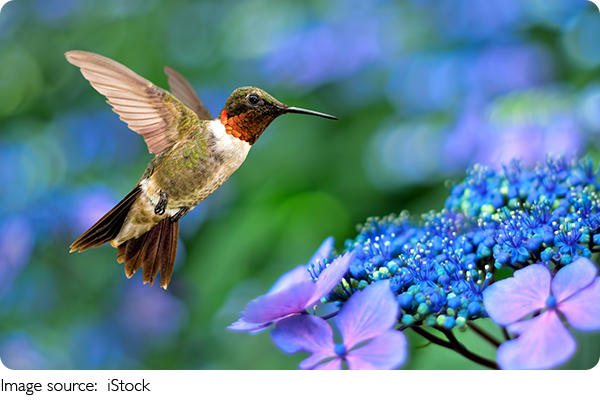
In the vast expanse of nature, there exists a tiny bird that embodies incredible courage and perseverance despite its minuscule stature.
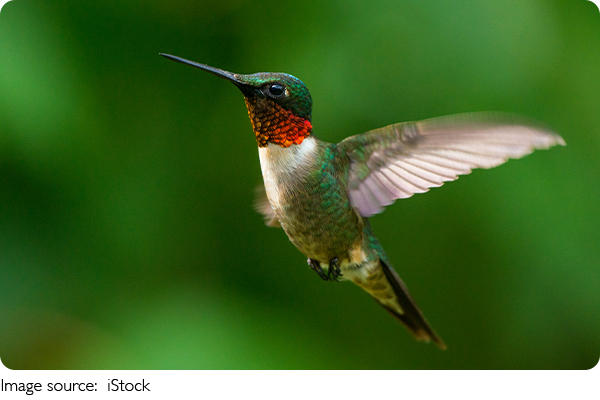
Meet the Ruby-throated hummingbird, a palm-sized marvel renowned for its astonishing migratory prowess.
A Petite Migrant
Hummingbirds, the smallest of birds, boast around 340 known species worldwide. Many of these enchanting creatures inhabit the tropical rainforests of Latin America, where nectar flows year-round, rendering migration unnecessary. Amidst lush foliage, they flit among flowers, seldom straying from their familiar habitats.
However, in regions beyond, where nectar availability fluctuates seasonally, hummingbirds encounter the challenge of intermittent food sources. While some, like the long-tailed hummingbird of the Andes, descend to lower altitudes in pursuit of warmer climates and richer sustenance, others opt for migration.
Gyps rueppellii, the highest-flying bird, embodies aerial grace and ecological importance in Africa's skies.
Giraffe markings are vital for camouflage, defense, and thermoregulation.
Birds' vision surpasses most animals, with ultra-sensitive color detection, motion sensing, and wide fields of view.
Birds' chirping is vital for courtship, territory, and communication, reflecting their complex behaviors.
Pursue of happiness: what we can learn from cats.
Cute but complex, rabbits need specialized care and commitment, making them challenging pets.
Of the 13 to 14 hummingbird species breeding in Canada and the United States, save for a scant few in southern California, all are formidable migrants. Come autumn, they embark on a journey southward, traversing Mexico and Central America or eastward to the Gulf Coast states and the Carolinas.
Among these migrating avian wonders, the Ruby-throated Northern Hummingbird stands as the stalwart vanguard, its swift, nectar-seeking lifestyle dictating seasonal migrations in search of blooming flora.
The Southern Odyssey
The Ruby-throated Northern Hummingbird's migration primarily unfolds across North America, affording ornithologists a clear view of their migratory routes. Through meticulous observation, scientists have meticulously charted the fundamental paths of their southward journey.
During peak migration, vast numbers of hummingbirds navigate migratory corridors flanking the Mississippi Coast, the Gulf Coast, and eastern Texas.
Situated at the confluence of temperate and tropical zones, these corridors guide them southward, spanning Mexico and Central America before some individuals venture as far as Panama.
Challenges of the Crossing
The odyssey of these diminutive birds is far from straightforward. While some Ruby-throated hummingbirds opt for a land route northward in spring, others embark on a daring sea voyage across the Caribbean—a shorter yet perilous journey spanning a mere 1,100 kilometers.
This oceanic crossing presents formidable challenges, particularly when autumnal winds intensify. Even with favorable tailwinds, migration remains an extraordinary feat for the Ruby-throated hummingbird.
In calm conditions, the Ruby-throated hummingbird must flap its wings approximately 3.2 million times over 18 grueling hours, maintaining a remarkable rate of 49 to 50 beats per second to complete this transoceanic passage.
While many bird species undertake migrations spanning thousands of kilometers each way, their larger size provides a physiological advantage.
In proportion to body size, the Ruby-throated hummingbird's continuous flight distance stands among the longest recorded for any avian species, underscoring the extraordinary nature of its migratory endeavors.
Conclusion: A Testament to Tenacity
In the annals of avian migration, the Ruby-throated hummingbird's journey stands as a testament to tenacity and resilience. Despite its diminutive frame, it embarks on an epic odyssey, overcoming immense challenges to navigate vast distances in pursuit of survival and sustenance.
Through its remarkable feats, this tiny marvel exemplifies the indomitable spirit of life, reminding us of nature's boundless wonders and the enduring power of perseverance.