Snail Mucus Functions

Declan Kennedy
01-07-2024
 · Animal Team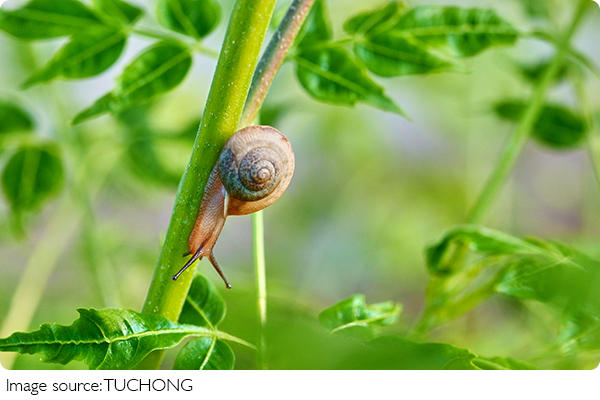
Snails are fascinating creatures, not just because of their unique appearance and slow pace, but also due to the intriguing mucus trails they leave behind as they move.
This phenomenon, while seemingly simple, is a complex and essential aspect of snail biology, serving multiple critical functions.
Understanding why snails leave a trail where they crawl involves exploring their anatomy, locomotion, ecological adaptations, and survival strategies.
Anatomy and Locomotion
A snail's movement is facilitated by its muscular foot, which undergoes rhythmic contractions and expansions known as pedal waves. However, this movement would be inefficient and potentially damaging without the aid of mucus. Snails secrete mucus from a gland located in their foot, creating a slimy layer that reduces friction and allows them to glide smoothly over various surfaces. This secretion is not just any ordinary slime; it is a specialized type of mucus composed of water, proteins, and polysaccharides, giving it unique adhesive and lubricating properties.
Discover the surprising home of African penguins thriving on sunny southern coastlines.
Dolphins sleep with half their brain awake, balancing rest and survival in the ocean.
Understanding its Unique Sleeping Position.
The battle-hardened killer whales have powerful enemies in the ocean.
Clownfish and anemones have a mutually beneficial relationship.
Though not as good as Lion and Tiger above in terms of popularity and power, they are just as charismatic.
Ecological and Survival Functions
The mucus trail serves several vital ecological and survival functions. Firstly, it acts as a lubricant, reducing the wear and tear on the snail’s soft foot as it moves over abrasive surfaces. This is crucial for a creature that often travels over rough terrain such as rocks, leaves, and bark. Secondly, the mucus trail helps in moisture retention. Snails are highly susceptible to desiccation due to their soft bodies and terrestrial habitats. The mucus creates a microenvironment that retains moisture, enabling snails to move even in dry conditions without drying out. This moisture retention is particularly important for land snails, which face the constant threat of dehydration.
Communication and Navigation
In addition to aiding in locomotion and moisture retention, snail mucus trails play a role in communication and navigation. Snails are known to follow the mucus trails left by other snails, which can lead them to food sources or suitable habitats. This behavior, known as trail following, is particularly evident in species that exhibit social behavior or live in colonies. The mucus contains pheromones, chemical signals that convey information about the snail's identity, reproductive status, and even health. By following these trails, snails can locate mates, avoid predators, and find optimal feeding grounds.
Defense Mechanisms
The mucus trail also functions as a defense mechanism. Some species of snails produce mucus that contains noxious or unpalatable chemicals, deterring potential predators. This chemical defense can be crucial for survival in environments where snails are preyed upon by birds, mammals, and other invertebrates. Additionally, the mucus can help snails evade predators by making their movement more unpredictable. A pursuing predator may lose track of a snail due to the slick, slippery trail left behind.
Research and Human Applications
The study of snail mucus has even piqued the interest of researchers and innovators. Its unique properties have potential applications in medical and industrial fields. For example, the adhesive qualities of snail mucus are being studied for use in surgical glues and wound healing treatments. Its biocompatibility and effectiveness in moist environments make it an attractive alternative to synthetic adhesives. Moreover, understanding the hydrating properties of snail mucus has led to its inclusion in cosmetic products aimed at moisturizing and repairing skin. The protective and restorative qualities of the mucus are harnessed in skincare formulations, showcasing a fascinating example of biomimicry where human technology emulates natural processes.