The Sprinting Marvel

Camille Dubois
01-07-2024
 · Animal Team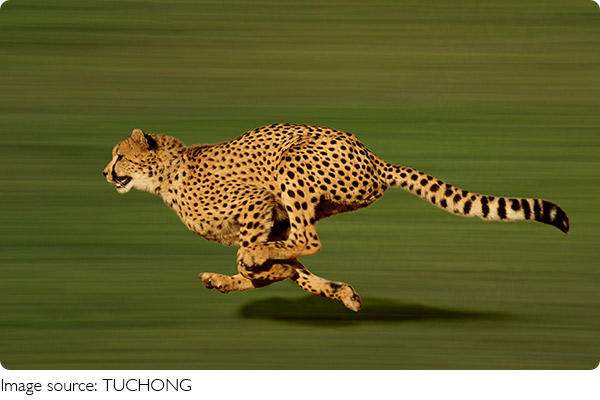
Cheetahs (Acinonyx jubatus) are renowned for their unparalleled speed and agility, making them one of the most fascinating predators in the animal kingdom.
Beyond their athletic prowess, cheetahs exhibit a range of behaviors and habits that are crucial for their survival in the wild.
Understanding these habits provides insight into their daily lives, social structures, hunting techniques, and conservation challenges.
Daily Activity Patterns
Cheetahs are primarily diurnal, meaning they are active during the day. This distinguishes them from many other large African predators, such as lions and leopards, which are predominantly nocturnal. Cheetahs typically hunt in the early morning and late afternoon when temperatures are cooler. This diurnal pattern helps them avoid competition and potential conflicts with other large predators that hunt at night.
Getting to know the master of the skies, the Eurasian Sparrowhawk.
A giant deer appeared! It weighs more than 1 ton and moves 15 meters in 1 second!
As they walk, their heads bob back and forth. So strange! Do you know who they are?
Starfish possess immortal regeneration, captivating human curiosity, and inspiring resilience in facing life's challenges.
Did you know that camels can go days or weeks without eating or drinking?
Juveniles live among the coral branch buds and feed on coral tissue.
During the hottest part of the day, cheetahs rest in shaded areas to conserve energy. They are often seen lounging under trees, bushes, or rock outcrops. This period of inactivity is crucial for their well-being, as it helps them avoid the intense heat of the African savannah.
Hunting Techniques and Diet
Cheetahs are carnivorous, with a diet primarily consisting of small to medium-sized ungulates such as gazelles, impalas, and springboks. They have evolved several unique adaptations that make them exceptional hunters.
One of the most distinctive habits of the cheetah is its hunting technique. Unlike other big cats that rely on stealth and ambush, cheetahs use their incredible speed to chase down prey. A cheetah's hunting strategy involves a careful stalk to get within 20-30 meters of the target, followed by a high-speed chase that can reach up to 60-70 miles per hour (97-113 km/h). This chase is a short burst of speed, lasting no more than 20-30 seconds due to the immense physical exertion and risk of overheating.
After a successful hunt, cheetahs need to eat quickly to avoid losing their kill to other predators like lions, hyenas, or scavengers such as vultures. They typically drag their prey to a secluded spot and consume it as rapidly as possible.
Social Structure and Reproduction
Cheetah social structures are unique compared to other big cats. Female cheetahs are largely solitary, except when they are raising cubs. After a gestation period of about three months, a female will give birth to a litter of 3-5 cubs. The mother is solely responsible for the upbringing of the cubs, teaching them hunting skills and protecting them from predators. Cubs stay with their mother for about 18-24 months before becoming independent.

In contrast, male cheetahs often form small groups called coalitions. These coalitions typically consist of brothers from the same litter and can remain together for life. This social behavior enhances their ability to defend territories and increases their hunting success rate.
Communication and Territoriality
Cheetahs have a range of vocalizations and body language cues to communicate with each other. Unlike other big cats, cheetahs cannot roar; instead, they produce sounds such as purrs, chirps, growls, and hisses. Chirping is commonly used between a mother and her cubs or among coalition members to locate each other.
Territoriality is a significant aspect of cheetah behavior. Males are particularly territorial, marking their territories with urine, feces, and scratch marks on trees. These territories can overlap with those of females, but males are usually aggressive towards other male cheetahs that encroach on their domain.
Conservation Challenges
Despite their remarkable adaptations, cheetahs face numerous conservation challenges. Habitat loss due to human encroachment, conflict with livestock farmers, and decreasing prey availability have led to a significant decline in their populations. Additionally, their genetic diversity is notably low, making them more susceptible to diseases and reducing their adaptive potential to changing environments.
Conservation efforts for cheetahs include habitat preservation, conflict mitigation strategies with farmers, and breeding programs to enhance genetic diversity. Organizations and researchers are working tirelessly to monitor populations and implement strategies to ensure the survival of this magnificent species.
Cheetahs are a testament to the wonders of evolution, embodying speed, grace, and intricate social behaviors. Their unique habits, from their daytime hunting to their social structures, highlight their adaptability and resilience. However, the challenges they face require concerted conservation efforts to preserve their place in the wild. Understanding and appreciating the habits of cheetahs is essential not only for their conservation but also for maintaining the biodiversity of the ecosystems they inhabit.