Bird Head Bobbing

Camille Dubois
01-07-2024
 · Animal Team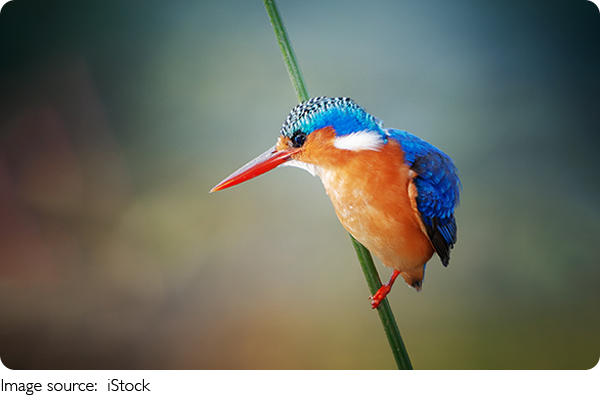
The peculiar head bobbing of birds has long captivated human curiosity and you will find their heads move rhythmically along with their bodies when we hold them or they stand on twigs.
This phenomenon, often dubbed the "chicken head stabilizer", is not merely a quirk of avian behavior but is intricately linked to the bird's vision and serves a crucial purpose in stabilizing their field of vision while walking.
Birds, with their distinctive swinging gait, employ head bobbing as a countermeasure against the movement of their bodies, effectively stabilizing their vision. Unlike humans and other mammals whose eyes are fixed forward, birds possess eyes located on the sides of their heads, granting them a panoramic field of vision.
Starfish possess immortal regeneration, captivating human curiosity, and inspiring resilience in facing life's challenges.
Did you know that camels can go days or weeks without eating or drinking?
Juveniles live among the coral branch buds and feed on coral tissue.
They fly quite fast and their flight is accompanied by a rather shrill cry.
Unexpectedly, a tiny dragonfly turned out to be the mysteries that have puzzled scientists for many years.
Rose-ringed parakeet - Have you ever seen this parrot with its own pink aura?
However, this wide peripheral vision comes at the cost of a narrower binocular field, essential for depth perception. To overcome this limitation, birds utilize head bobbing to bring objects of interest into their binocular field, enabling accurate depth perception.
The mechanism behind bird head bobbing is elegantly simple yet remarkably effective. As a bird moves its head forward, one eye draws closer to the object of focus, while retracting its head brings the other eye into play.
Through rapid alternation between these positions, birds develop unique skills to perceive the distance between themselves and the object.
Apart from the depth perception, their head bobbing also helps keep them in balance and therefore further stabilizes their vision. To draw a parallel, recall your feeling on a roller coaster——the disorientation due to weightlessness and difficulty in focusing on any object.
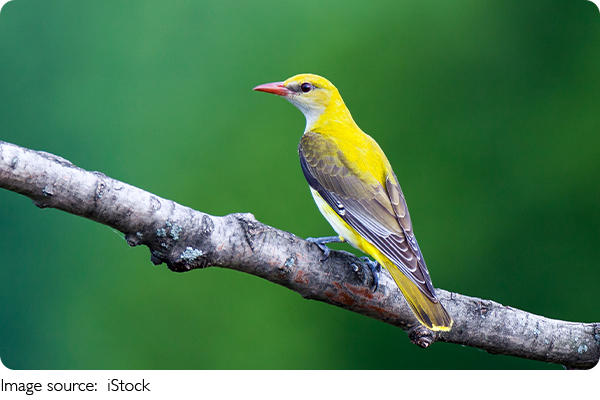
Humans, with our balance-sensing organs located in the ears, share this susceptibility. However, if a bird were to experience dizziness from head bobbing, the consequences could be dire.
During rapid aerial maneuvers such as take-off, landing, and mid-flight adjustments, vigorous body movements may ensue. Should the bird's head follow suit, its vision would be compromised, increasing the risk of collisions and falls.
Therefore, birds must maintain absolute stability in their heads, a feat accomplished through precise neck movements. Humans employ a similar strategy; imagine sitting in a car and fixating on a stationary object.
As the vehicle moves, instinct prompts us to adjust our neck position to maintain focus on the target. However, birds have evolved highly developed neck muscles specifically to excel in this task, surpassing the stabilizing abilities of humans by a significant margin.
In essence, bird head bobbing is not a whimsical behavior but an evolutionary adaptation finely tuned to optimize visual perception and spatial awareness.
From foraging on the forest floor to navigating the open skies, this seemingly quirky trait plays a vital role in the daily lives of birds, ensuring their survival and success in diverse environments.
Next time you observe a bird's rhythmic head movements consider the intricate interplay between biology, behavior, and environment that underpins this fascinating phenomenon. Truly, the world of birds offers a wealth of wonders waiting to be explored and understood.
Delving deeper into avian adaptations, we uncover a myriad of fascinating mechanisms that contribute to their survival and success. From intricate feather structures optimized for flight to specialized beak shapes tailored for diverse diets, birds exhibit a remarkable array of adaptations honed over millennia of evolution.