A Jewel Of The Rainforest

Mason O'Donnell
29-06-2024
 · Animal Team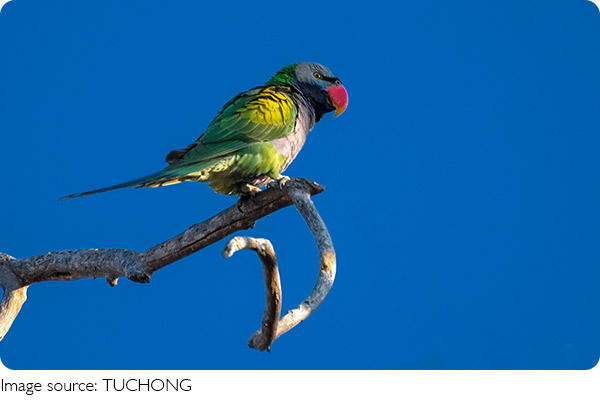
The Brown-hooded Parrot (Pyrilia haematotis) is a captivating bird that inhabits the lush tropical forests of Central America.
Known for its vibrant plumage and distinctive call, this parrot is a vital component of its ecosystem, playing significant roles in seed dispersal and maintaining the health of the forest.
Despite its relative obscurity compared to more famous parrot species, the Brown-hooded Parrot is a fascinating subject for ornithologists and bird enthusiasts alike.
Description and Identification
The Brown-hooded Parrot is a medium-sized bird, measuring approximately 22 cm (8.7 inches) in length and weighing around 165 grams (5.8 ounces). Its most distinctive feature is the rich brown coloration on its head, which contrasts sharply with the vivid green of its body. The wings are adorned with a mix of green and blue feathers, while the tail feathers are a striking blue, tipped with green. The bird's underparts are a lighter green, and it has a characteristic red patch on the shoulders. One of the most unique features of this parrot is the reddish-brown ear patch, which gives it a distinctive look among the tropical avian fauna.
Unexpectedly, a tiny dragonfly turned out to be the mysteries that have puzzled scientists for many years.
Rose-ringed parakeet - Have you ever seen this parrot with its own pink aura?
Tens of thousands of butterflies gathered together in an imposing manner, not unlike a swarm of bees!
20 Cool Facts About Polar Bears That You Should Know.
British royal tradition: Swans symbolize wealth, protected for centuries by monarchs.
Whales, masters of underwater sound, dominate the ocean's acoustic landscape.
Habitat and Distribution
Brown-hooded Parrots are predominantly found in the lowland tropical forests of Central America, ranging from southern Mexico through Belize, Guatemala, Honduras, Nicaragua, and into Costa Rica and western Panama. They prefer humid forests, often residing at elevations up to 1,000 meters (3,280 feet) above sea level. These birds are highly dependent on primary and mature secondary forests, where they find their food and nesting sites.
Behavior and Diet
The Brown-hooded Parrot is a social species, often seen in pairs or small flocks. They are known for their loud, high-pitched calls, which can be heard echoing through the forest canopy. These parrots are primarily frugivorous, feeding on a variety of fruits, seeds, and nuts. They play a crucial role in their ecosystem as seed dispersers, helping to maintain the diversity and health of the tropical forest.
Feeding often occurs in the early morning and late afternoon, when the parrots can be observed foraging high in the trees. In addition to fruits and seeds, they may also consume flowers and buds, contributing to the pollination of various plant species.
Reproduction and Lifespan
Breeding season for the Brown-hooded Parrot typically begins in April and lasts through June. These parrots are cavity nesters, preferring to lay their eggs in tree hollows. The female usually lays between two to four eggs, which she incubates for about 26 days. During this period, the male plays a supportive role, bringing food to the nesting female.
Once the chicks hatch, both parents are involved in feeding and caring for the young. The fledgling period lasts around 8 to 10 weeks, during which the chicks grow rapidly and learn essential survival skills. In the wild, the lifespan of a Brown-hooded Parrot can reach up to 30 years, though this can vary depending on environmental conditions and threats.
Conservation Status
The Brown-hooded Parrot is currently listed as Least Concern by the International Union for Conservation of Nature (IUCN). However, like many species of tropical birds, it faces threats from habitat loss and degradation. Deforestation for agriculture, logging, and urban development continues to shrink their natural habitat, putting pressure on their populations.
Conservation efforts are essential to ensure the survival of this species. Protecting large areas of primary and secondary forests, enforcing anti-logging regulations, and promoting sustainable land use practices are critical steps in preserving the Brown-hooded Parrot's habitat. Additionally, ecotourism initiatives that highlight the beauty and ecological importance of these parrots can generate income for local communities, providing an economic incentive to protect the forests.
The Brown-hooded Parrot is a vibrant and vital part of the tropical ecosystems of Central America. Its role in seed dispersal and forest health underscores the interconnectedness of wildlife and the environment. By appreciating and protecting these remarkable birds and their habitats, we can contribute to the conservation of the rich biodiversity that defines our planet. The Brown-hooded Parrot, with its striking appearance and ecological significance, serves as a reminder of the wonders of the natural world and the importance of preserving it for future generations.