How Leopards Trick the Eye

James Carter
01-06-2026
 · Animal Team
Good day, Friends! Imagine sitting in a safari vehicle as the afternoon sun stretches long shadows across the African savanna. Your guide suddenly points toward a rocky hillside and quietly says, “There’s a leopard.”
You search every bush, branch, and boulder, yet nothing seems out of place. Then, in an instant, a pair of amber eyes catches the light, revealing that the leopard had been watching from the same spot the entire time.
This remarkable ability to disappear is one of the African leopard’s greatest strengths. Found across much of Sub-Saharan Africa, the leopard has evolved a coat pattern so effective that it can remain hidden even when standing in plain view. Whether moving through dense woodland, resting in rocky terrain, or stalking prey across dry grasslands, its camouflage is a masterpiece shaped by millions of years of evolution.
How feathers, oils, and grooming allow ducks to stay dry and comfortable in rain and cold water environments
Exploring the adaptations, behavior, diet, and conservation of red pandas
Vanishing Shadows: The Mysterious Mountain Predator With Only 4000 Units Left!
A science-based guide to maintaining a healthy and stable aquarium environment for goldfish
Why red pandas are a distinct species and how they differ from giant pandas
Discover the extraordinary adaptations that make owls one of nature’s most remarkable birds
More Than Spots: The Secret of Rosettes
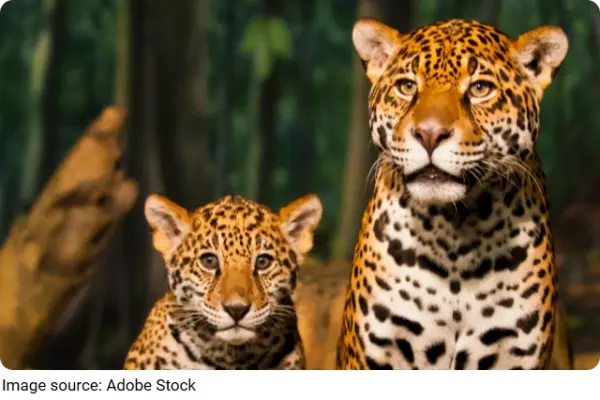
At first glance, a leopard's coat appears covered with simple spots. A closer look reveals something far more sophisticated. Most African leopards display rosettes—dark markings that form open circles around a lighter center.
These patterns are not decorative accidents. Rosettes create visual disruption, making it difficult for other animals to recognize the leopard's body shape. Instead of seeing a clear outline of a predator, prey animals perceive scattered patches of light and shadow. This effect is especially powerful in habitats where sunlight filters through vegetation.
The broken light patterns produced by leaves and branches closely resemble the arrangement of the leopard's markings. As a result, the cat blends into the background rather than standing apart from it. Every leopard possesses a unique arrangement of rosettes, much like a human fingerprint. Researchers even use these patterns to identify individual animals in camera-trap studies.
Why Breaking the Outline Matters
Many animals rely on camouflage, but the leopard takes the strategy to another level. Its markings are designed not merely to match colors in the environment but to conceal its entire form. Predators and prey often identify one another by recognizing familiar silhouettes. A deer may instantly react to the outline of a lion, while smaller predators can detect potential threats through shape recognition. Leopards disrupt this process.
The rosettes fragment the visual boundaries of the body, making the shoulders, legs, and torso harder to distinguish. When a leopard crouches motionless among shrubs or rocks, the eye struggles to connect the scattered markings into a recognizable animal.
This advantage is critical because leopards are ambush hunters. Unlike cheetahs, which rely on speed, leopards prefer to approach prey undetected before launching a short, explosive attack from close range. Every meter they can cover unseen increases the likelihood of a successful hunt.
Adapted to Diverse African Landscapes
One reason African leopards remain widespread is their extraordinary adaptability. They inhabit environments ranging from rainforests and mountain slopes to savannahs and semi-arid regions.
Their coat pattern works effectively because it complements a broad range of landscapes. In woodland areas, the dense clusters of shadows created by trees mirror the complexity of the rosettes. In rocky terrain, the irregular markings resemble patches of shade between stones and crevices.
Even in open grasslands, where hiding places seem limited, the leopard's tawny background color matches dry vegetation surprisingly well. When lying low among tall grasses, its body becomes difficult to distinguish from the surrounding environment. This flexibility allows leopards to occupy habitats where many other large predators struggle to remain concealed.
What Science Reveals About Leopard Camouflage
Modern research has provided fascinating insights into how leopard camouflage functions. Studies using camera traps across Africa have shown that coat patterns can vary subtly depending on habitat conditions. Leopards living in heavily forested regions often display denser and more complex rosette arrangements.
In contrast, individuals inhabiting more open environments may have larger and more widely spaced markings. Scientists believe these variations improve concealment within local conditions. Although the overall pattern remains recognizable, small differences can enhance effectiveness in specific landscapes.
Research into animal vision also highlights another advantage. Many prey species do not perceive color in the same way humans do. Instead, they rely heavily on contrast and movement. The leopard's patterned coat reduces contrast against natural backgrounds, making it even harder for prey animals to detect. Combined with the cat's slow, deliberate movements, this camouflage creates one of the most effective stealth systems found among large mammals.
A Survival Tool Beyond Hunting
Camouflage helps leopards capture prey, but its benefits extend far beyond hunting. Young cubs are vulnerable to predators such as lions, hyenas, and large birds of prey. Their spotted coats provide valuable concealment while they remain hidden in vegetation during the first months of life.
Mature leopards also use camouflage to avoid conflict. Although they are powerful predators, they often share territory with larger carnivores. Remaining unseen can prevent dangerous encounters and reduce competition over food resources. In many ways, invisibility is just as important to survival as strength.
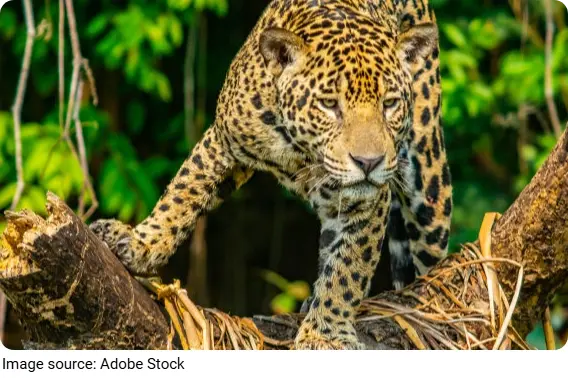
Leopards are masters of camouflage, using their spots, shadows, and natural surroundings to blend in perfectly. Their ability to trick the eye not only helps them hunt but also stay safe from predators. Studying these patterns reminds us how clever and adaptive nature can be, and how much there is to discover when we look closely.