Hidden Lives of Red Pandas

Finnegan Flynn
01-06-2026
 · Animal Team
Good day, Readers! Red pandas may look like living plush toys, but these tree-dwelling mammals are far more unusual than they appear. Native to the cool forests of the eastern Himalayas, they have fascinated scientists for decades because of their unique behavior and strange adaptations.
Despite their name, red pandas are not closely related to giant pandas and belong to their own animal family. Their thick fur, flexible ankles, and climbing skills help them survive in harsh mountain forests.
1. Red Pandas Are Not Closely Related to Giant Pandas
One of the biggest misconceptions about red pandas is that they belong to the same family as giant pandas. In reality, they are evolutionary outsiders. For years, scientists debated where red pandas belonged in the animal kingdom. Their features resemble raccoons, bears, and weasels all at once. Modern genetic studies eventually confirmed that red pandas belong to their own unique family called Ailuridae.
Vanishing Shadows: The Mysterious Mountain Predator With Only 4000 Units Left!
A science-based guide to maintaining a healthy and stable aquarium environment for goldfish
Why red pandas are a distinct species and how they differ from giant pandas
Discover the extraordinary adaptations that make owls one of nature’s most remarkable birds
Two owls pressed together look like a cute couple moment, but there's a lot more science and sweetness going on than you think!
That cute round face hides a ruthless, precision-built killing machine. Here's the wild truth about owls.
That means they are the last surviving members of an ancient evolutionary branch that once spread across Eurasia millions of years ago. Even their famous “false thumb” evolved independently from the giant panda’s version. This extra wrist structure acts like a thumb and helps them grip bamboo stems while climbing trees.
It is a rare example of convergent evolution, where two unrelated species develop similar traits because they face similar environmental challenges. Despite sharing a bamboo-heavy diet with giant pandas, red pandas are genetically much closer to skunks and raccoons than to black-and-white pandas.
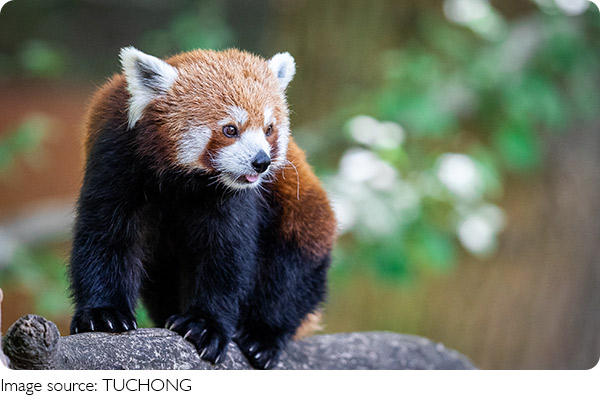
2. Their Tails Work Like Blankets During Freezing Himalayan Nights
Red pandas live at elevations reaching over 12,800 feet (about 3,900 meters) in cold mountain forests where winter temperatures can drop far below freezing. To survive these harsh conditions, they rely heavily on one remarkable feature: their enormous ringed tails.
A red panda’s tail can measure nearly as long as its body. While the striped tail helps with balance during tree climbing, it also serves another critical purpose during sleep. When temperatures fall, red pandas curl into a tight ball and wrap the tail completely around their face like a thick scarf.
This behavior reduces heat loss from sensitive areas such as the nose and paws. Their dense fur also covers the bottoms of their feet, functioning almost like insulated snow boots while walking on icy branches. Unlike many mammals in cold climates, red pandas do not hibernate. Instead, they conserve energy by lowering their metabolic activity and spending long hours resting in tree canopies.
3. Bamboo Is Actually a Terrible Food Source for Them
Readers, it may sound surprising, but bamboo is one of the least nutritious foods a mammal can survive on. Yet red pandas depend on it for most of their diet. Although classified as carnivores, red pandas evolved into specialized bamboo eaters. The problem is that their digestive system still resembles that of meat-eating animals.
They lack the complex stomach chambers that herbivores use to efficiently break down fibrous plants. Because bamboo provides very little energy, red pandas must spend up to 13 hours a day feeding and searching for fresh shoots. Even then, they digest only a fraction of what they consume.
To cope with this inefficient diet, they developed extremely low-energy lifestyles. Rapid movement wastes precious calories, which explains why red pandas often appear calm and slow-moving. During spring, they selectively eat nutrient-rich bamboo shoots, while in colder months they switch to tougher leaves despite their lower nutritional value. They occasionally supplement their diet with berries, bird eggs, insects, and small lizards.
4. Red Pandas Are Secretive Climbers That Rarely Touch the Ground
Unlike many forest mammals, red pandas spend most of their lives above the forest floor. Their bodies are designed for life in the canopy.
Their ankles rotate outward, allowing them to climb down trees headfirst, similar to squirrels. Sharp semi-retractable claws help them grip slippery, moss-covered bark in wet mountain forests. Their flexible joints make movement through narrow branches surprisingly efficient despite their fluffy appearance.
Researchers studying wild red pandas often struggle to observe them because they are primarily crepuscular, meaning they are most active during dawn and dusk. Many individuals carefully avoid areas with heavy human activity, making sightings extremely rare even in protected reserves.
Tree canopies provide more than shelter. Elevated branches protect red pandas from predators such as snow leopards and wild dogs while offering access to cooler temperatures. Heat is actually dangerous for them. Red pandas become stressed when temperatures rise too high, which is one reason climate change threatens their survival.
5. Their Survival Depends on Forest Corridors Few People Notice
Today, fewer than 10,000 red pandas are believed to remain in the wild, though exact population numbers are difficult to determine because of their elusive nature. Their populations continue to decline. Habitat fragmentation is one of the most serious threats they face. Red pandas depend on connected forest corridors that allow them to travel safely between feeding and breeding areas.
When roads, farms, or logging operations divide forests into isolated patches, populations become trapped and genetically weakened. In several Himalayan regions, conservation teams now use GPS collars and camera traps to identify migration routes hidden deep within remote mountain forests. Some communities are also creating “red panda corridors” by restoring native bamboo forests between fragmented habitats.
Another growing danger comes from domestic dogs. Besides direct attacks, dogs can spread diseases such as canine distemper to wild red pandas. Even limited human disturbance near nesting sites may cause mothers to abandon cubs. Conservationists increasingly view red pandas as an indicator species. When red panda habitats remain healthy, countless other mountain species benefit from the same protected ecosystem.
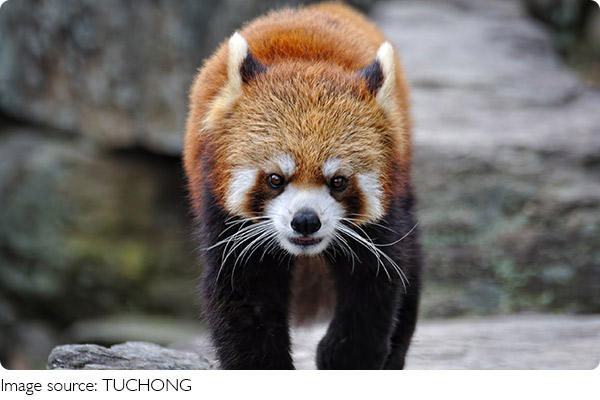
Readers, red pandas are far more than internet-famous animals with fluffy tails and gentle faces. They represent a unique evolutionary survivor adapted to cold mountain forests through extraordinary behaviors, specialized anatomy, and a delicate ecological balance.
Understanding how they live—and the threats they face—helps highlight the importance of protecting the fragile Himalayan ecosystems they call home. Preserving red panda habitats not only safeguards this remarkable species but also supports countless other plants and animals that depend on the same mountain forests.