Madagascar’s Jewel

Mason O'Donnell
09-08-2024
 · Animal Team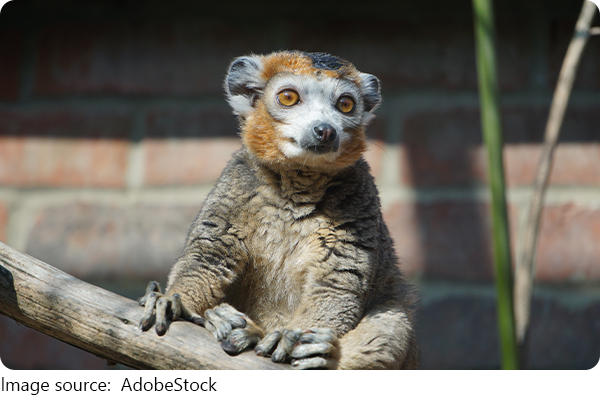
The Crowned Lemur is a fascinating species of lemur native to the island of Madagascar.
Distinguished by the distinctive orange or golden crown patches on their heads, crowned lemurs are a vital component of Madagascar's unique biodiversity.
Here, Lykkers, we offer important insights into primate evolution and the dynamics of ecosystems.
Appearance and Characteristics
Crowned lemurs are relatively small primates, typically weighing between 1 and 2 kilograms. Their body length ranges from 34 to 36 centimeters, with tails slightly longer, measuring around 40 to 45 centimeters.
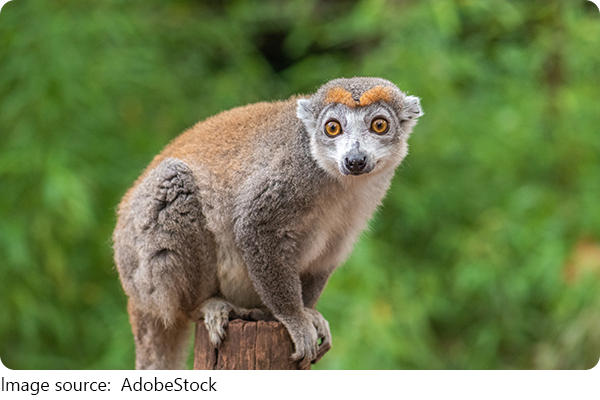
A notable feature of crowned lemurs is the sexual dimorphism in their appearance. Males exhibit darker crown patches that are orange or brown, while females display lighter yellow or golden patches. Their fur is predominantly gray or brown-gray, with a lighter hue on the belly.
Step into the stripes: Uncover the allure of the mysterious Bengal tiger in their natural realm!
This small-sized bird delights bird enthusiasts with its stunning appearance and fascinating behaviours.
Unbelievable! They can turn back to toddlers to avoid aging!
Click to witness how the world's largest bird lives a life of legend!
The golden eagle, an apex predator with keen eyesight, symbolizes strength and thrives across continents.
Cats respond more to their owners’ voices than strangers, revealing their deep emotional bond and unique social skills.
Habitat
Crowned lemurs inhabit the dry deciduous forests and moist forests of northern Madagascar. These forests provide abundant food resources and concealed habitats that are crucial for their survival.
Adapted to an arboreal lifestyle, crowned lemurs exhibit excellent jumping and climbing abilities, allowing them to move swiftly through the forest canopy.
Dietary Habits
As omnivores, crowned lemurs have a varied diet consisting primarily of fruits, flowers, leaves, and insects. They have a particular fondness for ripe fruits, which supply essential sugars and hydration.
During the dry season, when food resources are scarce, crowned lemurs rely more heavily on leaves and flowers, supplementing their diet with small invertebrates.
Social Structure and Behavior
Crowned lemurs are social animals that live in small groups ranging from 5 to 15 individuals. Their social structure is complex, featuring a clear hierarchy and strong territorial awareness.
Typically, a group is led by a pair of adult males and females, with other members including their offspring and non-breeding individuals. Communication among crowned lemurs involves a variety of methods, such as vocalizations, scent marking, and body language.
Primarily diurnal, crowned lemurs are most active during the early morning and late afternoon, resting in the shade during the heat of midday. They exhibit strong territorial behavior, using vocalizations and scent markings to delineate and defend their territories from other groups.
Reproduction and Life Cycle
The breeding season for crowned lemurs occurs between May and June. Females typically give birth to one infant per year, although twins are occasionally born. The gestation period lasts about 120 days.
Newborns have sparse fur and closed eyes, requiring intensive maternal care. During the initial weeks after birth, infants cling to their mother’s abdomen and move with her, gradually learning to navigate independently.
Weaning begins around five months of age when the young start to consume solid food. By the age of one year, juvenile lemurs can largely fend for themselves but continue to stay with their mother to learn essential survival skills. In the wild, crowned lemurs have a lifespan of approximately 15 to 20 years, which can extend in captivity.
Conservation Status
Crowned lemurs face significant threats due to habitat destruction and illegal hunting. The expansion of agriculture, deforestation for timber and charcoal, and the collection of fuel wood have severely reduced their natural habitats.
As a result, the population of crowned lemurs has declined markedly. Despite various measures taken by the Malagasy government and international conservation organizations to protect these lemurs and their habitats, the situation remains critical.
The International Union for Conservation of Nature (IUCN) currently lists the crowned lemurs as "Vulnerable," indicating that they face a high risk of extinction.
Effective conservation of crowned lemurs hinges on enhancing habitat protection, curbing illegal hunting, and increasing public awareness through education and community involvement.
In Conclusion
Crowned lemurs are an integral part of Madagascar's unique ecosystem. Their survival is crucial not only for maintaining ecological balance but also for advancing scientific understanding of primate evolution and behavior.
Despite the significant threats they face, there is hope for their future through sustained conservation efforts and international cooperation.
By protecting their habitats, combating illegal hunting, and raising awareness, we can ensure that crowned lemurs continue to thrive in the wild, contributing to the rich biodiversity of Madagascar and inspiring future generations with their beauty and uniqueness.