Nectar Sippers Unveiled

Sofia Alvarez
09-08-2024
 · Animal Team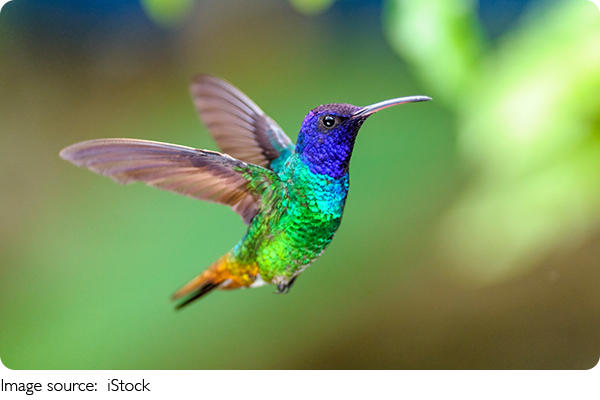
Hummingbirds are fascinating creatures, renowned for their vibrant colors and extraordinary flight capabilities.
Among their many intriguing features is their feeding mechanism, which involves a seemingly paradoxical challenge: how do these birds, with their incredibly narrow tongues, efficiently extract nectar from flowers?
The answer lies in a combination of specialized anatomy and sophisticated biomechanics.
The Anatomy of the Hummingbird's Tongue
A hummingbird's tongue is a marvel of nature. It is long, thin, and bifurcated, meaning it splits into two tips. This split is essential for the bird's feeding process. The surface of the tongue is covered with tiny, hair-like structures called lamellae. When the hummingbird extends its tongue into a flower, these lamellae play a crucial role in nectar collection.
Dolphins' intelligence and unique "superpowers" make them fascinating and vital marine creatures.
Grass is essential for rabbits, boosting digestion, dental health, weight management, and reducing anxiety.
Camels, the "ships of the desert," excel in extreme heat and scarcity with their unique adaptations.
The world’s strangest birds: unique features and behaviors.
The Alpine ibex: a marvel of the Alps.
Cats' eyes reveal a mysterious world with wide vision, keen motion detection, and exceptional night vision.
The Capillary Action and Elastic Recoil Mechanism
For a long time, scientists believed that hummingbirds used capillary action, the same principle that allows liquid to travel up a thin tube, to draw nectar into their mouths. While capillary action does play a minor role, recent studies have revealed a more complex and efficient mechanism at work: elastic recoil.
When a hummingbird extends its tongue into a flower, the lamellae on the tongue tips spread apart, creating a groove that traps nectar. As the tongue retracts, these lamellae snap back together, squeezing the nectar into the grooves and creating a tiny, high-speed stream of liquid that is propelled towards the bird’s mouth. This process is incredibly fast, occurring in less than a tenth of a second.
High-Speed Tongue Movements
The speed at which a hummingbird's tongue moves is astonishing. A typical feeding session involves the bird extending and retracting its tongue up to 20 times per second.
This rapid movement is facilitated by specialized muscles that control the tongue's extension and retraction. The entire process is so fast and efficient that the hummingbird can extract a significant amount of nectar in just a few seconds.
The Role of Beak and Tongue Coordination
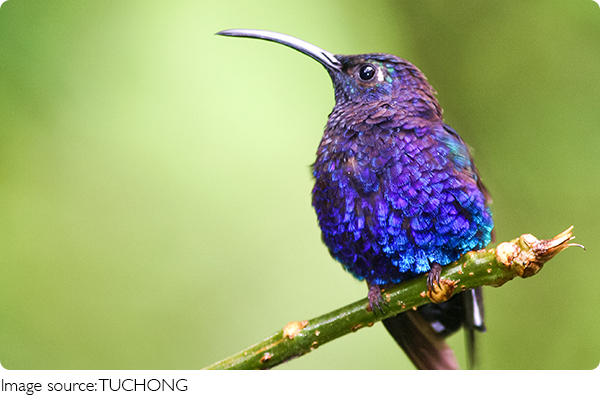
The hummingbird’s beak also plays a crucial role in this feeding mechanism. The beak is long and slender, perfectly shaped to reach deep into flowers. When feeding, the hummingbird partially opens its beak to allow the tongue to extend and retract. This coordination between the beak and tongue ensures that the bird can access nectar even from the deepest and narrowest flowers.
Adaptations for Nectar Feeding
The hummingbird's specialized tongue and beak are just part of its overall adaptation for nectar feeding. These birds have evolved to have a high metabolic rate, which allows them to hover in place while feeding.
Their wings beat rapidly, creating the characteristic humming sound from which they get their name. This hovering ability is crucial for feeding from flowers, as it allows the bird to remain stationary in the air while inserting its beak and tongue into the flower.
Energy Efficiency
Given their high-energy lifestyle, hummingbirds need to consume large quantities of nectar to meet their metabolic demands. Their feeding mechanism is highly efficient, allowing them to extract the maximum amount of nectar in the shortest possible time.
This efficiency is vital for their survival, as it allows them to spend less time feeding and more time on other essential activities such as mating and defending their territory.
Evolutionary Significance
The evolution of the hummingbird’s feeding mechanism highlights the intricate relationship between form and function in nature. The bird’s narrow tongue, once considered a limitation, has become an essential tool for efficient nectar extraction. This adaptation has allowed hummingbirds to exploit a niche food source, giving them an advantage in their ecological environment.
Research and Discoveries
The study of hummingbird feeding mechanisms has been greatly enhanced by advancements in technology. High-speed cameras and microscopic analysis have allowed scientists to observe the rapid movements of the hummingbird’s tongue in unprecedented detail. These studies have not only provided insights into the bird’s feeding habits but have also inspired innovations in technology, particularly in the field of fluid dynamics.
In Conclusion
Hummingbirds are extraordinary examples of evolutionary adaptation. Their ability to suck liquid into their mouths despite having narrow tongues is a testament to the complexity and ingenuity of nature.
Through a combination of anatomical specialization and rapid, efficient feeding techniques, these tiny birds have mastered the art of nectar extraction, ensuring their survival and success in the natural world. The hummingbird's feeding mechanism continues to captivate scientists and nature enthusiasts alike, offering a glimpse into the remarkable ways in which life adapts and thrives.