Bizarre Bird Beauties

Arvind Singh
08-08-2024
 · Animal Team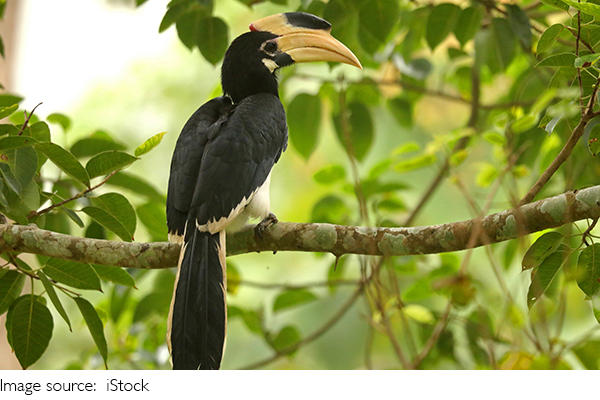
Birds, with their diverse forms and captivating behaviors, are among nature's most fascinating creatures.
Their variety ranges from the strikingly beautiful to the peculiarly unusual, offering a glimpse into the complexity of avian life.
Among the myriad of bird species, a few stand out for their extraordinary characteristics and behaviors.
1. Shoebill
The Shoebill is an enigmatic bird native to the swamps of central tropical Africa. Its name derives from its massive, shoe-shaped bill, which can reach up to 15 centimeters in length. This striking feature resembles a whale’s head, giving the Shoebill an almost prehistoric appearance.
Despite its somewhat comical look, the Shoebill's bill is a formidable tool for hunting. It uses this powerful beak to capture and consume prey, including fish, amphibians, and even small reptiles.
The Alpine ibex: a marvel of the Alps.
Cats' eyes reveal a mysterious world with wide vision, keen motion detection, and exceptional night vision.
The Alexandrine Parakeet, with its vibrant plumage and lively nature, makes a captivating pet.
Temperature determines the gender? That's fake for humans but true for this animal!
Older male elephants are key to elephant society. What's their role?
Why Do Cats Eat Grass? Unusual Cat Behaviors Explained
The Shoebill's hunting technique involves a swift clamp of its bill to secure its catch before swallowing it whole. This bird's bill is not only impressive in size but also in functionality, equipped to deliver a crushing bite.
Historically, Shoebills were kept as pets by ancient Egyptians, who admired their distinctive appearance and formidable presence.
2. Cassowary
The Cassowary is one of the world’s most dangerous birds, a title awarded by the Guinness World Records.
Native to New Guinea, northeastern Australia, and nearby islands, the Cassowary is notable for its striking resemblance to an ostrich, albeit with a more menacing demeanor. This large, flightless bird is equipped with sharp claws on its powerful legs, which can deliver devastating kicks.
Cassowaries can run at speeds of up to 50 kilometers per hour, making them exceptionally difficult to escape if they become aggressive.
Their distinctive casque, a helmet-like structure on their head, has sparked considerable debate among experts. Some suggest it plays a role in attracting mates, while others believe it protects the bird’s head from falling objects, such as large seeds.
3. Malay Hornbill
The Malay Hornbill is a striking bird found throughout Southeast Asia, notably in Malaysia, where it is the national bird. Recognizable by its large, curved beak adorned with a casque resembling a rhinoceros horn, the Malay Hornbill has a lifespan of up to 35 years in the wild.
These hornbills are known for their elaborate courtship rituals. Males must first win the trust of females before engaging in mating, egg-laying, incubation, and raising their young. From May to June, Malay Hornbills transition from group living to forming monogamous pairs.
They nest in tree cavities located 16 to 33 meters above the ground, utilizing naturally occurring hollows or those created by termites, rather than pecking out new ones themselves.
4. African Marabou
The African Marabou is often regarded as one of the less aesthetically pleasing avian species, earning it the nickname "corpse picker." Native to Africa, this large bird stands about 1.5 meters tall with a wingspan exceeding 3 meters. As scavengers, African Marabous primarily feed on carrion, though they will also prey on live birds, particularly flamingos.
An unusual aspect of the Marabou's behavior is its method of regulating body temperature. It can defecate on its legs to cool down, a practice that, while unappealing, is effective for thermoregulation.
Despite their somewhat grim reputation, African Marabous play a crucial role in their ecosystems by cleaning up carrion and contributing to the balance of their habitat.
5. Peacock
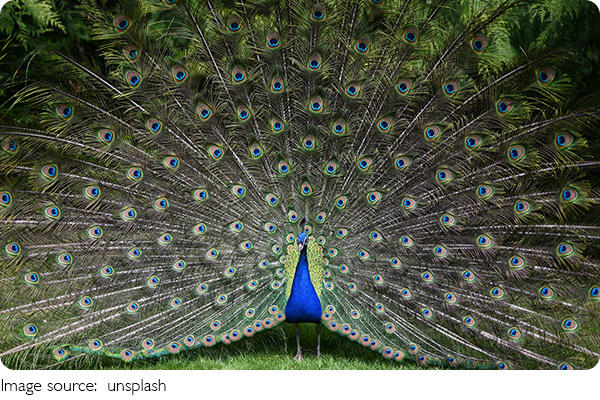
The Peacock, known for its stunningly vibrant plumage, is perhaps one of the most visually striking birds. It is the male peacock that boasts the most impressive feathers, which are characterized by eye-catching "eye spots" that become prominently displayed when the peacock fans out its tail feathers. These tail feathers, or "train," are used in elaborate courtship displays to attract females.
Female peacocks, or peahens, are generally less colorful, which highlights the role of the male’s dazzling feathers in mating rituals.
The brightness and quality of the feathers are believed to signal the health and genetic fitness of the male, thus aiding peahens in selecting a suitable mate. This sexual selection mechanism is a prime example of how avian beauty plays a critical role in reproductive success.
In Conclusion
These extraordinary birds illustrate the incredible diversity of avian life and underscore the importance of studying and conserving such unique species. Each bird offers valuable insights into the evolutionary adaptations that enable survival in various environments.