Exotic Feathered Beauties
Finnegan Flynn
07-08-2024
 · Animal Team
The Alexandrine Parakeet is a medium-sized parrot known for its striking plumage and lively personality.
Native to the forests and tropical regions of South and Southeast Asia, these birds are popular as pets due to their adaptability and affectionate nature.
Appearance
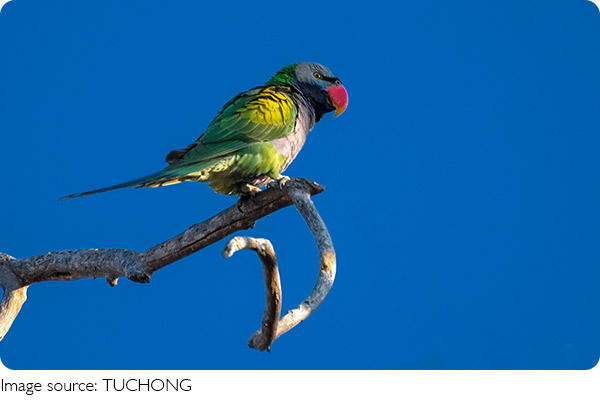
The Alexandrine Parakeet measures approximately 58 centimeters in length, including its remarkably long tail feathers. Adult males and females have distinct differences in appearance: males sport a ring of black and pink feathers around their necks, while females lack this feature.
The overall plumage of these birds is predominantly green, with a touch of red on their wings, which makes them appear particularly stunning in the sunlight. Additionally, Alexandrine Parakeets have strong, red beaks, perfectly adapted for breaking shells and foraging for various nuts and seeds.
Temperature determines the gender? That's fake for humans but true for this animal!
Older male elephants are key to elephant society. What's their role?
Why Do Cats Eat Grass? Unusual Cat Behaviors Explained
Amazing facts about elephants that you probably did not know.
Unveiling the Magical Creature of Coastal Waters: Meet the Eastern Brown Pelican, Nature's Plunge-Diving Maverick!
Dragonfly skimming, a graceful dance on water, is essential for egg-laying and larval development.
Habitat
In the wild, Alexandrine Parakeets typically inhabit trees in tropical rainforests, open forests, and areas near farmland. They are highly social birds that prefer to move in flocks, especially during seasons when food is plentiful.
Large groups of Alexandrine Parakeets can often be seen flying or foraging among the trees. This social behavior not only aids them in locating food but also provides a defense mechanism against predators.
Diet
Alexandrine Parakeets are omnivorous, and their diet consists of seeds, nuts, fruits, and nectar. In the wild, they are particularly fond of figs and coconuts.
In captivity, owners often provide specialized parrot feed, along with fresh fruits and vegetables, to ensure a balanced nutritional profile. It is important to note that these parrots are sensitive to high-fat and high-sugar foods, so such items should be supplied sparingly to avoid health issues.
Breeding Habits
The breeding season for Alexandrine Parakeets typically occurs in the spring and summer. In their natural habitat, they build nests in tree cavities. However, in captivity, providing an appropriately sized nest box is crucial for successful breeding.
Female Alexandrine Parakeets lay between 2 to 4 eggs per clutch, with an incubation period of about 24 to 28 days. After hatching, the chicks are cared for by both parents until they are approximately 6 to 7 weeks old.
During the breeding season, these parrots become highly protective of their nests and may exhibit more aggressive behavior to safeguard their young.
Social Behavior
Alexandrine Parakeets are highly social and enjoy interacting with their species as well as with humans. They are intelligent and active, easily learning various simple tricks and mimicking sounds.
In captivity, without adequate social interaction and stimulating toys, these parrots may exhibit signs of boredom and destructive behaviors, such as feather plucking or excessive vocalization.
Therefore, owners should ensure they receive sufficient attention and interaction time each day, along with a variety of toys and activities to stimulate their mental and physical abilities.
Keeping Alexandrine Parakeets as Pets
Due to their beautiful appearance and friendly personality, Alexandrine Parakeets are a popular choice among bird enthusiasts. However, prospective owners must consider their long lifespan, which typically ranges from 20 to 30 years, and their substantial space requirements.
A spacious bird cage and daily free-flight time are essential to maintain their physical and mental health. Owners need to be patient, providing consistent training and interaction to establish a good relationship and appropriate behavioral norms.
The Alexandrine Parakeet is a beautiful and intelligent bird that exhibits unique charm and value both in the wild and as a pet. Protecting and understanding this bird is of great significance for maintaining ecological balance and enriching our lives.
Whether admired for their vibrant plumage in their natural habitats or cherished as lively companions in homes, Alexandrine Parakeets continue to captivate bird enthusiasts around the world.