Fascinating Jellyfish

Mason O'Donnell
06-08-2024
 · Animal Team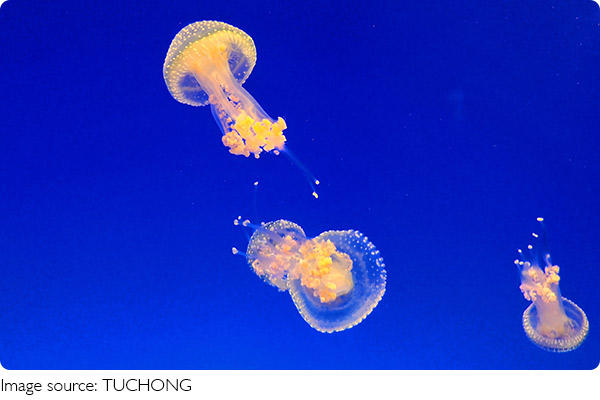
Jellyfish are ancient and mysterious marine creatures belonging to the phylum Cnidaria. They typically have a transparent body, tentacles, and a bell-shaped umbrella, and although they appear simple, they play an important role in marine ecosystems.
Here are six types of jellyfish that represent the diversity and wonder of the jellyfish world.
1. Moon Jellyfish
The Moon Jellyfish is named for its semi-transparent, moon-like bell. This jellyfish is commonly found in temperate and subtropical waters, especially along coasts.
The bell can reach up to 25 centimeters in diameter, and it has four tentacles arranged around the edge of the bell. Moon Jellyfish feed on plankton and usually are more active at night. Their nematocysts (stinging cells) are generally harmless to humans but can be lethal to some small marine creatures.
Ladybugs: vibrant garden allies that devour pests, promoting plant health and ecosystem balance.
Elephants: giants with nearsighted vision.
American Pride: the bald eagle.
The Eurasian lynx, with its unique appearance and vital ecological role, symbolizes forest majesty.
Sea turtles' and tortoises' differences in ecology, physiology, and behavior.
Understanding and addressing cats' behavior is essential for ensuring their health and happiness.
2. Box Jellyfish
The Box Jellyfish, found in tropical waters, particularly around northern Australia and Southeast Asia, is named for its square-shaped bell. Its tentacles are long and highly venomous, with toxins that can cause severe pain and even be fatal.
The venom of the Box Jellyfish is considered one of the most deadly in the ocean, potentially leading to cardiac arrest and respiratory failure. Due to its dangerous nature, caution is advised when swimming in its habitat.
3. Deep-Sea Jellyfish
Deep-sea jellyfish inhabit the deep ocean, adapting to its unique conditions. These jellyfish are usually smaller, with bodies that exhibit various colors and bioluminescence to cope with the darkness of their environment.
Their bells are typically small and irregular, and their tentacles often have glowing features that help attract prey in the pitch-black depths. Although their venom is usually less potent, their unique habitat makes them of great interest to scientific research.
4. Lion's Mane Jellyfish
The Lion's Mane Jellyfish is one of the largest jellyfish species, with bell diameters reaching up to 2.5 meters.
It is typically found in cold waters of the Arctic and sub-Arctic regions. Its tentacles are long and numerous, extending from the bell's edge, and while its venom is potent to small marine animals, it is relatively mild for humans. The tentacles are covered with nematocysts that efficiently capture and kill prey.
5. Red Bigfin Jellyfish
The Red Bigfin Jellyfish is a rare deep-sea jellyfish discovered at depths around 2000 meters. Its bell is uniquely shaped and brightly red, with many protrusions. The tentacles are long and spread out, primarily catching plankton and small fish.
Due to its deep-sea habitat, our understanding of the Red Bigfin Jellyfish is limited, and its mysterious nature makes it a focus of deep-sea biological research.
6. Nomura's Jellyfish
Nomura's Jellyfish, found in the northwestern Pacific Ocean, particularly along the coasts of Japan and Korea, is a giant species with a bell diameter of up to 2 meters and very long tentacles.
Its venom can cause severe pain and skin rashes in humans, with potential allergic reactions and serious health issues in some cases. Extreme caution is recommended when swimming in areas where Nomura's Jellyfish are present.
Conclusion
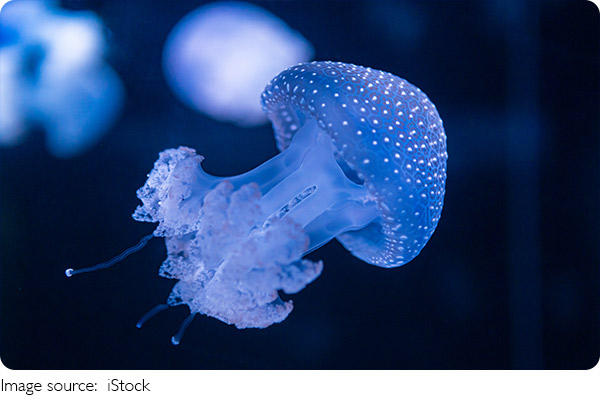
Jellyfish, as ancient creatures, showcase the adaptability and survival strategies of marine life. From the shallow waters of the Moon Jellyfish to the deep-sea Red Bigfin Jellyfish, these jellyfish not only play crucial roles in marine ecosystems but also captivate researchers with their unique biological characteristics.
Understanding these jellyfish helps us better appreciate the complexity of marine environments and emphasizes the need to protect our oceans.