Cute but Calculated
Pardeep Singh
31-07-2024
 · Animal Team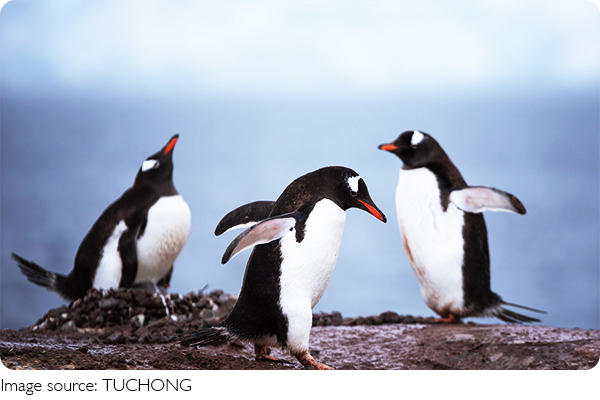
Penguins, these cute and interesting birds, live in the ice and snow of Antarctica.
They are not only loved by people for their unique gait and naive appearance but also praised for their tenacious survival abilities.
However, although penguins look very docile and harmless their social behavior and survival strategies are quite "dark."
1. "Darkness" in Breeding Strategy
The behavior of penguins during the breeding season can be regarded as a model of "darkness." Take Adélie penguins as an example. Male penguins will collect stones during nesting and use these stones to attract female penguins.
However, stones are not only materials for nesting but also important tools for courtship. To obtain more stones, male penguins often steal stones from other penguins. This "stone-stealing" behavior not only exposes the penguins' unscrupulous means in the competition for resources but also reflects their cunning and wit in the competition for courtship.
Despite similar vocal organs, monkeys can't talk like humans due to neural and cognitive differences.
Explore the world's ten most stunning birds, each showcasing nature's incredible beauty and diversity.
Is the Hoopoe Nature's Most Mysterious Bird?
Unveiling the Secrets of Nature's Stealthiest Predator – Incredible Leopard Facts Revealed!
Discover 8 Surprising Facts About Scotland's Majestic Red Deer That Will Blow Your Mind!
Do you know cats' eyes are nature's ingenuity?
In addition, penguins will also show a certain "calculation" when choosing a mate. Female penguins usually choose male penguins that can provide more stones or have stronger nesting abilities to ensure that their offspring can have a better living environment.
This "utilitarian" mate selection standard makes penguins full of competition and deception during reproduction.
2. Companions? No, It's Bait
No matter what kind of food they seek, penguins must jump into the cold seawater to find it. At this time, a group of mammals in the sea, primarily seals (there are 18 species of seals, 4 of which live in the Antarctic waters), are eyeing them.
The first penguin to jump into the water is most likely to be eaten. To avoid being the first to be eaten, penguins will push their companions into the water with their wings and only dive in collectively after confirming it is safe.
3. "Black-bellied" in Social Behavior
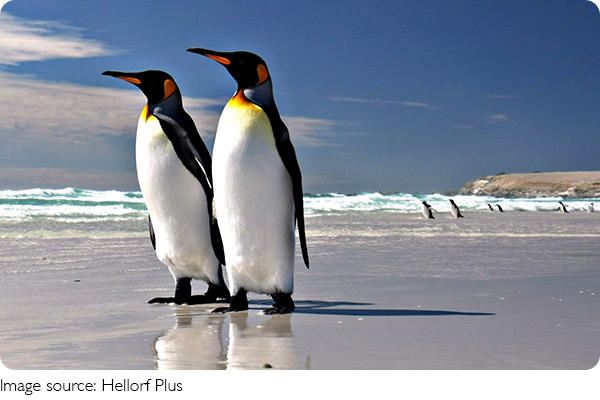
Penguin's social behavior is also full of "black-bellied" elements. They not only show competition and deception when foraging and breeding, but also exhibit scheming in daily social interactions.
Penguin groups usually gather together for warmth, but within these dense groups, the relationship between individuals is not always harmonious.
For example, in a group of Adélie penguins, individuals often clash over territory. Some penguins use threats and intimidation to occupy better positions, and some even attack secretly when their companions are not paying attention, forcing them to give up their positions.
This kind of "secretive" behavior is not uncommon in penguin groups, showing their "dark" nature in competition.
In addition, penguins also show a certain "hierarchy" within the group. Some strong penguins will maintain their status through various means, while weaker penguins are often excluded and bullied.
This hierarchy is not only reflected in foraging and reproduction but also daily social interactions, further highlighting the complexity and cunning of penguins in group life.
In Conclusion
Although penguins have won people's love with their cute appearance and unique lifestyle, their "dark" behavior in survival and competition cannot be ignored.
These "dark" behaviors are not only essential for their survival in the wild but also provide us with a more comprehensive understanding of these lovely birds.
In the world of penguins, kindness and cunning coexist. It is this complex nature that allows them to thrive on the Antarctic ice fields and become one of nature's great wonders.