Echoes in the Jungle

Arjun Mehta
31-07-2024
 · Animal Team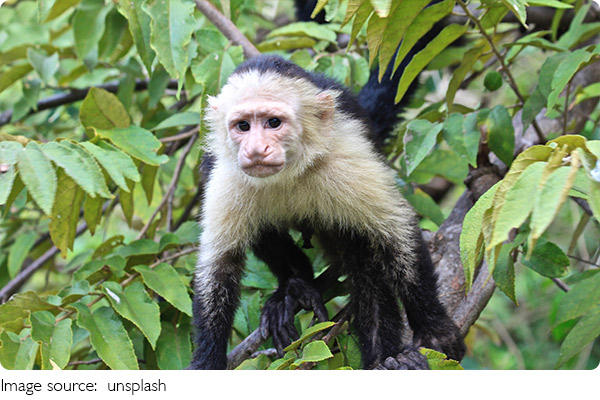
A fascinating question at the intersection of biology and linguistics is why monkeys cannot talk like us despite having vocal organs similar to humans.
Here, Lykkers, let's delve into anatomy and physiology cognitive science, evolutionary biology, and neuroscience.
1. Similarity of Vocal Organs
Anatomically, the vocal organs of monkeys and humans are remarkably similar. Both species possess a larynx (including vocal cords), pharynx, oral cavity, and nasal cavity.
These structures collaborate to produce sounds modulated by resonance in the oral and nasal cavities. Research indicates that there are minimal differences in the morphology and function of monkey and human vocal cords.
Monkeys, like humans, can produce a variety of sounds by adjusting the tension and vibration frequency of their vocal cords.
Explore the world's ten most stunning birds, each showcasing nature's incredible beauty and diversity.
Is the Hoopoe Nature's Most Mysterious Bird?
Unveiling the Secrets of Nature's Stealthiest Predator – Incredible Leopard Facts Revealed!
Discover 8 Surprising Facts About Scotland's Majestic Red Deer That Will Blow Your Mind!
Do you know cats' eyes are nature's ingenuity?
Goats' horizontal pupils provide panoramic vision and balance, crucial for their survival.
2. Neural Mechanism of Voice Control
Despite the anatomical similarities, the neural control mechanisms governing these vocal organs differ significantly between monkeys and humans. In humans, specific brain regions such as Broca's area and Wernicke's area in the cerebral cortex are pivotal for language production and comprehension.
These areas manage the fine motor movements of the mouth, larynx, and tongue through intricate neural networks, enabling the production of complex and meaningful speech.
In contrast, while monkeys have analogous brain structures, the development and functionality of these areas are significantly less advanced.
Monkeys' Broca's area and Wernicke's area are relatively smaller, and their neural networks lack the complexity found in humans. Consequently, monkeys cannot control their vocal organs with the same precision required to produce articulated speech.

3. Language Cognitive Ability
Language encompasses not just the production of sounds but also sophisticated cognitive abilities. Humans exhibit advanced cognitive functions, including abstract thinking, memory, learning, and symbolic understanding.
These capabilities allow us to create and comprehend complex grammatical structures and vocabulary, facilitating intricate communication and information exchange.
Although monkeys demonstrate considerable cognitive abilities, there remains a substantial gap compared to humans.
Research indicates that monkeys can understand some simple symbols and instructions and can even learn to use basic sign language or symbol systems to communicate with humans through training.
However, this form of communication is still rudimentary and cannot match the complexity of human language.
4. Evolutionary Biology Perspective
From an evolutionary biology standpoint, the emergence of human language is the result of a long and complex process. Approximately 6 million years ago, the common ancestors of humans and apes began to diverge.
Over time, the human brain increased in size, the nervous system became more complex, and cognitive abilities improved. These changes laid the physiological and cognitive groundwork for the development of language.
Conversely, the evolutionary trajectory of monkeys did not culminate in a similar outcome. Despite having similar vocal organs, monkeys lack the necessary neural and cognitive foundations to develop intricate language systems.
Thus, while monkeys and humans share many anatomical features, their differences in language capabilities are profound.
In summary, while monkeys and humans share similar vocal organs, differences in neural control and cognitive abilities prevent monkeys from speaking like humans.
Monkeys, despite their vocal similarities to humans, lack the necessary neural and cognitive framework to develop intricate language systems. The evolutionary pathways of these species have led to significant divergences in their communicative abilities.