The Longest Tail

Lucas Schneider
10-07-2024
 · Animal Team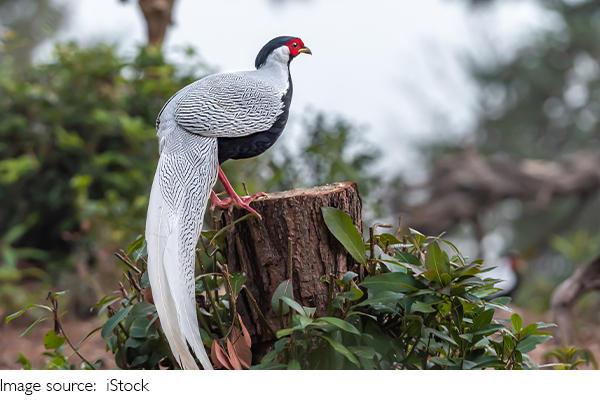
In the vibrant world of avian wonders, few species capture the imagination quite like the Ribbon-tailed Astrapia (Astrapia mayeri).
Native to the highlands of Papua New Guinea, this spectacular bird boasts the longest tail in the avian kingdom relative to its body size, making it a marvel of natural beauty and evolutionary adaptation.
Physical Description
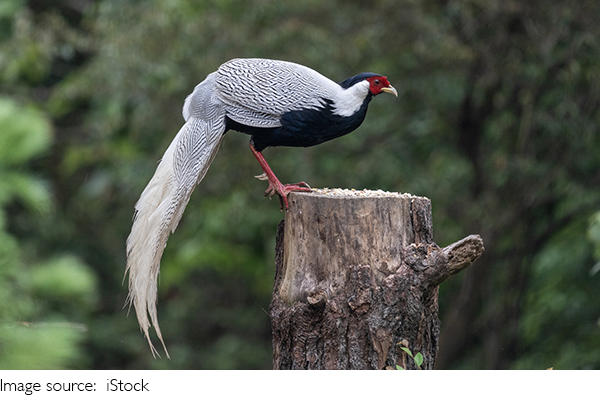
The Ribbon-tailed Astrapia is a medium-sized bird, measuring about 32 cm in body length, but its tail can extend to an astounding 1 meter. The male Astrapia's tail feathers are its most distinguishing feature: long, ribbon-like plumes that trail behind in an exquisite display of black and white. These tail feathers are not just long; they are exceptionally slender and flexible, fluttering gracefully with every movement. In contrast, the female's tail is considerably shorter and less ornate.
Who is the tallest of the flying birds? And how tall is it?
Giraffes: The Elegant Giants of the African Savanna
The largest animal on Earth, the blue whale: 90 kilograms gained in a day and a night.
Majestic deer thrive worldwide, embodying diversity and grace in varied habitats.
The morphological characteristics of yellow-billed storks.
Here's Everything You Need to Know About a Kangaroo's Pouch.
The male's iridescent black plumage is another striking aspect of its appearance, shimmering with hues of green and blue in the sunlight. Its head is adorned with a crown of short, stiff feathers that can be raised into a slight crest, adding to its regal appearance. The female, while less flamboyant, still possesses a subtle beauty with her more muted brown and black coloration, providing her with better camouflage in the dense forest underbrush.
Habitat and Behavior
Ribbon-tailed Astrapias inhabit the montane forests of Papua New Guinea, typically found at elevations between 1,800 and 3,400 meters. These high-altitude environments are characterized by cool temperatures and frequent mist, creating a unique ecosystem where these birds thrive. The dense canopy provides ample cover and a rich array of fruits and insects, which form the bulk of their diet.
The Ribbon-tailed Astrapia is known for its solitary nature outside the breeding season. Males are particularly territorial, often selecting prominent perches from which they display their impressive tails and emit a series of mechanical-sounding calls to attract females and ward off rivals. These displays are crucial during the breeding season, as females choose mates based on the length and condition of the males' tail feathers, a clear indicator of genetic fitness and overall health.
Reproduction and Lifespan
During the breeding season, which coincides with the region's wetter months, males perform elaborate courtship displays that are both visual and auditory spectacles. The display typically involves a combination of aerial maneuvers, tail feather fanning, and intricate calls. Once a female selects a mate, she will build a nest, usually a small cup of twigs and leaves, hidden among dense foliage.
After mating, the female is solely responsible for incubating the eggs and rearing the chicks. She lays one to two eggs per clutch, and the incubation period lasts about 18 to 20 days. Once hatched, the chicks are fed a diet rich in insects and fruits, which helps them grow rapidly in preparation for fledging.
Conservation Status
Despite their stunning appearance, Ribbon-tailed Astrapias face significant threats from habitat destruction and hunting. Deforestation for agricultural expansion and logging poses the most substantial risk, as it leads to habitat fragmentation and loss. Additionally, the birds are sometimes hunted for their remarkable tail feathers, which are highly prized in traditional ceremonial attire and adornments.
Conservation efforts are critical to ensuring the survival of this magnificent species. Protecting their natural habitats through the establishment of reserves and promoting sustainable land-use practices are essential strategies. Education and awareness campaigns can also help reduce hunting pressures by highlighting the ecological and intrinsic value of preserving these birds in the wild.
The Ribbon-tailed Astrapia, with its extraordinarily long tail and captivating beauty, stands as a testament to the wonders of evolution and the intricate dynamics of sexual selection. As the bird with the longest tail in the world, it not only fascinates ornithologists and bird watchers but also underscores the importance of conservation efforts to protect our planet's diverse and delicate ecosystems. Ensuring the survival of such species requires a concerted global effort, one that values and preserves the natural splendor of the world's avian treasures for generations to come.