Hybrid or Gas Engine

Chandan Singh
01-06-2026
 · Auto Team
Hybrid vehicles have moved firmly into the mainstream. The 2026 Toyota Prius leads compact hybrid sedans at 57 mpg combined. The Corolla Hybrid achieves 50 mpg.
The Civic Hybrid delivers 49 mpg while producing 200 horsepower. These are genuinely impressive numbers — and they do translate to real savings at the pump.
However, whether a hybrid makes financial sense compared to a gas-only alternative is a question worth doing the actual math on, not just assuming the answer.
How a Hybrid System Works
A hybrid combines a gasoline engine with one or more electric motors and a battery pack. The electric motor handles most of the workload at low speeds and in stop-and-go traffic, where an internal combustion engine is least efficient. The gasoline engine takes over at highway speeds and during harder acceleration.
Turbocharged engines promise more power from less displacement. They mostly deliver — but know what you're getting into.
Why does the road feel harsher than usual? Hidden car trouble may be closer than expected?!
The 2026 Honda Civic and Toyota Corolla are both solid buys — but they're built around completely different priorities.
Why does red just hit different?! These sports cars look perfect in one color!
Where is the car world heading next?! Big changes are reshaping everything on the road!
Why can one glance completely change a motorcycle turn?
The battery recharges through regenerative braking — a process that captures kinetic energy when slowing down and converts it back into electrical charge that would otherwise be wasted as heat.
This dual system is most effective in urban and mixed driving where speeds are lower and braking is frequent. Highway commuters see a smaller fuel economy benefit because the hybrid relies primarily on the gasoline engine at sustained high speeds, and the regenerative braking opportunities are fewer.
The EPA's combined rating is based on a mix of both driving types, so real-world highway performance tends to run a few miles per gallon below the official figure for a typical highway driver.
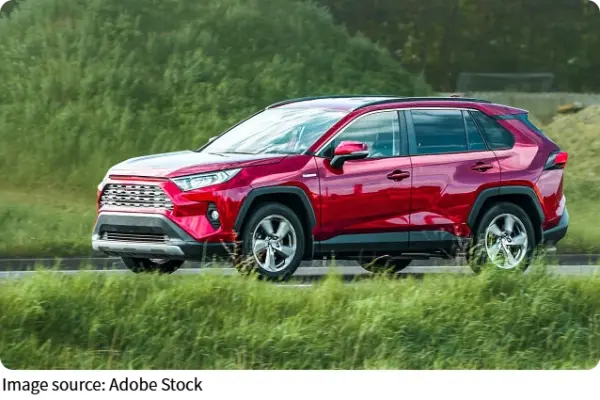
The Numbers on a Real-World Example
The 2026 Toyota Corolla Hybrid LE starts at around $25,970 — approximately $1,375 more than the gas Corolla LE at $24,595. The hybrid returns 50 mpg combined against the gas model's 34 mpg. At 15,000 miles annually with gas at $3.32 per gallon, the gas model costs roughly $1,434 per year to fuel while the hybrid costs about $975 — a difference of $459. At that rate, the hybrid's purchase premium is recovered in approximately three years.
Drive more miles, and the break-even point arrives sooner. Drive fewer miles, and it takes longer. Analysis makes clear that the math is straightforward, but the variables matter: annual mileage, gas prices, how long you keep the car, and whether the hybrid's higher resale value factors into the calculation.
The hybrids retain roughly 25–30% better resale value than comparable gasoline models — a meaningful benefit for buyers who trade vehicles every four to five years.
Beyond Fuel Economy: The Other Reasons
The efficiency advantage at the pump isn't the only consideration. Hybrid powertrains reduce tailpipe emissions by an estimated 30–50% compared to gasoline-only equivalents, which matters for buyers with environmental priorities. Electric motor assist at low speeds produces smoother, quieter acceleration and reduces cabin noise, particularly in city traffic.
Regenerative braking extends brake pad and rotor life, often meaningfully reducing service intervals and costs compared to conventional brake wear. Hybrid systems also restart the engine more seamlessly than conventional stop/start technology, which some drivers find noticeably more refined. These are practical benefits that compound over years of ownership, independent of the fuel savings calculation.
The Cases for Gas
Gas-powered engines remain the more practical choice for specific buyer profiles. A driver covering 6,000–7,000 miles annually in primarily highway conditions captures little of the hybrid's urban efficiency advantage, extending the break-even period significantly. The upfront cost difference is real and immediate; the fuel savings are distributed across years of ownership.
Gas engines are also simpler mechanically, with fewer electronic components and no high-voltage battery system. Hybrids scored 213 problems per 100 vehicles compared to 198 for ICE-only cars — though the hybrid score improved by 14 points from the prior year, while gas cars dropped by two, suggesting the gap is narrowing.
For buyers who prioritize simplicity, lower initial cost, and plan to drive moderate mileage, a well-chosen gasoline sedan still represents a very strong value.

So where does that leave the average car buyer? If you drive more than 12,000 miles annually, spend significant time in city traffic, or plan to keep the car for five-plus years, the hybrid’s higher upfront cost pays back through fuel savings and stronger resale value.
If your driving is mostly highway, annual mileage is low, or you prefer simpler mechanicals, a gas engine remains a smart, economical choice. Run your own numbers using local gas prices and driving habits — the right answer depends entirely on your specific situation, not the hype.