Small Engine, Big Power

Pankaj Singh
01-06-2026
 · Auto Team
Driven by emissions rules and demand for efficient yet responsive performance, automakers are rapidly adding turbochargers to mainstream sedans.
A 2.0-liter turbocharged four-cylinder producing 250 horsepower was a performance car headline a decade ago.
Today, it's a fairly routine spec for a family sedan. Understanding how turbocharging actually works — and where the genuine trade-offs lie — is worth doing before it influences a purchasing decision.

How a Turbocharger Actually Works
A naturally aspirated engine relies entirely on atmospheric pressure to draw air into the cylinders. The amount of air available limits how much fuel can be burned per cycle, which limits power output. A turbocharger bypasses this ceiling by using exhaust gases — energy that would otherwise exit the tailpipe as waste — to spin a turbine that drives a compressor, forcing additional air into the combustion chamber under pressure.
Why does the road feel harsher than usual? Hidden car trouble may be closer than expected?!
The 2026 Honda Civic and Toyota Corolla are both solid buys — but they're built around completely different priorities.
Why does red just hit different?! These sports cars look perfect in one color!
Where is the car world heading next?! Big changes are reshaping everything on the road!
Why can one glance completely change a motorcycle turn?
Half tank rule or brim fill-up? One choice may shape fuel stops more than expected!
More air means more fuel can be burned per cycle, increasing power output from an engine that's physically smaller than a naturally aspirated alternative producing the same numbers.
This is why a 1.5-liter turbocharged engine can realistically replace a 2.5-liter naturally aspirated one in a sedan without a noticeable performance deficit. The smaller engine's lower displacement reduces friction and pumping losses during steady-state cruising, which is where the fuel economy advantage shows up.
On the highway, the EPA reports that a 2.0-liter turbo sedan can return 32–34 MPG compared to 30–31 MPG for an equivalent naturally aspirated V6.
The Real Benefits in Everyday Driving
Turbochargers deliver noticeable torque at relatively low engine speeds, which translates to confident acceleration when merging onto highways or passing. A daily commuter driving a 1.4-liter turbocharged sedan can typically expect responsive highway performance while averaging around 36 MPG, conservatively driven — a combination that naturally aspirated engines of similar size struggle to match.
Emissions compliance is another genuine benefit. Smaller turbo engines produce 20–30% fewer CO2 emissions than larger-displacement naturally aspirated engines delivering similar power output, which is exactly why manufacturers have pushed toward them under CAFE standards and EU regulations.
Variable geometry turbochargers, which adjust the angle of turbine vanes to optimize performance across different engine speeds, have become increasingly common as they provide consistent power delivery without the traditional all-or-nothing boost characteristics.
Where the Trade-Offs Live
Turbo lag — the brief hesitation before full boost pressure builds — was a significant issue in older systems and remains a characteristic of some designs, particularly at low RPM when exhaust flow is insufficient to spin the turbine quickly.
Twin-scroll designs and electric turbocharger assist (which uses an electric motor to spool the turbine instantly at low speeds) have substantially reduced this in modern systems, but it hasn't disappeared entirely across the board.
The more significant trade-off for many buyers is complexity and maintenance cost. More moving parts — turbines, intercoolers, additional piping, boost control solenoids — mean more potential failure points. Turbocharged engines require consistent, timely oil changes because the turbo bearings rely on clean oil for lubrication at very high temperatures.
Neglecting oil intervals is the most common cause of premature turbo failure. Turbocharged models typically carry a $1,000–$3,000 premium over equivalent naturally aspirated versions, though incentives can narrow that gap.
The Reliability Question
An uptick in engine-related failures correlates with the broader shift to turbocharged inline-fours. The concern was whether the increased thermal and mechanical stress would shorten engine longevity.
A decade later, the verdict is more nuanced: turbocharged engines are inherently somewhat more complex than naturally aspirated alternatives, but the vast majority of drivers will never put enough miles on a vehicle to notice a meaningful reliability difference — provided basic maintenance is followed.
High-mileage diesel truck engines with turbochargers regularly exceed a million miles, though that application differs significantly from a compact sedan.
For buyers who understand basic maintenance and plan to own the vehicle long-term, a modern turbocharged sedan is a rational and enjoyable choice. For buyers who prefer minimal maintenance engagement and maximum simplicity, a naturally aspirated engine — where they still exist — remains the more forgiving option.
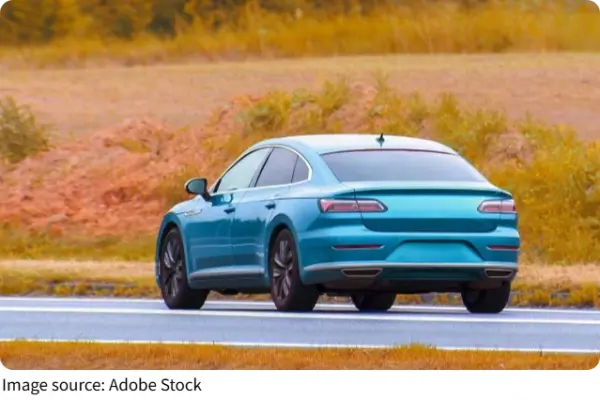
In short, turbocharging offers a compelling balance of smaller-engine efficiency and larger-engine power for most daily driving. The real-world fuel savings and lower emissions are genuine, while turbo lag has largely been tamed. The trade-offs are predictable: higher upfront cost, more complexity, and a stricter need for timely oil changes.
For the average sedan buyer who follows basic maintenance, a modern turbo engine is a reliable, enjoyable choice. Only those who prioritize maximum simplicity and minimal long-term involvement should seek out the shrinking number of naturally aspirated alternatives.