Real Grass Energy!

Chandan Singh
01-06-2026
 · Lifestyle Team
Hi, Lykkers!, when was the last time you watched children run barefoot across real grass without worrying about schedules, screens, or indoor distractions? There is something timeless about an open green space.
The moment children step onto a grassy field, their energy changes. They sprint farther, laugh louder, and seem naturally drawn into movement and exploration.
In many modern neighborhoods, outdoor play is shrinking. Busy routines, apartment living, artificial surfaces, and endless digital entertainment often keep children indoors for long hours. Yet research in child development, physical health, and psychology continues to show that outdoor activity—especially on natural green spaces—offers benefits that indoor environments simply cannot fully replace.
Droopy stems and brown tips? One watering mistake changes everything!
Guiding Playful Kids: How to Help Children Balance Play and Responsibility
How emotional patterns in a supportive home can still shape inner confusion later in life
Why do family visits make people feel younger again?
How Can Wabi-Sabi Interior Design Create Calm, Natural, and Peaceful Living Spaces?
How Small Everyday Moments Can Strengthen Emotional Connection Within Families
1. Green Spaces Naturally Reduce Stress
One of the most immediate effects of grassy outdoor areas is their calming influence. Studies in environmental psychology have repeatedly found that exposure to natural green environments helps lower stress levels and improve mood in both children and adults.
Even small patches of grass can create a sense of relaxation compared to crowded indoor spaces or concrete surroundings. Children often experience sensory overload from noise, schedules, and screen exposure. Grass provides a softer, quieter environment where the brain can slow down.
Sitting on a lawn reading books, having a picnic, or simply lying under the sky allows children to mentally reset without realizing it. Parents frequently notice behavioral changes after outdoor time as well. Children tend to become less restless, more cooperative, and emotionally calmer after active play in green spaces.
2. Open Grass Encourages Natural Movement
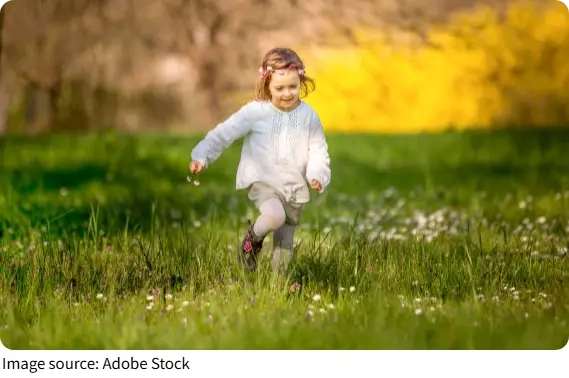
Large grassy areas invite movement almost automatically. Unlike indoor environments filled with furniture, walls, and restrictions, open fields give children freedom to run, jump, roll, and explore without constant interruption. Many children instinctively sprint the moment they see a wide lawn because open space activates curiosity and physical energy.
This kind of unstructured movement is extremely important for developing coordination, balance, agility, and cardiovascular health. Running across uneven grass surfaces also strengthens stabilizing muscles that are not challenged as much on perfectly flat indoor floors.
Health organizations consistently recommend daily physical activity for children because movement supports healthy growth, better sleep quality, emotional balance, and overall fitness. Outdoor grassy play makes exercise feel natural instead of forced. Children rarely think of chasing a soccer ball or doing cartwheels as “exercise,” but their bodies receive enormous benefits from those simple activities.
3. Grass Play Benefits Everyone Too
The benefits of grassy outdoor spaces are not limited to children. People of all ages tend to relax more easily in natural environments. Family games, casual sports, or even sitting outdoors together can improve mood and reduce mental fatigue. Activities like tossing a frisbee, playing catch, or setting up lawn games encourage connection in ways that screens often interrupt.
Researchers studying green environments have found that spending time outdoors may reduce stress hormones and improve attention restoration. In practical terms, families often communicate better and feel more present when sharing outdoor experiences. Even simple traditions—such as weekend picnics, backyard camping, or evening soccer practice—can become lasting childhood memories tied to these natural spaces.
4. Grass Inspires Creativity and Imagination
One of the most overlooked advantages of outdoor grassy play is creativity. Children do not always need expensive equipment or organized entertainment. In fact, open-ended environments often encourage stronger imagination because there are fewer instructions controlling how play should happen.
A grassy yard can become almost anything in a child’s mind:
- A soccer stadium.
- A jungle expedition.
- A gymnastics arena.
- A camping site.
- A treasure hunt.
Without rigid structures directing every activity, children invent games, create rules, solve conflicts, and experiment socially. Development experts consider this type of imaginative free play essential for cognitive growth and emotional flexibility. When children create their own activities, they practice decision-making, cooperation, storytelling, and problem-solving naturally.
5. Real Grass Supports Athletic Development
For children involved in sports, grassy outdoor play offers another major advantage: repetition through fun. Young athletes improve through constant movement and repeated physical contact with the ball, object, or activity related to their sport. Soccer players improve foot control through extra touches. Football players strengthen coordination through casual throwing and catching. Gymnastics-inspired movements like rolling or balancing also become easier on softer grassy surfaces.
Importantly, informal practice often feels less stressful than organized training sessions. Children develop skills while enjoying themselves rather than focusing entirely on performance. This relaxed repetition builds confidence and physical familiarity over time. The American Psychological Association (APA) explicitly states that child-led, unstructured play and informal games are vital for reducing anxiety and stress in children.
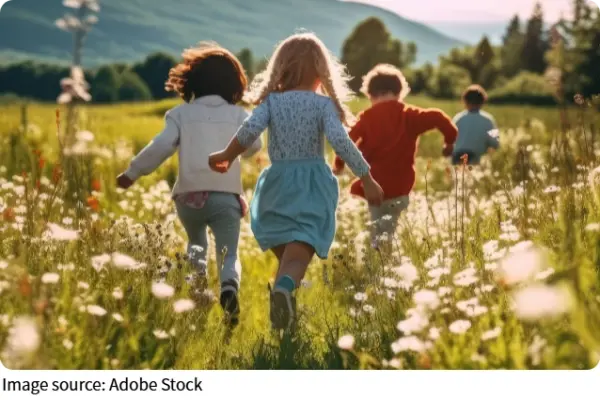
Lykkers, real grass may seem ordinary, but for children it becomes a powerful space for growth. Every sprint across a field, every homemade game, and every afternoon spent outdoors contributes to healthier bodies, stronger social skills, and more confident minds.