More Than Just Play

Declan Kennedy
21-08-2026
 · Information Team
Childhood is often associated with laughter, movement, and imagination, but beneath these joyful experiences lies an essential developmental process shaped by play.
Far beyond entertainment, play serves as a natural mechanism that supports emotional well-being, cognitive growth, and social understanding. Modern child psychology recognizes play as a foundational element in promoting resilience, healthy emotional expression, and overall mental development during childhood.
Play as a Natural Emotional Regulator
Play provides children with a safe and supportive environment in which emotions can be expressed without pressure or judgment. Through imaginative scenarios, role-playing activities, and group interaction, children are able to explore and process emotional experiences in symbolic ways. This process can help release internal tension in a constructive and manageable manner.
Height myth or fact?! What exercise actually does for body growth potential!
Simple daily habits that support lasting freshness and help maintain a clean, comfortable mouth throughout the day
How Regular Time in Nature Supports Mobility, Emotional Well-Being, Cognitive Health, and Social Connection in Later Life
The Hidden Financial Strategy Behind Freedom, Time, and Happiness!
Enhancing Mental Health, Focus, and Emotional Well-Being Through Simple Physical Activity
Simple daily routines to keep your cat active, curious, and mentally sharp
Dramatic play, such as pretending to be a teacher, parent, or doctor, allows children to work through everyday situations and unfamiliar emotions. Recreating social experiences through storytelling or toys can help children better understand feelings such as excitement, uncertainty, or frustration. Over time, these experiences may contribute to improved emotional regulation and reduced stress responses.
“Play gives them a way to express things they are struggling with that they don’t yet have the words to fully explain.” — UNICEF.
This idea reflects how play can help children communicate emotions and experiences that may be difficult to express verbally, particularly during early developmental stages.
Strengthening Cognitive Flexibility and Problem-Solving Skills
Play naturally encourages creativity, adaptability, and flexible thinking. Activities involving building, sorting, organizing, or strategic decision-making help strengthen planning and reasoning abilities.
Puzzle games, construction activities, and imaginative challenges also improve attention control and logical sequencing. Unlike rigid academic tasks, play-based learning encourages experimentation and trial-and-error without fear of failure. This supportive environment helps develop mental agility, an important skill for adapting to new challenges throughout life.

Social Development Through Interactive Play
Group play creates opportunities for communication, cooperation, and negotiation. These interactions help children understand shared rules, social expectations, and appropriate boundaries.
Activities involving turn-taking and teamwork encourage patience, empathy, and perspective-taking. Even disagreements during play can become valuable learning experiences by teaching conflict resolution and emotional control in a safe setting. These early social experiences often influence how relationships are managed later in life.
Reducing Stress and Supporting Emotional Balance
Engagement in playful activities has been associated with reduced emotional strain and improved mood regulation. Physical games, imaginative storytelling, and creative expression can help redirect attention away from stress and negative emotions.
During play, children often experience focused engagement that supports relaxation and emotional recovery. Consistent exposure to positive play environments may contribute to greater emotional stability, particularly during periods of change, adjustment, or uncertainty.
Building Confidence Through Achievement and Exploration
Play provides repeated opportunities for achievement without the pressure of perfection. Completing a puzzle, learning the rules of a game, or successfully building a structure reinforces a sense of accomplishment.
These small successes gradually strengthen self-confidence and encourage children to approach new experiences with curiosity rather than fear. Exploration-based play also promotes independent thinking and resilience by helping children view mistakes as part of the learning process.
Types of Play That Support Mental Growth
Different forms of play contribute to various aspects of psychological development:
- Imaginative play encourages creativity and emotional expression
- Constructive play strengthens problem-solving and planning skills
- Physical play supports coordination, movement, and emotional release
- Social play develops communication, cooperation, and interpersonal understanding
Together, these forms of play create a balanced foundation for healthy mental and emotional development.
The Role of Routine and Environment in Play
Consistent opportunities for play help reinforce emotional security and healthy development. Safe, supportive, and stimulating environments encourage children to explore freely and confidently.
Simple materials such as blocks, drawing tools, puzzles, or household objects can provide meaningful experiences without the need for expensive equipment. In many cases, the quality of interaction and freedom of creativity are more important than the complexity of the activity itself.
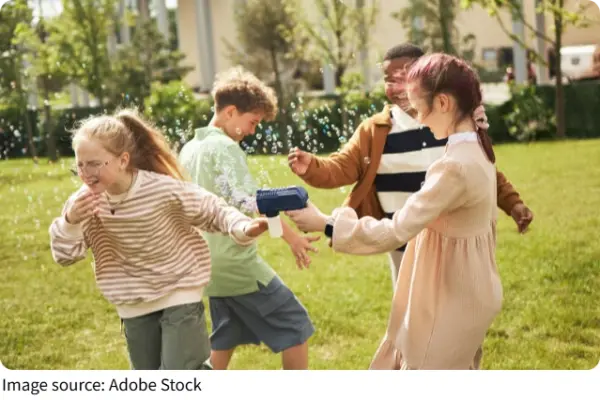
Play is far more than a recreational activity; it is a vital part of healthy childhood development. Through imaginative, physical, and social experiences, children learn to regulate emotions, solve problems, build relationships, and develop confidence. Encouraging regular, meaningful play can support stronger emotional resilience, cognitive flexibility, and overall well-being throughout childhood and beyond.