Fantail Daily Life

Samir
24-03-2026
 · Animal Team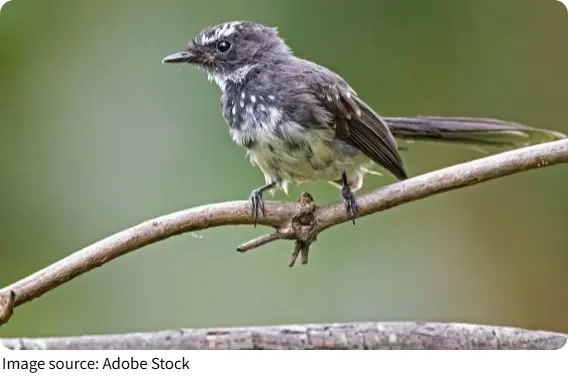
Have we ever noticed a tiny bird fluttering around us, almost like it is curious about our every move? That little companion could be the New Zealand Fantail. Known for its eye-catching tail that spreads like a delicate fan, this bird is small in size but full of personality.
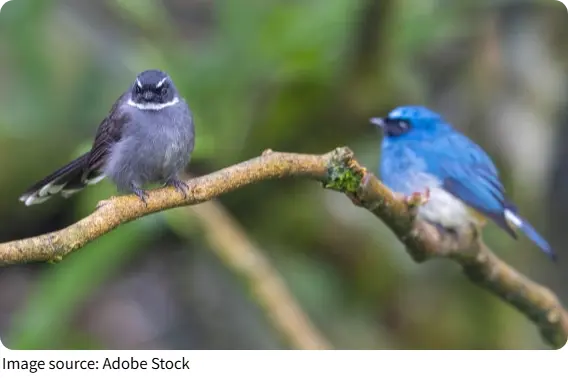
Fantails are found across regions like New Zealand, Australia, and parts of Southeast Asia. However, the species in New Zealand is unique enough to have its own identity. Locally, it is called “Pīwakawaka,” a name that reflects its cultural importance. Among the many types of fantails worldwide, this gray-toned variety stands out for its soft color and friendly behavior.
A Tail That Tells a Story
One of the first things we notice about the fantail is its tail. When fully spread, it forms a neat semicircle, almost like a handheld fan. The feathers are usually dark in the center, fading into lighter shades along the edges, creating a soft contrast that is both simple and elegant.
Watch the Black-Winged Kite Hover Like a Living Arrow—A Sky Masterpiece That Reveals Nature’s Ultimate Precision!
The Science and Magic Behind Nature’s Glowing Signals
How Tiny Dancers Share Maps, Messages, and Survival Strategies
Discover how having a pet can improve your life, even as a single person.
Discover the surprising ways pets can help you sleep better at night.
Amazing Traits of One of North America’s Most Adaptable Raptors
Even more interesting, the tail is not just for show. It is lightweight and flexible, helping the bird stay balanced while flying. When we watch closely, we can see the tail constantly opening and closing, especially during flight. This movement is not random—it helps the bird change direction quickly as it chases insects in the air.
Daily Life and Feeding Habits
Let’s take a closer look at how these birds live. Fantails mainly feed on small insects. They are always on the move, jumping between branches, hovering mid-air, or even darting close to the ground.
Their body colors are also worth noticing. The back is usually dark gray or brown, while the belly often shows hints of yellow or orange. Around the neck, we might spot small patches of white, adding a gentle contrast to their overall look.
What makes them especially fun to observe is their energy. From morning until evening, they rarely stay still. We might even feel like they are following us—and in a way, they are. When we walk, we disturb insects, making them easier for the fantail to catch. So, their “friendly” behavior is actually a smart survival strategy.
A Unique Bond with Humans
Have we ever had a bird come so close that it feels almost intentional? Fantails are known for this behavior. They are not afraid of people and often appear in gardens, parks, and even near homes.
In fact, their presence around us is quite practical. Human activity helps stir up insects, which becomes an easy meal for them. This creates a natural connection between us and the bird, even though it is not a pet.
In local traditions, the Pīwakawaka holds a deeper meaning. It is sometimes seen as a messenger, carrying important signals. While its constant chirping might sound simple to us, it has long been part of stories passed down through generations.
Breeding and Family Life
When it comes to raising the next generation, fantails are hardworking and cooperative. They usually breed twice a year. Both partners work together to build a nest, often placing it securely between tree branches.
The nest itself is small but carefully crafted. It is made from moss, bark, plant fibers, and even spider silk, forming a neat cup shape that keeps the eggs safe.
Each time, the female lays around three to four eggs. After about two weeks, the chicks hatch. From that point on, both parents share the responsibility of feeding and protecting their young. Watching this teamwork reminds us how strong cooperation can be, even in the natural world.
Protection and What We Can Do
Thanks to their strong breeding ability, fantails are still common in New Zealand today. They are not considered rare, but that does not mean they are free from challenges. Changes in the environment, loss of natural spaces, and other factors can still affect their numbers over time.
So what can we do? Even small actions matter. We can protect green spaces, avoid disturbing nests, and create environments where insects—and therefore birds—can thrive.
Next time we step outside and see a tiny bird dancing through the air, let’s take a moment to appreciate it. Lykkers, have we ever had a fantail follow us on a walk? Maybe it was not just coincidence, but a small glimpse into the clever and lively world of nature.