Hovering Sky Hunter

Elise
24-03-2026
 · Animal Team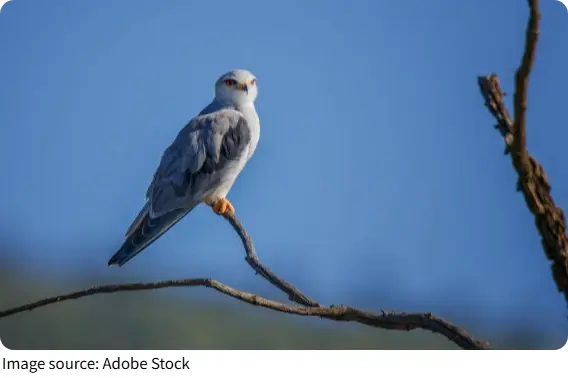
Imagine standing in a quiet wetland on a warm afternoon. There, suspended in midair, is the black-winged kite. Its black-and-white wings stretch out like a painting brought to life, motionless as time seems to stop. That piercing red gaze locks on a single spot on the ground. One second. Two seconds. Three. Over a minute passes, and still it hovers, seemingly frozen.
We might think magic is at play—but this is pure skill. The black-winged kite’s ability to hover is a rare trait among raptors. Behind that calm stillness lies an intense battle against gravity, wind, and physics itself.
The Mechanics of Hovering
Every second, its wings beat multiple times, a blur to the human eye. Its tail feathers fan out like a finely tuned rudder, controlling its aerial balance. Each tiny adjustment is precise to the millimeter. It fights against gravity, stabilizes air currents, and maintains elegance right at the edge of stalling.
The Science and Magic Behind Nature’s Glowing Signals
How Tiny Dancers Share Maps, Messages, and Survival Strategies
Discover how having a pet can improve your life, even as a single person.
Discover the surprising ways pets can help you sleep better at night.
Amazing Traits of One of North America’s Most Adaptable Raptors
You Won’t Believe How a Keel-billed Toucan’s Calls Can Transform Your Day and Reveal Nature’s Hidden Secrets!
As we watch from tens of meters away, all we see is a masterful hunter, poised between earth and sky, a living painting in motion. Behind that grace, however, is an incredibly expensive energy cost. Hovering is not for show—it is a tactical move used only when necessary. And there’s one reason it’s willing to pay this price: prey has appeared.
Hunting With Red Eyes
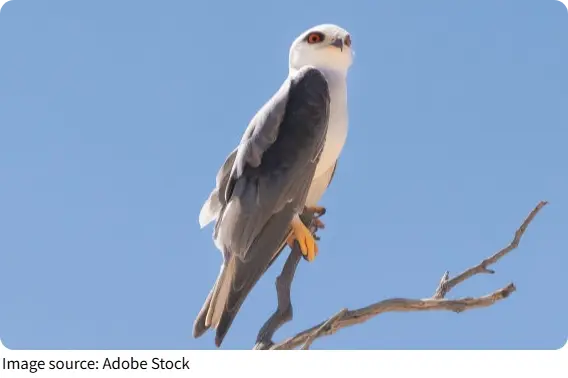
Below, a mouse scurries through the grass, unaware that a red-eyed radar above scans every twitch of its fur. The kite’s red iris, framed with bold black markings, is not for decoration—it filters stray light and allows it to see tiny details from hundreds of meters up. Juveniles have pale yellow eyes, but as they mature, the color deepens to crimson, sharpening their vision for the hunt.
The moment comes. Wings fold, transforming the hovering “spirit of the sky” into a missile-like arrow. Half a meter from the prey, the kite spreads its wings just slightly and strikes with claws designed for precision killing. No hesitation, no wasted motion—this is pure instinct written into its DNA.
Silent Devotion During Breeding
If we think of the kite as only a killer, we miss a deeper story. During breeding season, male kites no longer hover alone. With a struggling mouse in its talons, it returns to its nest in a secluded area. The nest is simple—twigs, grasses, a few leaves—but it shelters three eggs.
The female waits patiently, silent and still. There is no courtship chatter. He delivers food, she takes it, tearing it apart and swallowing. This is the ultimate promise in raptor life: hunting for life, and hatching eggs in return. During the 25–28 day incubation, the male travels back and forth dozens of times a day, pausing briefly to rest before resuming the journey.
Silent Loyalty in Action
The kite grows tired and hungry like any creature—but it never returns empty-handed. This is a quiet fidelity, not a fairytale romance, but a simple truth: once bonded, the pair stops counting gains and losses. Their devotion is a testament to the strength of survival and trust.
Today, spotting this scene takes luck. Black-winged kites are a nationally protected species. They do not avoid humans out of pride—they are driven away by habitat loss. Open sparse woodlands, wetlands, and farm edges are their preference, yet these areas often overlap with human development.
Signs of Hope
Fortunately, change is happening. In several wetlands, kites have been recorded nesting repeatedly, showing signs of stable populations.
Kites are honest. They vote with their wings. Their presence indicates whether a wetland is suitable for life, more accurately than any environmental report. When a black-winged kite chooses to hover in a patch of sky, it is the ultimate ecological seal of approval.
Beyond Skill: The Heart of the Kite
We often marvel at its abilities. Hovering looks incredible, diving is thrilling, and those red eyes could be straight from a sci-fi movie. But if we have the chance to observe one in the wild—even through binoculars—we realize what truly captivates is not skill but seriousness toward life.
When hovering, its eyes only see prey. During incubation, they see only their partner. While raising young, every wingbeat calculates wind direction for the chicks. It never performs for humans—it simply lives, precisely, and measures whether this land is still worth calling home.
A Call to Reflection
Next time we spot that small, frozen dot in the sky above a wetland, let’s not just admire the skill. Remember that its choice to hover here shows it hasn’t completely given up on humans. We should ask ourselves—are we worthy of this trust?
The wind passes through its fanned tail. It waits. And so should we.