The Survival of Guanacos

Chris Isidore
26-03-2024
 · Animal Team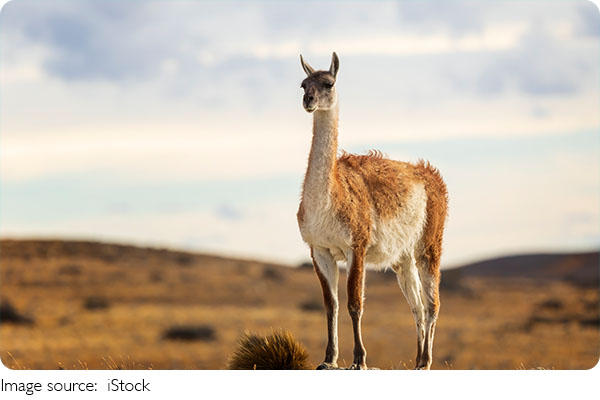
The guanaco, a herbivorous mammal belonging to the Camelidae family within the order Artiodactyla, once thrived on the South American continent with an estimated population of around 50 million individuals.
Today, this number has drastically declined to 500,000. Fortunately, in the southern regions of Chile, the guanaco population is showing signs of growth.
Beginning their day beneath the snowy peaks of the Andes, herds of guanacos, consisting of up to 30 individuals, graze on grass, leading a communal lifestyle. They can also be found in the windswept Pampas grasslands at altitudes exceeding 4000 meters.
As the sun sets, guanacos become especially alert, as it marks the most dangerous time of the day when pumas prefer to hunt under dim light. However, the greatest threat to their survival is human activity. Historically, the Spanish nearly drove them to extinction for pasture resources, while today, unintentional forest fires caused by tourists pose a significant risk, especially in national parks.
Bearded Reedlings: Guardians of Wetlands, Vital for Ecosystem Balance.
Genetic analysis reveals how cat domestication shaped their behavior and physiology.
Amid rural splendor, the elegant Cattle Egret harmonizes with cattle, embodying a unique symbiosis, urging exploration.
Koalas: Not bears but marsupials, they're Australia's iconic sleepyheads with a surprising secret life.
Celebrate cats' birthdays to cherish, bond, and enrich both their lives and ours.
Brown bears, solitary yet occasionally social, raise their cubs with care in North America's wilderness, a captivating mystery.
Newborn guanacos join their herds within hours of birth, receiving protection for about a year before young males are driven out to fend for themselves. Despite their ability to leap tirelessly, fences pose a severe threat to guanacos, both physically harming them and dividing herds.
Dust baths are a daily ritual for guanacos, providing grooming, itch relief, and parasite removal. Despite their comical appearance to humans with their long necks, fluffy coats, and pointed ears, these features are evolutionary adaptations that aid their survival. Their height helps them spot predators like pumas, while their thick fur protects them from the harsh winds of Patagonia.
Curious, a guanaco leaps into the air, discovering a hidden photographer in the valley. Although reminiscent of gazelles, guanacos are not related to them but belong to the camel family.
A male guanaco stands proudly on the golden slopes of the Andes, overlooking its domain. Departing herds form smaller groups, while some venture alone into the wilderness.
Feeding primarily on grasses but also enjoying leaves, young trees, mushrooms, and lichens, guanacos can survive for days without water.
Outside human interference, guanacos face their greatest enemy in the puma, adept at twilight or nocturnal attacks, swiftly severing their prey's neck.
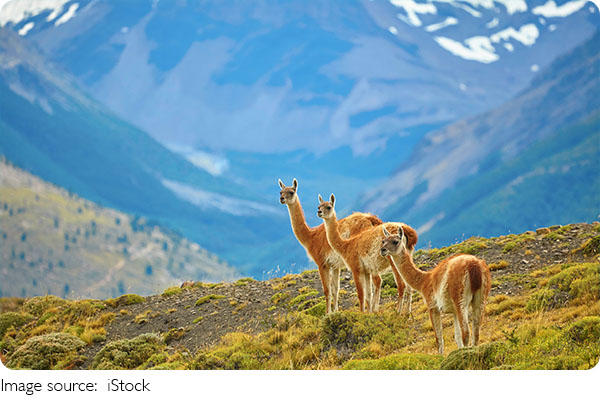
The guanaco, once abundant across South America, now faces challenges to its survival. Human activities, forest fires, and predator threats have made their environment increasingly hostile. Yet, resiliently, they adapt and persist, striving amidst the changing world.
Through human efforts and attention, may these precious species continue to thrive, bringing vitality to the South American landscape. Let us unite to safeguard wildlife and preserve the Earth's splendor for generations.