Guardians of the Reeds
Nolan O'Connor
26-03-2024
 · Animal Team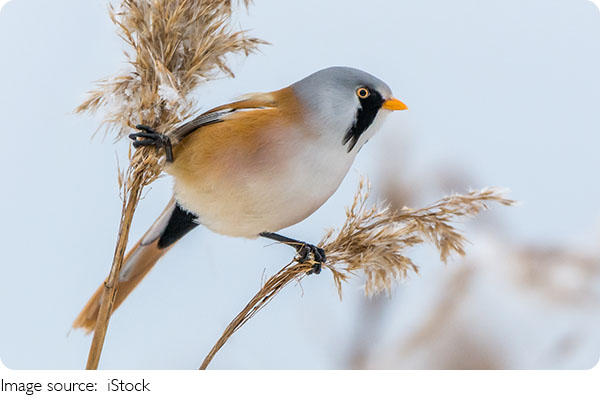
In the serene ambiance of the wetland, a flock of finches gracefully hop and dart amidst the reeds.
Their distinctive features and lifestyle render them unique custodians within the wetland ecosystem.
The Bearded Reedling, a diminutive avian resident of wetlands spanning Europe, Asia, and North Africa, assumes the gatekeeper role owing to its distinctive elongated beard and specialized ecological niche.
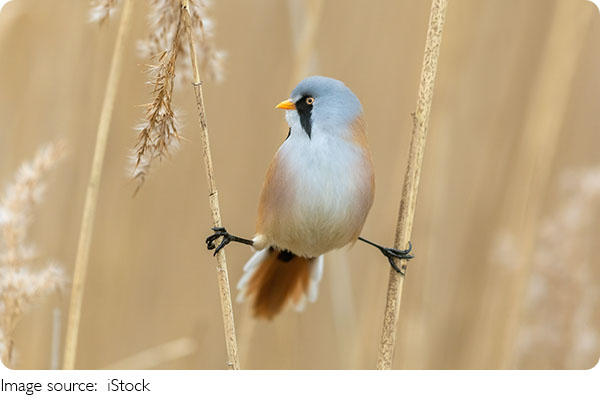
The appearance of the Bearded Reedling is strikingly captivating. Measuring approximately 12 centimeters, they are relatively diminutive yet possess an extraordinarily exaggerated feature—their lengthy "beard," from which they derive their name.
These "whiskers" consist of specialized feathers positioned between the jaws of both males and females, bestowing a markedly distinct appearance upon them. Additionally, their bodies predominantly exhibit hues of orange and gray, ensuring adept camouflage within the reeds, thereby confounding detection.
Genetic analysis reveals how cat domestication shaped their behavior and physiology.
Amid rural splendor, the elegant Cattle Egret harmonizes with cattle, embodying a unique symbiosis, urging exploration.
Koalas: Not bears but marsupials, they're Australia's iconic sleepyheads with a surprising secret life.
Celebrate cats' birthdays to cherish, bond, and enrich both their lives and ours.
Brown bears, solitary yet occasionally social, raise their cubs with care in North America's wilderness, a captivating mystery.
Respectful care fosters affection; understanding cats enhances human-feline bonds effectively.
Bearded Reedlings predominantly inhabit reedbeds, constituting their primary habitat. Within these reedbeds, they find abundant food sources and secure nesting sites.
Their diet predominantly comprises insects, spiders, small invertebrates, and reed seeds, with adept foraging capabilities within the dense reeds. Furthermore, apart from serving as a source of sustenance, the reedbeds afford these finches ample cover, facilitating evasion from potential predators.
However, Bearded Reedlings transcend the realm of mere avian inhabitants of wetlands; they fulfill pivotal ecological roles, meriting the designation of gatekeepers of wetlands.
Primarily, they serve as crucial seed dispersers within reedbeds. Their foraging behavior involves the consumption of reed seeds, subsequently excreting them at varied locations, thereby facilitating reed propagation and growth.
This behavior underpins the stability and rejuvenation of wetland vegetation, which is essential for the well-being of wetland ecosystems.
Additionally, Bearded Reedlings assume the mantle of omnivorous predators within reedbeds. They prey upon assorted insects and other small invertebrates within their habitat.
By regulating the population dynamics of these organisms, Bearded Reedlings effectively modulate the ecological equilibrium within wetlands, mitigating the proliferation of potential pests and safeguarding the proliferation of reeds and other flora.
Furthermore, Bearded Reedlings serve as sentinel species within wetland ecosystems. Possessing a heightened adaptability to wetland environments, they exhibit sensitivity to fluctuations in water quality, vegetation, and habitat conditions.
Consequently, fluctuations in the population and behavior of Bearded Reedlings often serve as reliable indicators of the overall health and integrity of wetland ecosystems, furnishing crucial insights for wetland conservation and management endeavors.
However, despite their pivotal ecological roles, Bearded Reedlings confront various threats imperiling their existence. Wetland degradation, pollution, habitat loss, and anthropogenic activities collectively pose formidable challenges to the survival of these avian denizens.
Hence, safeguarding the habitats of Bearded Reedlings, curtailing human-induced disturbances within wetlands, and fortifying measures for the conservation and management of wetland ecosystems emerge as imperative initiatives for protecting Bearded Reedlings and the ecosystems they inhabit.
In summary, Bearded Reedlings, as wetland ecosystems' custodians, captivate attention for their unique attributes and behaviors and their indispensable ecological contributions within wetlands.
Bearded Reedlings play an irreplaceable role in upholding wetland ecosystems' environmental balance and stability as seed dispersers, omnivorous predators, and ecological sentinels within reedbeds.
Hence, prioritizing the conservation and management of Bearded Reedlings and their habitats is paramount in ensuring the vitality and resilience of wetland ecosystems.