Indian Gaur Facts
Nolan O'Connor
29-10-2024
 · Animal Team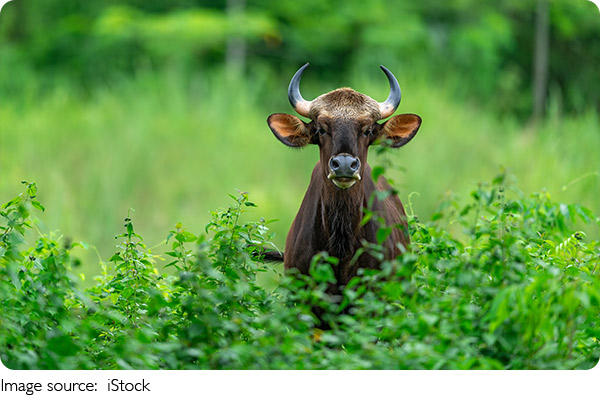
Dear Lykkers! Roaming through the dense forests and grasslands of India, the Indian Gaur, also known as the Indian Buffalo, stands as one of the most majestic and awe-inspiring creatures you'll encounter in the wild.
Standing tall as the world's largest wild bovine species, the Indian Gaur is both a breathtaking sight and a vital component of India's diverse ecosystem. Let's dive deeper into what makes the Indian Gaur truly unique.
What is the Indian Gaur?
Native to South and Southeast Asia, the Indian Gaur (*Bos gaurus*) is an endangered wild species renowned for its impressive size and strength. Standing up to 7 feet tall and weighing over 2,200 pounds, the Gaur is truly a giant of the animal kingdom. Its imposing presence has earned it the nickname "The Bodybuilder of the Jungle," and for good reason—its muscular frame and broad shoulders are unmatched in the wild.
Are you excited to learn fun facts about brown bears and their role in the ecosystem?
What Makes Dolphins One of the Most Fascinating Sea Creatures?
Uncover the Amazing Secrets of Reindeer: Nature’s Incredible Arctic Animals!
Lions are top predators, and their habits reflect their position at the top of the food chain.
Reveal the evolutionary history of lions.
We can't tame zebras just like horses do.
Physical Appearance
The Gaur's dark coat, massive horns, and distinctive muscular hump make it a striking figure in any setting. Adult males are especially impressive, with broad, barrel-shaped bodies and massive necks that amplify their imposing appearance. They have curved horns, usually with pale green or yellowish tips, which can span up to 40 inches.
The Powerhouse Physique of the Indian Gaur
The Gaur's physique has rightfully earned it the reputation of being the ultimate powerhouse in the animal kingdom. Often described as having a "bodybuilder's build," this wild animal boasts a robust frame supported by powerful legs and shoulders, enabling it to move through forest terrain with surprising agility.
Adaptations for Survival
The Gaur's imposing physique is not only visually impressive but also critical for its survival in the wild. Its large body aids in temperature regulation, while its sturdy legs and sharp horns make it a formidable adversary for predators, including tigers. The Gaur's muscular build also allows it to push through dense foliage in search of food, a crucial adaptation in its thick forest habitats.
World's Biggest Wild Cows - Dangerous Gaur of India
Video by What on Earth!
Habitat and Range
Indian Gaurs are primarily found in the forested regions of India, Nepal, and Bhutan, with smaller populations in Southeast Asia. In India, they roam through national parks and wildlife reserves, from the lush Western Ghats in the south to the dense forests of central India.
The Gaur's Role in the Ecosystem
The Indian Gaur plays a crucial role in maintaining the balance of its ecosystem. As a herbivore, it feeds on grasses, leaves, and shrubs, helping to regulate plant growth and prevent overgrowth in forested areas.
Influencing Predators and Scavengers
As prey for top predators like tigers, the Gaur is a key component of the food chain. Its presence influences predator behavior, and when a Gaur dies in the wild, its remains provide sustenance for scavengers. In this way, the Gaur's life cycle impacts a wide variety of species, from apex predators to smaller creatures reliant on carrion.
Guardians of the Gaur: Conservation Efforts
Recognizing the Gaur's ecological importance, several conservation efforts have been established to protect and preserve this majestic species. Wildlife sanctuaries and national parks, such as Bandipur, Nagarhole, and Periyar, offer protected habitats where Gaurs can thrive, free from the threats of poaching and human interference.
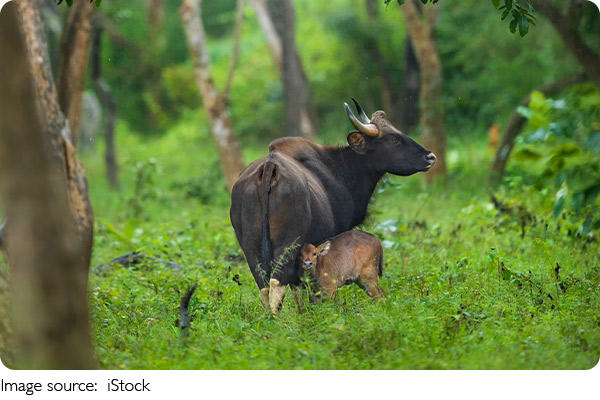
The Indian Gaur is more than just an awe-inspiring sight; it stands as a living symbol of resilience and the natural beauty of India's wilderness. Representing strength, endurance, and adaptability, the Gaur holds cultural significance, with its mighty frame often embodying the power and vitality of India's rich and diverse ecosystems.