Climate Warriors

Naveen Kumar
26-08-2024
 · Animal Team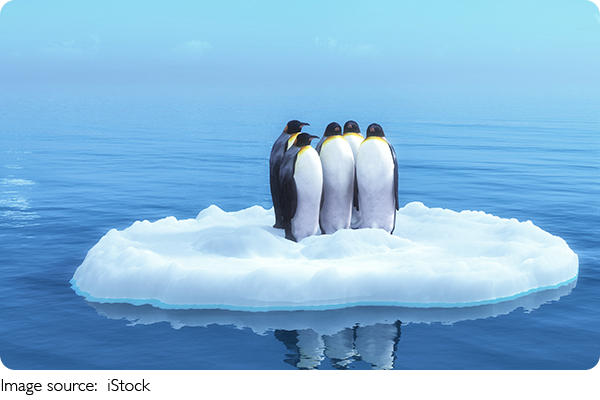
Emperor penguins, the largest penguins in the world, are extraordinary birds primarily inhabiting Antarctica.
Their unique living habits and remarkable adaptability have garnered significant attention, making them a subject of fascination in the scientific community and beyond.
Living in the icy and snowy world of Antarctica, emperor penguins face some of the harshest climates on Earth. The winter temperatures can plunge to a staggering minus 60 degrees Celsius, and the wind speeds can reach up to 200 kilometres per hour.
Despite these extreme conditions, emperor penguins have evolved to not only survive but thrive in this polar region. Their bodies have adapted through long-term evolution, allowing them to withstand the severe environment of Antarctica.
Sloths move slowly as an evolutionary strategy to conserve energy and evade predators.
Thinking of getting a purr-fect companion but don't know how to choose? Check this one to choose a popular cat breed!
The red kestrel, a symbol of agility and strength, masterfully hovers to hunt, maintaining nature's balance.
Dragonflies are a relatively primitive and diverse group of insects.
Bell collars are very popular among cat owners, but can these bells be harmful to your cat's hearing?
If people evolved from apes, then why are there still apes?
One of the key adaptations that enable emperor penguins to survive in such a harsh climate is their thick layer of subcutaneous fat. This fat acts as an effective insulator against the cold, keeping the penguins warm even in freezing temperatures.
Additionally, their feathers have a special structure; they are covered with a layer of oil on the surface, making them both waterproof and heat-insulating. This combination of feathers and subcutaneous fat enables emperor penguins to swim freely in the frigid sea while minimizing the loss of body heat.
A well-known characteristic of emperor penguins is their unique breeding method, which sets them apart from other species. Every winter, thousands of emperor penguins gather together to commence their breeding season.
After the female penguin lays an egg, she carefully passes it to the male penguin and then departs the breeding ground in search of food. During this period, the male penguin assumes the crucial responsibility of incubating the eggs.
He carefully balances the egg on his feet, covering it with his abdomen to keep it warm. To protect the eggs from the extreme Antarctic climate, the male penguins huddle together, forming a massive "penguin circle" where they stay close to one another for warmth.
This incubation process lasts about two months, during which time the male penguins neither eat nor drink, enduring the severe cold of Antarctica. It is only when the female penguin returns with food that the newly hatched chicks can begin to grow and thrive.
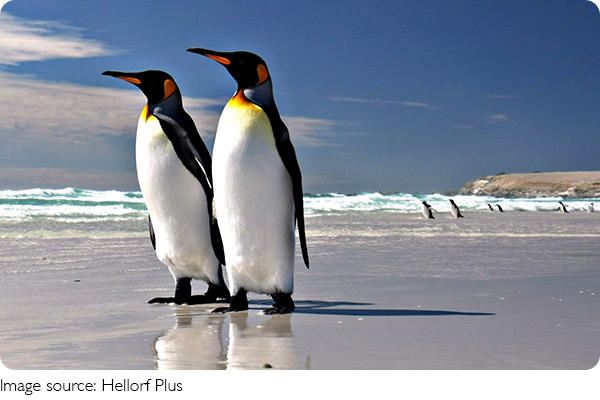
Beyond their unique breeding habits, the physical structure of emperor penguins is also remarkable. Adult emperor penguins typically stand about 115 cm tall and can weigh as much as 40 kg. Their large and streamlined bodies are perfectly designed to reduce resistance and increase speed when swimming in the water.
The wings of emperor penguins have evolved into fin-like structures. Although they cannot fly, these "wings" serve an essential purpose in the water, allowing the penguins to catch food such as fish and krill with agility and precision.
Emperor penguins also possess a long, sharp beak, ideally suited for catching and swallowing marine life, while their hard claws aid them in walking on the icy surfaces of Antarctica.
Despite their impressive adaptability to the natural environment, emperor penguins now face significant threats to their survival due to climate change and human activities. The rising global temperatures have led to the gradual melting of Antarctic ice, directly affecting the breeding and foraging habits of emperor penguins.
The reduction of ice forces emperor penguins to swim longer distances to find food, which not only exhausts them physically but also exposes them to greater dangers.
Furthermore, the overexploitation of the fishing industry has reduced the food resources available to emperor penguins, creating a double burden for a species that relies heavily on marine life for sustenance.
In response to these survival challenges, scientists are diligently studying and working to protect emperor penguins. Through satellite monitoring, field investigations, and sample analysis, researchers are striving to gain a deeper understanding of the emperor penguin's living habits and population dynamics.
This knowledge is crucial for developing effective conservation measures to ensure their continued survival. Additionally, environmental organizations worldwide have been advocating for the reduction of greenhouse gas emissions and the protection of marine ecosystems, recognizing the importance of preserving the living environment of polar creatures, including emperor penguins.
Emperor penguins are iconic symbols of Antarctica, and their unique lifestyle and tenacious survival abilities continue to captivate people around the world. However, as global climate change progresses, their living environment faces unprecedented challenges.
The task of protecting emperor penguins while maintaining the ecological balance of Antarctica is a shared goal that requires the concerted efforts of the global scientific and environmental communities.