Human & Apes

Ravish Kumar
23-08-2024
 · Animal Team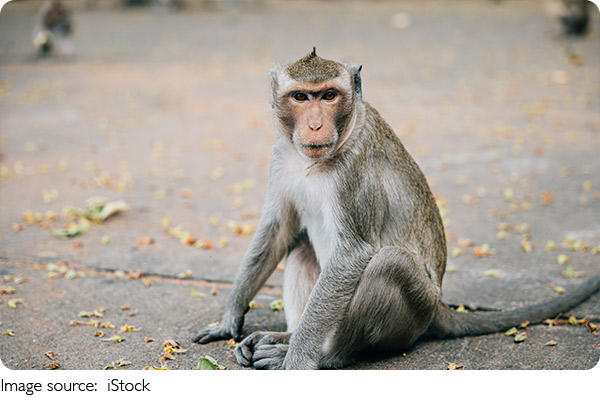
In the long history of evolution, life has developed in various forms through continuous adaptation to the environment.
Evolution, a process that has shaped the diversity of life on Earth, is marked by complexity, randomness, and a lack of predetermined direction.
One intriguing question often arises: Since humans and apes share a common ancestor, why don't today's apes evolve into humans once more? This question touches on the fundamental mechanisms of evolution and the intricate paths that different species take as they adapt to their environments.
To comprehend this query, we must first delve into the concept of evolution itself. Evolution is not a linear process with a specific endpoint. It is a series of random changes that accumulate over time, allowing organisms to better adapt to their unique environments.
Discover owls' stealthy flight, diverse habitats, and unique traits in this intriguing overview!
Discover why jellyfish glow, using light as camouflage, a lure, and defense in the deep ocean's mysterious depths.
How do they keep fattening up yet stay healthy?
Among those popular rabbits, what are your favourite rabbit breeds?
Discover the Shocking Secrets Behind the Common Cuckoo’s Devious Nesting Trick!
Give your cat's coat a check to gauge their health!
These adaptations do not necessarily lead to more complex or "advanced" forms. Instead, they result in organisms that are better suited to survive and reproduce in their specific ecological niches.
Modern apes, including chimpanzees, bonobos, gorillas, and orangutans, share a common ancestor with humans that lived around 14 million years ago. This shared ancestry means that apes and humans are not of direct-line descent, like grandparents and grandchildren, but rather are more like distant cousins.
Humans did not evolve from the apes we see today. Instead, both humans and modern apes diverged from a common ancestor and embarked on different evolutionary paths. These paths were shaped by the unique environmental challenges and opportunities each group encountered over millions of years.
Apes have adapted to life in dense forests, where their strong upper limbs and flexible bodies enable them to move freely among the trees.
These traits are crucial for their survival in such environments, and as a result, apes have not evolved the ability to walk upright on two legs as humans have. For apes, their current form is highly specialized and well-adapted to their specific ecological niche.
Moreover, while apes have smaller brains compared to humans, they exhibit remarkable intelligence. For instance, chimpanzees and bonobos are known to use tools, build simple nests, and display emotional complexity, such as mourning their dead.
These behaviours indicate that apes are highly adapted to their environments and do not require larger brains or more complex social structures to thrive. Their intelligence is sufficient for their survival, and their physical adaptations serve them well in their natural habitats.
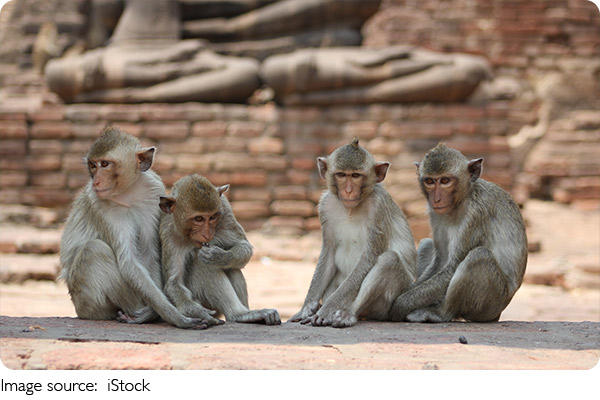
Humans, on the other hand, owe their unique evolutionary trajectory to changes in their environment. Approximately 3 million years ago, the climate in Africa began to change, becoming drier and transforming dense forests into savannas.
In this new environment, the ability to walk upright became increasingly important. Bipedalism allowed early humans to move more efficiently across the grasslands, find food, and avoid predators.
Additionally, walking on two legs freed up the hands, enabling early humans to make and use tools, which in turn stimulated brain development.
However, it is essential to recognize that evolution does not follow a fixed path or direction. If the climate in Africa had not changed, or if the changes had occurred differently, the course of human evolution might have been entirely different.
Perhaps other ancient human species, such as the Neanderthals, would have become the dominant species instead of sapiens. The course of evolution is shaped by a myriad of factors, including environmental changes, genetic mutations, and random events. The diversity of life on Earth today is a testament to the unpredictable nature of evolution.
For modern apes, their evolutionary path has diverged significantly from that of humans. They have adapted to their unique ecological environments in ways that have allowed them to thrive without needing to evolve into forms similar to humans.
The traits that make apes successful in their environments, such as their physical agility and social behaviours, do not necessitate the development of human-like characteristics. The reason today's apes will not evolve into humans again lies in the fact that they have already achieved a high degree of adaptation to their specific environments.
Evolution is not about progressing toward a particular goal or becoming more human-like; it is about survival and reproduction in the context of a given environment.
Each species follows its evolutionary path, shaped by the pressures and opportunities it encounters. For apes, this has meant developing traits that are different from those of humans but are equally effective for their survival.