Stripes and Whiskers

Naveen Kumar
02-08-2024
 · Animal Team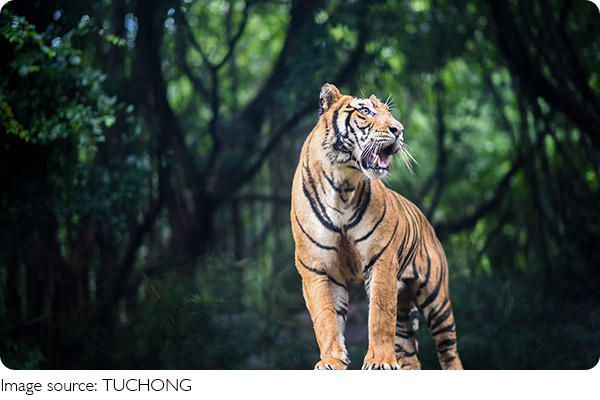
Tigers and kittens indeed stand at opposite ends of the feline spectrum, differing vastly in appearance, size, strength, and living habits.
But what unfolds when these two members of the cat family encounter each other? What dynamics come into play when a tiger catches sight of a kitten?
Habitat
To grasp the potential scenarios, it's crucial to comprehend the nature of these animals. Tigers, majestic apex predators, boast impressive dimensions, stretching up to 3 meters in length and weighing a formidable 300 kilograms.
They command the dense forests, sprawling grasslands, and murky swamps of Asia, reigning as the top carnivores, adept at hunting down prey to sustain themselves. Kittens, on the contrary, represent a domesticated variant of the feline lineage.
Decoding the mysteries of owl sleep habits reveals nocturnal intricacies.
Sharing a bed with pets may raise hygiene and sleep concerns, but its emotional benefits often outweigh the risks.
Top 9 smallest birds on Earth.
Nigerian Dwarf goats: tiny, friendly, and versatile pets with high milk production and adaptability.
You probably do not know these interesting facts about the elegant dancer in the lake!
Secret Rabbit Language Revealed! Learn How They Really Communicate!
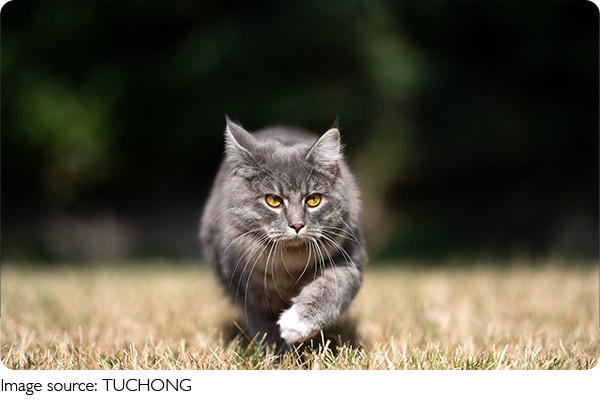
They embody a stark contrast, characterized by their diminutive size and gentle disposition, often serving as cherished companions in human households.
Perception
However, when the paths of a wild tiger and a domesticated kitten intersect, there's no exchange of secret greetings across species nor any courteous butt-sniffing rituals. In the untamed realm of wildlife, survival reigns supreme.
There's scant camaraderie among species, only the primal urges for sustenance and the relentless pursuit of dominance. Carnivores, in particular, adhere to a ruthless code.
In the eyes of a tiger, a kitten appears as nothing more than a trivial plaything, hardly substantial enough to satiate the hunger that gnaws at its core. They scarcely warrant the effort of a hunt.
Conversely, to a kitten, tigers loom as colossal threats, triggering instincts of fear and self-preservation. Swift and vigilant, a kitten would have scampered away at the first sign of danger, recognizing the peril posed by these formidable predators.
A Prey or a Predator
Within the natural order, instances of intraspecies predation occur with alarming regularity. Whether driven by the primal need to fill their bellies or to eliminate competitors, animals routinely resort to cannibalistic behaviors.
Wolves encroach upon human settlements, dispatching domestic dogs with ruthless efficiency; lions seize upon vulnerable cheetah cubs, asserting dominance within their territories; and chimpanzees, in a stark demonstration of their omnivorous tendencies, partake in the consumption of fellow primates, such as monkeys.
Amidst the verdant tapestry of the African jungle, when a troop of chimpanzees descends upon a hapless red colobus monkey, there's no room for sentimentality or ethical qualms—only the relentless pursuit of sustenance.
Nurture beats Nature
Yet, amidst the theoretical ponderings emerges a tantalizing question: if a cat were to burgeon to the size of a tiger, could it best its larger counterpart?
In the realm of physical attributes, cats inevitably pale in comparison to their formidable tiger kin. Their musculature lacks the bulk of tigers, their skeletal structure lacks the robustness, their jaws lack the crushing force, and their teeth and claws lack the formidable sharpness.
While cats excel in agility, their supple frames and adeptness at leaping and scaling trees render them more akin to sleek sports cars amidst a landscape dominated by heavy-duty off-road vehicles represented by tigers.
In a life-and-death confrontation, even a cat inflated to tiger proportions would find itself sorely outmatched by its larger, more powerful counterpart.
Beyond the realm of sheer physicality, domestication stands as the greatest impediment to feline prowess. Through centuries of coexistence with humans, domestic cats have shed much of their "natural killer" instinct, their behaviors shaped and tempered by the hand of human intervention.
Tigers, by contrast, epitomize untamed ferocity, embodying a raw, primal power that brooks no compromise. Their epithet as the "king of the jungle" is no mere accolade; it's a testament to their dominance within the natural hierarchy.
Conclusion
In the grand tapestry of the natural world, the encounter between a tiger and a kitten serves as a poignant reminder of the vast chasm that separates these two members of the feline lineage.
While their paths may intersect fleetingly, their destinies diverge along markedly different trajectories, shaped by the inexorable forces of evolution and human intervention.
And yet, amidst the stark contrasts and irreconcilable differences, lies an undeniable thread of kinship—a shared ancestry that binds these disparate creatures together within the sprawling family tree of the animal kingdom.