Ancient Avian Marvels

Amit Sharma
14-07-2024
 · Animal Team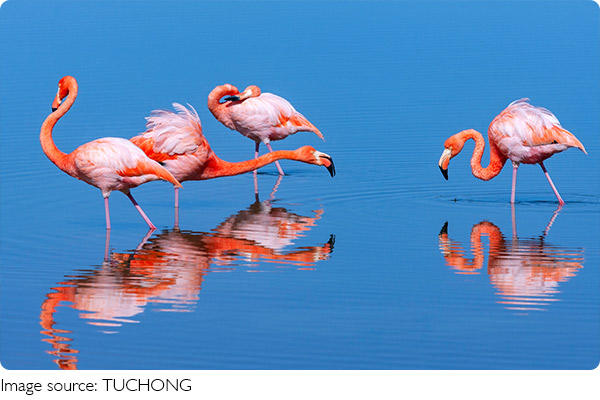
The flamingo, an ancient bird dating back over 30 million years, has captivated the curiosity of ornithologists for centuries.
Despite their long history, the classification of flamingos has been a source of debate due to their structural and behavioral similarities to various bird species.
Flamingos exhibit intriguing connections to different avian families based on their bone structure, egg-white proteins, and habits. For instance, their pelvic bone and rib structure resemble those of cranes, while the composition of egg white protein mirrors that of herons. The behavior of flamingo chicks bears striking resemblance to that of geese, and adults possess webbed feet and waterproof feathers akin to those of waterfowl. Recognizing these similarities yet distinctions, taxonomists eventually assigned flamingos to a separate order known as the Phoenicopteriformes.
Exploring the distinctions between gazelles and springboks.
Why do Canada geese fly at night?
From wild ancestors to domestic breeds, the intricate world of sheep and goats unfolds.
The mythical brilliance of kingfisher feathers: fact or fiction?
7 essential tips that you must know if you want to keep a parrot as a pet!
The Southern Pygmy Owl, a tiny raptor of South America, captivates with its unique habits and crucial ecological role.
Presently, only five species of flamingos endure, each with unique characteristics distinguishing them from one another. The Greater Flamingo, encompassing two subspecies—the Caribbean Flamingo and the Greater Flamingo—boasts dark pink feathers and stands as the largest among its counterparts. Conversely, the Lesser Flamingo, adorned with brighter hues than its larger counterpart, represents the smallest species. The Chilean Flamingo, slightly diminutive compared to the Caribbean Flamingo, displays grey legs and pink bands at the joints. The James Flamingo, distinguished by its black flight feathers—a feature absent in other species—adds to the diversity of flamingos. Lastly, the Andean Flamingo, notable for its yellow legs, feet, and feathers, stands as a distinct member of the flamingo family, with red spots adorning its nostrils.

The evolution of flamingo feathers, transitioning from gray or white at birth to various shades of pink as they mature, has long puzzled scientists. Through extensive research, the mystery surrounding this phenomenon has been elucidated. The coloration of adult flamingo feathers is entirely contingent upon their dietary intake. Consuming algae and crustaceans rich in carotenoids—a pigment responsible for the vibrant hues—results in the accumulation of pink and orange particles in the feathers, beak, and legs, imbuing them with their characteristic coloration. Flamingos that directly ingest algae exhibit vivid hues, while those consuming crustaceans fed on algae tend to display duller colors. To maintain their radiant plumage, captive flamingos require a diet supplemented with astaxanthin-rich prawns or additives like beta-carotene and keratin, as otherwise, their feathers gradually fade to white or pale pink.
Further insights into flamingo behavior reveal their meticulous grooming rituals, with a significant portion of their daytime activities devoted to organizing their feathers. Recent research by Spanish scientists suggests that this behavior serves not only to maintain feather health but also to enhance their appearance. Flamingos secrete oil from tail glands, which they apply to their neck, chest, and back feathers using their beaks. This oil, containing carotenoids, not only waterproofs the feathers but also maintains their vibrant pink hue. Regular application of this "make-up" results in brighter and more vivid feather colors, while cessation leads to rapid fading, as the carotenoid pigment quickly turns white upon exposure to sunlight.
Flamingos stand as ancient avian marvels, with their evolutionary history and unique characteristics continuing to fascinate scientists and enthusiasts alike. By unraveling the mysteries of their classification, feather coloration, and grooming behaviors, we gain deeper insights into the extraordinary world of these majestic birds.