Parrot Behavior

Declan Kennedy
12-07-2024
 · Animal Team
Parrots, with their vibrant plumage and remarkable intelligence, are fascinating creatures that communicate through a variety of physical and behavioral cues.
Understanding these cues is essential for anyone who owns or works with parrots, as they offer insights into the bird's emotional state, health, and intentions.
This essay delves into the key physical and behavioral signals parrots use to communicate and what they reveal about these complex avian companions.
One of the most prominent physical cues in parrots is their body posture. A parrot's stance can tell a lot about its mood and well-being. For instance, a relaxed and content parrot will often stand on one foot, with its feathers fluffed up slightly and its eyes half-closed.
Nature's collective caregiving strategies.
Honey bees' short life: from egg to old age, navigating perilous tasks.
Birds' epic migrations and ingenious survival tactics reveal nature's resilience.
Wings, dance, habitat: crane comparisons.
Butterflies may have first "appeared" in North America 100 million years ago.
Do all rabbits have red eyes?
This is a sign of comfort and trust in its environment. Conversely, a parrot that feels threatened or anxious will display a more rigid posture, with feathers slicked down close to its body, eyes wide open, and both feet firmly gripping the perch.
This defensive stance indicates that the bird is on high alert and may be ready to flee or defend itself if necessary.
Feather condition and movement also provide significant insights into a parrot's state of mind. Fluffing up feathers can have multiple meanings depending on the context.
When a parrot fluffs up its feathers and shakes or preens them, it is often a sign of relaxation and self-maintenance. However, if the feathers remain fluffed for an extended period, it might indicate that the bird is cold, sick, or stressed.
In social interactions, particularly during courtship or bonding, a parrot might puff up its feathers to appear larger and more impressive to potential mates or rivals.
The eyes of a parrot are another important indicator of its feelings. Parrots have a unique ability called "eye pinning," where the pupils rapidly constrict and dilate. This can signify excitement, curiosity, or intense interest in something.
However, eye pinning can also occur when a parrot is agitated or preparing to defend itself, making it essential to consider other accompanying cues to accurately interpret this behavior.
For example, if eye pinning is combined with an aggressive posture and vocalizations, it is likely a sign of agitation rather than curiosity.
Vocalizations themselves are a rich source of information about a parrot's emotional state.
Parrots are known for their ability to mimic sounds, including human speech, but their natural vocal repertoire includes a range of calls, squawks, and whistles.
A parrot that is happy and engaged might produce a series of melodious whistles or chatter, while a distressed or scared parrot might emit loud, harsh screeches.
Understanding the context and frequency of these sounds helps in gauging whether a parrot is content, seeking attention, or signaling distress.
Additionally, a parrot’s beak and feet are expressive tools. Beak grinding, a soft, repetitive sound made by rubbing the upper and lower beak together, is generally a sign of contentment and relaxation, often heard before the bird goes to sleep.
In contrast, beak clicking or clacking can be a defensive gesture, indicating that the parrot is feeling threatened.
Foot behaviors, such as raising one foot towards a person, can be an invitation for interaction, as parrots often use their feet to explore and manipulate objects. However, foot biting or aggressive grabbing can signal irritation or aggression.
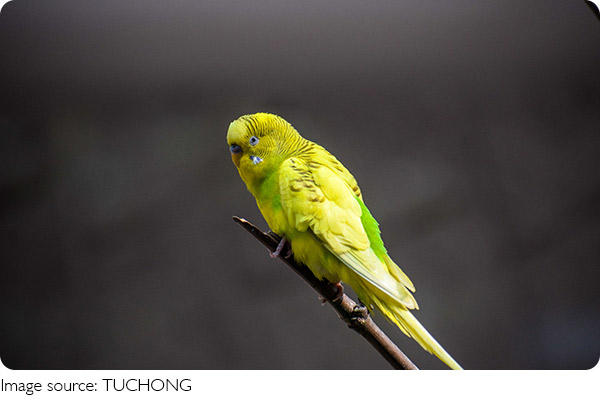
Explore the fascinating world of parrots! These social birds use unique gestures to communicate with each other and with us. Understanding these behaviors is key to connecting with your feathered friends and uncovering the secrets of their communication.