Colorful Guppies

Caleb Ryan
30-05-2024
 · Animal Team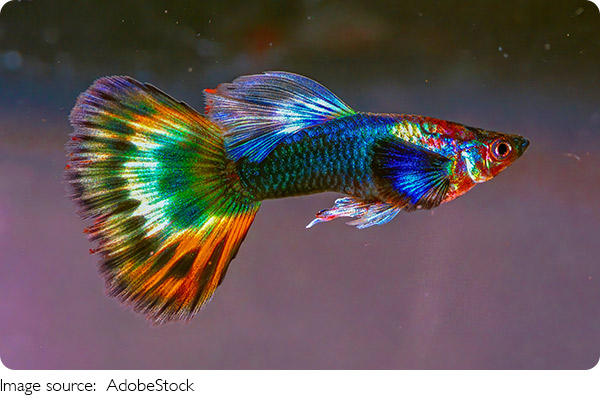
The guppy is a small tropical fish species.
It originates from freshwater and brackish habitats in South America, particularly in regions like Venezuela, Brazil, and Guyana. Known for its colorful and diverse fin patterns, the guppy is one of the most popular aquarium fish worldwide.
Physical Characteristics
Guppies are small in size, typically growing to 4-6 centimeters as adults.
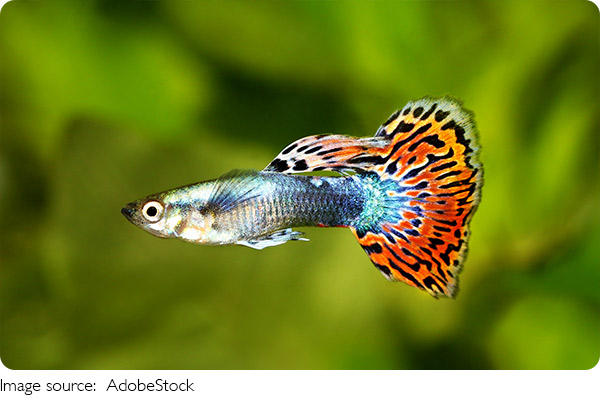
There are significant differences between males and females in size and coloration. Males are smaller but have more vibrant and colorful fins and bodies, displaying hues of red, blue, green, and yellow, among others. Their fins can be round, sword-shaped, or fan-shaped. Females are larger with simpler coloration, usually gray or brown, though some strains may exhibit hints of color on their fins and bodies.
How do parrots master the language? Let's unveil their scientific mysteries!
Why were cats so important in ancient Egyptian culture? Let's uncover the reasons together!
Why do giraffes have such long necks? The theories of evolution and behavioral ecology provide the answers!
Join us in exploring the origins and evolution of birds and their relationship with dinosaurs!
Have you ever seen the live-action version of The Lion King?
Mind-Blowing Revelations: Unlocking the Mysteries of Africa's Lilac-breasted Roller!
Ecological Habits
Guppies thrive in warm waters, ideally between 22-28 degrees Celsius. They tolerate various water qualities but prefer clear, slow-moving waters. As omnivorous fish, they primarily feed on algae, plankton, small insects, and aquatic plants.
Reproductive Behavior
Guppies are livebearers, meaning females internally fertilize and give birth to live young.
Each female can produce 20-50 fry per month. During mating, males use specialized organs to transfer sperm to females. After a gestation period of about a month, females give birth to fry. The newborn fry is small and requires ample hiding places to avoid aggression from adult fish.
Aesthetic Value
Due to their vibrant colors and lively nature, guppies are highly prized in the aquarium trade.
Breeders have developed numerous varieties such as red-tailed, blue-tailed, and gold guppies, each with unique color patterns and shapes. Some strains also exhibit special fin and body shapes like long-finned and double swordtail guppies.
Care and Maintenance
Guppies are adaptable and have modest tank requirements, making them ideal for beginners.
A tank size of 20-40 liters is sufficient for their needs. Maintaining clean water at suitable temperatures is crucial. Adding live plants like water hyacinths and water wisteria not only beautifies the environment but also provides hiding spots for guppies.
Feeding should be varied to include dry flakes, frozen foods, and vegetable matter, with care taken not to overfeed to prevent water contamination.
Environmental Concerns
While guppies are popular globally, they can become invasive if released into natural water bodies outside their native range. Invasive guppies may compete with local species for food and habitats, impacting native aquatic ecosystems.
Therefore, responsible fishkeeping practices are essential to prevent unintended environmental impacts.
In conclusion, guppies are cherished for their beauty and ease of care, delighting aquarium enthusiasts worldwide. By responsibly appreciating these fish and managing their impact on ecosystems, we can continue to appreciate their charm without jeopardizing natural habitats.