Stress Relief or Escape?

Finnegan Flynn
01-06-2026
 · Travel Team
Hi, Readers!
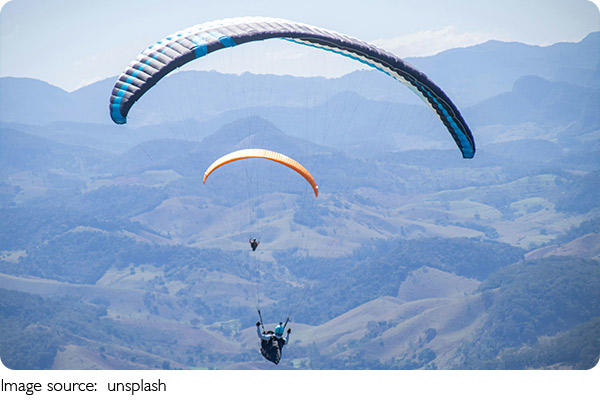
You are standing on the edge of a wind-swept hill, a colorful wing spread above you, and the whole sky stretched out in front.
For millions of travelers today, that moment is no longer just a bucket-list fantasy. Paragliding is quickly becoming one of the most sought-after activities during travel, and the reasons behind it go much deeper than just the thrill.
What Actually Happens to Your Body Up There
When you paraglide, your body activates an ancient survival mechanism. The simple act of taking off and being suspended in the air triggers a "fight-or-flight" response, releasing a massive amount of adrenaline. This prepares your body to handle stress: it speeds up the heart rate, dilates the pupils, and sharpens the senses, leaving you in a state of maximum alertness.
Why speedboat rides feel thrilling and how to stay safe, comfortable, and aware on the water
Navigating local customs and traditions during your homestay can feel tricky, but these practical tips will help you connect.
Every wrapper, off-trail shortcut, and fed squirrel adds up. Here's how to actually protect the places you love.
Your tarot-guided year of movement, choices, and growth.
Your zodiac's guide to navigating tomorrow's energy with ease.
Book Lascaux tickets, go early to Rouffignac, pair Marqueyssac with Castelnaud for value—and save a night for candles.
That might sound like the opposite of relaxation, but here is the interesting part: one of the most notable effects is stress and anxiety reduction. While the body goes through peak alertness during the flight, the experience ends with a deep sense of calm, because the brain regulates the cortisol released during that tense moment, balancing brain chemistry and leaving a feeling of relaxation and mental clarity.
Why the Mind Craves This Kind of Experience
The pursuit of extreme sports like paragliding is more common among individuals looking to break routine and live unique experiences. This is not escapism in a negative sense. It is a deliberate reset. When you are paragliding, you focus on what you are doing and nothing else. You forget all your worries and the usual distractions of life. This intense focus, combined with the adrenaline rush, makes you feel cleansed both mentally and physically.
There is also a neurological reason why flights stay with you long after landing. The chemical processes in the brain not only influence the moment of flight but also how you remember it. The intense release of adrenaline and dopamine temporarily enhances the hippocampus, which stores long-term memories.
This explains why a paragliding flight feels unlike any ordinary activity: it is packed with vivid details you relive every time you think back on it.
A Confidence Builder, Not Just a Thrill
Flying generates a strong sense of achievement and self-confidence. Facing heights, the void, and taking control of the paraglider pushes personal limits. Overcoming these challenges not only boosts self-esteem but also teaches individuals to trust their own abilities, something that carries over into other areas of life.
When you are thousands of feet up in the air, taking in nothing but the beauty of the world, the feel of freedom, and the intensity of life, everything about the way you view the world transforms into something much more positive. That shift in perspective is something no desk, no screen, and no routine can replicate.
The Physical Side People Often Overlook
Paragliding is not just a mental experience. It helps by boosting confidence and concentration while also reducing stress and overcoming fears. This exciting aerial sport burns calories while engaging deep core muscles and increasing upper body strength. It also improves both flexibility and mobility, which ultimately reduces the risk of injury from other activities.
By being in constant tension to control the paraglider, your arms are strengthened, improving flexibility, mobility, and the range of your movements. So yes, you are getting a real workout without it feeling like one.
Community and Connection in the Sky
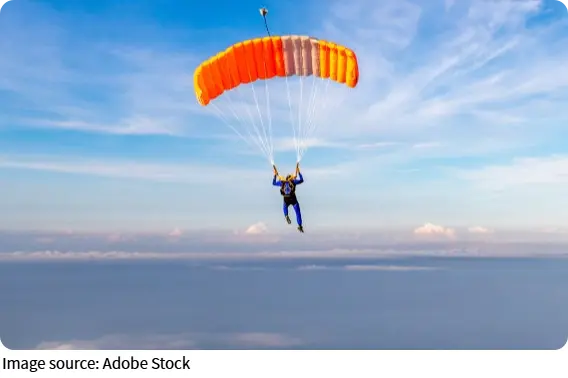
Paragliding is often practiced in groups, which encourages social interaction and the development of a support network. Taking part in outings and training with other enthusiasts allows you to forge strong connections and share enriching experiences. This sense of belonging to a community can have a positive impact on mental health by reducing feelings of loneliness and providing valuable social support.
Paragliding is also an invitation to reconnect with nature and the present moment. Gazing at landscapes from above, flowing with the wind, and observing the vastness of the surroundings awaken a profound awareness of the here and now.
So is choosing paragliding while traveling a form of stress relief or a way to escape daily life? Honestly, it is both, and that is completely fine. The sky has a way of putting everything back into proportion. If you have been curious about trying it, whether solo or tandem with an experienced pilot, the science and the experience both point in the same direction: it is worth every second of that nervous wait at the edge.