Common Mynas

Mariana Silva
18-04-2024
 · Animal Team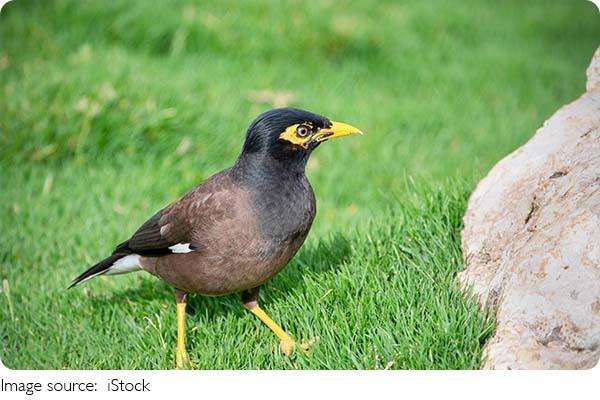
The Common Myna, scientifically known as Acridotheres tristis, is a ubiquitous bird species across various regions worldwide.
Known for its distinctive appearance, intelligent behavior, and adaptable nature, the Common Myna exhibits a fascinating array of habits that have earned it both admiration and disdain from humans.
One of the most notable habits of the Common Myna is its vocal prowess. These birds are highly vocal and possess many calls and sounds.
From melodious whistles and chirps to raucous squawks and cackles, Common Mynas are proficient mimics capable of imitating the calls of other bird species and human-made noises such as car alarms and telephone ringtones.
This vocal mimicry serves various purposes, including communication within flocks, establishing territory, and attracting mates.
Ibex thrive through climbing, social structure, and adaptive diet in Alpine environments.
Exploring growth habits of Great Tits."
Scarlet macaws: colorful, social, and vanishing due to habitat loss and poaching.
Guanaco: The Meek Rulers of Patagonia.
Oxygen's Vital Role for Fish Survival.
Protecting Florida Key White-tailed Deer ensures biodiversity and ecosystem balance.
In addition to their vocal abilities, Common Mynas are also known for their gregarious behavior. They are highly social birds that form tight-knit flocks, often roosting and foraging together in large numbers.
These communal gatherings provide Common Mynas with safety in numbers, making it easier to spot potential predators and defend against threats. However, their gregarious nature can also lead to conflicts with humans, especially in urban areas where they may congregate in large numbers and cause disturbances.
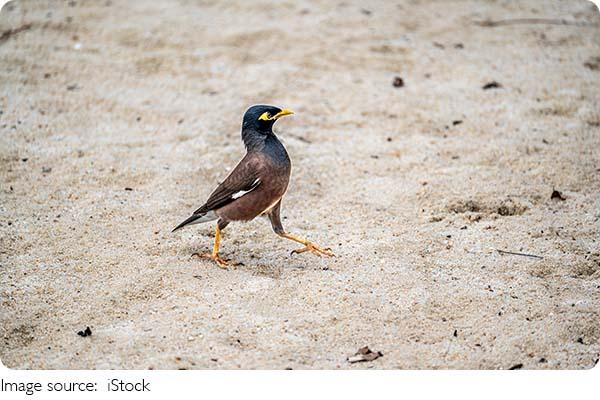
Common Mynas are opportunistic feeders with omnivorous diets. They primarily feed on insects, fruits, seeds, and human food scraps. Their adaptability allows them to thrive in diverse habitats, from urban parks and gardens to agricultural areas and forest edges.
This dietary flexibility has enabled Common Mynas to establish themselves in numerous regions worldwide, often out-competing native bird species for food and resources.
Another intriguing habit of the Common Myna is its nesting behavior. These birds are cavity-nesters, meaning they seek out sheltered locations such as tree hollows, crevices, and artificial structures to build their nests.
Common Mynas are adept at utilizing urban environments for nesting, often nesting in roof cavities, eaves, and other structures around human habitation. They are opportunistic breeders, capable of producing multiple broods in a single breeding season, further contributing to their rapid population growth and widespread distribution.
While Common Mynas are celebrated for their intelligence and adaptability, they are also regarded as pests in some regions due to their aggressive behavior and negative impacts on native wildlife.
In areas where they have been introduced, such as Australia and parts of the United States, Common Mynas have been implicated in the decline of native bird species through competition for nesting sites, food resources, and predation on eggs and nestlings.
Despite their mixed reputation, Common Mynas are fascinating creatures with many habits and behaviors. Common Mynas have successfully carved out a niche for themselves in various environments, from their vocal mimicry and social gatherings to their opportunistic feeding habits and adaptable nesting behavior.
While their presence may pose challenges in specific contexts, there is no denying the intrigue and allure of these charismatic birds as they continue to thrive and adapt in a rapidly changing world.