Power Of Child Creativity!

Caleb Ryan
21-08-2026
 · Information Team
Creativity plays a central role in child development because it shapes how young minds explore ideas, solve problems, communicate emotions, and understand the surrounding world.
Far beyond painting or music, creativity involves imagination, experimentation, curiosity, and flexible thinking.
Developmental psychologists increasingly recognize creative activity as an essential component of intellectual and emotional growth rather than a simple recreational skill. During early development, creative experiences stimulate curiosity and encourage independent thought.
Creativity Strengthens Cognitive Development
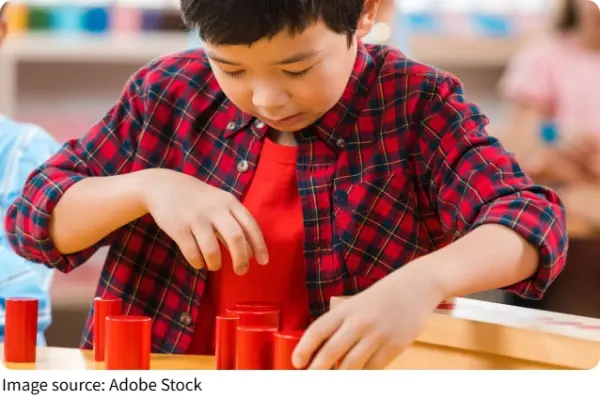
Creative activities encourage children to think beyond fixed answers. Instead of simply recalling information, imaginative tasks require experimentation, interpretation, and decision-making. This process strengthens cognitive flexibility, a mental skill associated with learning, reasoning, and problem-solving.
How to protect children’s teeth? Simple habits help prevent cavities early and easily!
Want to stay active at home? Simple exercises help older adults build strength and balance!
Running helps kids stay active, but are they doing it the right way!? Easy guide!
Why are more young people getting hypertension?! The hidden danger nobody notices yet
Why height velocity matters?! The key growth signal doctors track in kids now!
How do you check a baby’s fever safely? Learn gentle reliable methods for accurate results!
When children invent stories, construct imaginary worlds, or design original solutions during play, the brain actively builds new connections between ideas. Such experiences improve attention, memory organization, and analytical thinking.
Creative exploration also encourages curiosity-driven learning. A child experimenting with colors, shapes, or movement often develops stronger observational skills and greater willingness to investigate unfamiliar concepts. This natural curiosity supports academic learning across language, mathematics, and science.
Imagination Helps Emotional Expression
Children frequently communicate emotions through creative behavior before developing advanced verbal skills. Drawing, pretend play, music, and storytelling provide safe ways to express excitement, fear, confusion, or sadness without direct explanation.
Psychologists observe that imaginative activities often help children process emotional experiences more effectively. Through fictional characters or symbolic play scenarios, difficult feelings become easier to explore and understand.
Creative expression can also strengthen emotional resilience. Children engaged in artistic or imaginative activities often learn patience, persistence, and emotional regulation while navigating mistakes or unexpected outcomes. Instead of fearing failure, creative environments encourage experimentation and adaptation.
This emotional flexibility becomes valuable during social challenges, school transitions, and unfamiliar experiences. A child comfortable with imagination often develops greater confidence when facing uncertainty.
Creative Play Improves Social Skills
Creativity frequently develops through interaction with others. Group storytelling, dramatic play, music activities, and collaborative building projects encourage communication, negotiation, and empathy. During imaginative play, children practice understanding different perspectives.
Pretending to become fictional characters or inventing social scenarios strengthens emotional awareness and social interpretation. Such experiences improve cooperation and listening ability while reducing rigid thinking patterns.
Creative collaboration also teaches compromise. Shared projects require children to exchange ideas, solve disagreements, and adapt plans collectively. These social experiences contribute to healthier communication habits and stronger interpersonal confidence.
Artistic Activities Support Language Development
Language development benefits significantly from creative experiences. Storytelling, singing, poetry, role-play, and imaginative conversation expose children to broader vocabulary and more complex sentence structures. Children involved in creative verbal activities often become more comfortable expressing ideas and emotions clearly.
Fictional storytelling encourages sequencing, descriptive thinking, and narrative organization, all of which contribute to stronger communication skills.
Music and rhythm also influence language processing. Repetition, melody, and sound recognition help children identify speech patterns and improve verbal memory. Educational specialists have observed connections between musical exposure and enhanced reading readiness during early learning stages. Importantly, creative communication allows children to develop personal voice and self-expression rather than relying solely on memorized responses.
Creativity Encourages Independent Thinking
One of the most important benefits of creativity involves the development of independent thought. Open-ended activities encourage children to generate original ideas instead of searching for one predetermined answer. This process strengthens confidence in decision-making and reduces fear of mistakes. Children learn that exploration and innovation are valuable parts of learning rather than signs of failure.
Independent thinking also supports adaptability. Creative children often become more comfortable approaching unfamiliar situations because imagination encourages flexible problem-solving. Instead of depending entirely on instructions, they learn to experiment and evaluate possibilities independently.
Such skills remain valuable far beyond childhood. Innovation, leadership, entrepreneurship, and scientific discovery all rely heavily on creative thinking and intellectual flexibility.
Technology and Creativity in Modern Childhood
Digital technology has transformed how children engage creatively. Animation tools, music software, digital illustration platforms, and educational games provide new opportunities for imaginative exploration. However, developmental specialists emphasize balance.
Passive screen consumption may limit creative engagement if it replaces hands-on activities and imaginative play. Creative technology use becomes most beneficial when children actively produce content rather than only observing entertainment.
Interactive storytelling apps, coding games, and digital art programs can encourage innovation when combined with physical exploration, outdoor play, reading, and social interaction. Balanced creative environments support broader intellectual and emotional development.
Educational theorist Sir Ken Robinson famously stated, “Creativity is as important in education as literacy and should be treated with the same status.”
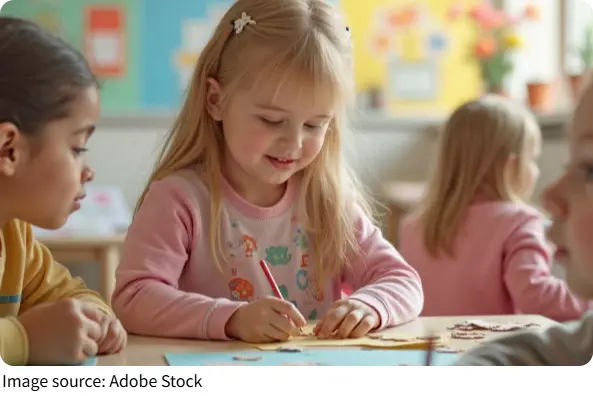
Creativity is far more than entertainment during childhood. In a rapidly evolving society, nurturing creativity during childhood has become an essential foundation for intellectual growth and lifelong adaptability.
Encourage mess, mistakes, and make-believe. A child who feels safe to experiment becomes a person who solves problems with confidence. Provide simple materials – paper, crayons, blocks, dress-up clothes – then step back. Ask open-ended questions like “What else could this be?” instead of giving directions.
Limit passive screen time and protect hours for unstructured play. The most creative minds are not born; they are raised in environments that value curiosity over correctness. Start today. Let them imagine.