Dancing in the Deep

Caroll Alvarado
07-03-2024
 · Animal Team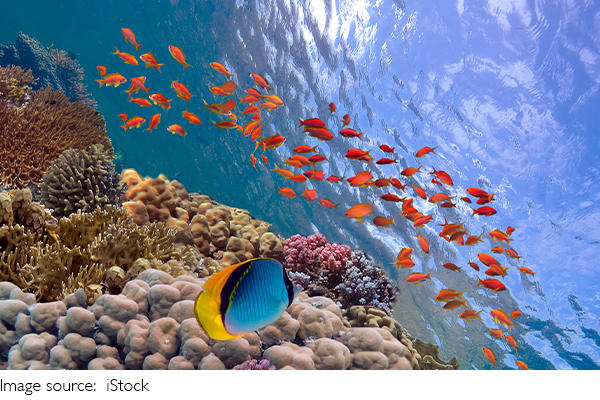
In the depths of the ocean, enigmatic creatures move through the darkness in mesmerizing formations.
They form intricate groups, navigating the deep sea with remarkable coordination and purpose.
The swarming behavior of these deep-sea fish has piqued the curiosity of scientists and enthusiasts alike, prompting a quest to unravel the mysteries behind their collective swimming.
This article aims to delve into the reasons for the shoaling behavior of deep-sea fish and shed light on this captivating phenomenon.
To begin with, it is essential to comprehend the living environment of deep-sea fish. The deep sea is renowned as one of the most mysterious realms on Earth, characterized by extreme conditions such as darkness, high pressure, and low temperature, which profoundly impact marine life.
Starfish possess remarkable regenerative abilities, but their potential is finite and shaped by physiological factors.
Saving Florida's wildlife paradise.
World Lion Day: Uniting for Lion Conservation, safeguarding our cultural and ecological heritage.
Giraffes manage exceptionally high blood pressure, providing insights into human health.
Cats, from ancient Egypt to modern homes, are beloved companions worldwide.
Discover the awe-inspiring diversity of nature through the world's largest foxes.
In such a sterile environment, organisms must employ various strategies to survive. Shoaling behavior emerges as one of the most effective survival mechanisms.
On the one hand, the shoaling behavior of deep-sea fish provides security and protection. In the profound darkness of the ocean depths, solitary individuals are more vulnerable to predation.
By forming a cohesive group, each member enhances their chances of survival and collectively wards off potential threats.
Within the safety of a group, individuals can vigilantly monitor their surroundings, promptly detecting any looming predators and orchestrating collective defensive maneuvers. This communal defense strategy significantly mitigates the predation risk for each group member.

On the other hand, shoaling behavior confers distinct advantages in foraging and reproduction. In the deep sea's resource-scarce and unevenly distributed environment, group formation facilitates resource sharing and cooperative hunting among individuals.
Through synchronized movements, shoals efficiently scour the depths for sustenance, maximizing their survival prospects.
Furthermore, group cohesion enhances reproductive success by increasing mating opportunities and bolstering the survival prospects of offspring, thereby ensuring the perpetuation of the species.
Moreover, deep-sea fish shoaling behavior may be intricately linked to social dynamics and communication. Certain pelagic fish species exhibit sophisticated social structures, maintaining cohesion and order through collective behavior.
Within these groups, individuals communicate and collaborate through a repertoire of visual, auditory, and chemical signals, fostering adaptability in the face of complex environmental challenges.
However, the underlying mechanisms driving the shoaling behavior of deep-sea fish warrant further investigation. Despite notable advancements, the deep sea remains largely uncharted territory, harboring countless mysteries yet to be unveiled by the scientific community.
As technology advances, future exploration promises to yield invaluable insights into the intricacies of deep-sea fish swimming behavior, unraveling the enigma of these elusive creatures and propelling humanity's quest for a deeper understanding of the oceanic realm.
In conclusion, the shoaling behavior of deep-sea fish represents a remarkable adaptation to extreme environments, enhancing survival prospects through collective action.
By delving into the intricacies of shoaling behavior, researchers can unravel the survival strategies and behavioral intricacies of deep-sea creatures, offering invaluable insights for the conservation and management of marine ecosystems.