Grace in Motion

Pankaj Singh
07-01-2025
 · Animal Team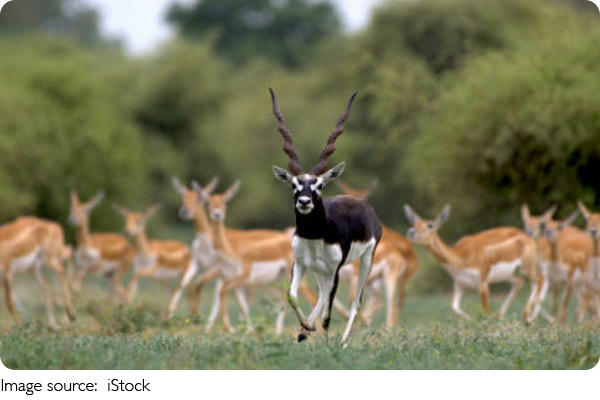
Welcome, Lykkers! Have you heard about the graceful Indian Antelope, commonly known as the Blackbuck (Antilope cervicapra)? It is one of the most iconic and graceful antelope species native to the Indian subcontinent.
Distinguished by its striking appearance, agility, and cultural significance, the Blackbuck has long been a part of India's rich wildlife heritage. It is admired for its beauty, speed, and its important role in the ecosystems it inhabits.
Physical Characteristics
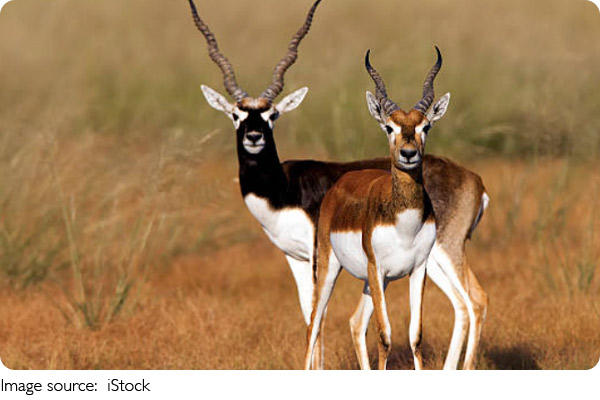
The Blackbuck is easily recognizable by the sharp contrast between the coat colors of the males and females. Males are particularly striking, with a dark brown or black coat on their upper body and a white underbelly, chin, and around the eyes. The most distinguishing feature of the male Blackbuck is its long, spiraled, V-shaped horns that can grow up to 70 centimeters in length. These horns are ringed and can twist as much as five times.
Saffron Finch: A Vibrant South American Beauty, Know Today!
Discover 10 Surprising Facts About Hummingbirds That Will Blow Your Mind!
Discover the Fascinating World of Clownfish: 10 Surprising Facts You Never Knew!
Discover the Fascinating and Surprising Facts About Giraffes That You Never Knew!
Here are some key points to consider when changing the water for a new fish.
As species of prey, gazelles rely on both speed and camouflage to survive.
Females, on the other hand, lack impressive horns and have a lighter, fawn-colored coat throughout. This dimorphism makes the Blackbuck unique among Indian antelopes. Both types are sleek and slender, standing about 74–84 cm (29–33 inches) at the shoulder and weighing between 25 and 45 kilograms (55 to 100 pounds).
Habit and Distribution
Historically, Blackbucks roamed much of the Indian subcontinent, including parts of Nepal. They primarily inhabit open grasslands, plains, and light scrub forests, thriving in arid to semi-arid environments. Today, their population is mostly confined to protected reserves and patches of suitable habitats across northern, central, and southern India, as well as small pockets in Nepal.
Major populations are found in states like Rajasthan, Gujarat, Haryana, Maharashtra, and Karnataka, where national parks and wildlife sanctuaries provide them a safe habitat.
Behavior and Diet
Blackbucks are highly social animals and tend to live in herds consisting of females and their young, led by a dominant male. Male Blackbucks are territorial and mark their area using glandular secretions. During the breeding season, which typically occurs between March and May, males engage in impressive displays of combat to establish dominance over mating territories. These fights often involve clashing their sharp, spiraled horns in an attempt to fend off rivals.
As herbivores, Blackbucks primarily feed on grasses, but they are also known to consume shrubs and herbs when available. They are particularly well adapted to living in arid regions, as they can extract moisture from the vegetation they eat, reducing their dependence on water.
Cultural Significance
The Blackbuck holds significant cultural importance in India. In Hindu mythology, the animal is associated with Lord Krishna, who is said to have often appeared with a Blackbuck by his side. The Blackbuck is also revered by the Bishnoi community in Rajasthan, which has a long tradition of protecting wildlife, including the Blackbuck, as part of their belief in the sanctity of all life forms.
In addition to its cultural significance, the Blackbuck has also featured prominently in Indian art, folklore, and history. Several ancient texts and paintings depict Blackbucks as symbols of grace and speed, which continues to resonate with the Indian people today.
Threats and Challenges
Despite conservation efforts, the Blackbuck faces numerous threats. Habitat loss due to agriculture, industrial development, and urban expansion remains a major concern. Open grasslands, the Blackbuck's natural habitat, are often converted into farmlands or lost to infrastructure projects, further restricting their range.
Poaching, though illegal, also remains a persistent threat. Blackbuck hunting was historically popular among royalty and nobility, and despite being banned, the illegal trade in horns and skins continues in some regions. Incidents of Blackbucks being attacked by stray dogs or hit by vehicles in areas close to human settlements are other growing concerns.
Conservation Success Stories
Today, thanks to dedicated conservation efforts, their population has stabilized in many parts of India, though they remain classified as "Near Threatened" on the International Union for Conservation of Nature (IUCN) Red List. India has implemented various protective measures, including the establishment of wildlife sanctuaries and legal protections under the Indian Wildlife Protection Act of 1972.
There have been several success stories in the conservation of Blackbucks in India. Sanctuaries like the Velavadar Blackbuck National Park in Gujarat and the Ranebennur Blackbuck Sanctuary in Karnataka have played key roles in reviving Blackbuck populations. Conservationists have worked closely with local communities to protect these antelopes, and some regions have seen significant population growth due to these efforts.
The reintroduction of Blackbucks into areas where they had become extinct has also been a priority, and conservation programs continue to monitor and manage their populations to ensure their long-term survival.
The Indian antelope, or Blackbuck, remains one of India's most elegant and enduring symbols of wildlife. While their future is not without challenges, ongoing conservation efforts, combined with their cultural significance, give hope for their continued survival.
The Blackbuck a.k.a Indian antelope (Antilope cervicapra) from Blackbuck National Park in Velavadar
Video by Kanniyakumari Nature Foundation