Eternal Ocean Drifters
Chandan Singh
15-11-2024
 · Animal Team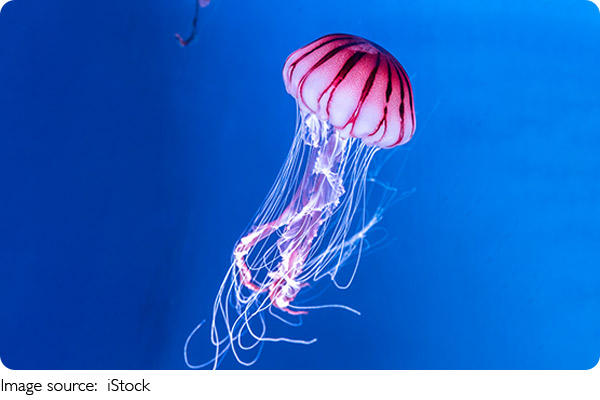
Jellyfish, mysterious and ancient marine creatures, have managed to survive for over 500 million years since their appearance on Earth, making them one of the oldest multicellular organisms in existence.
Their persistence through the ages has made them a subject of fascination and study among marine biologists and science enthusiasts alike.
Jellyfish are found in oceans worldwide, inhabiting a vast range of environments from warm tropical waters to frigid polar regions. Their unique morphology and survival strategies make them an intriguing subject for scientific research.
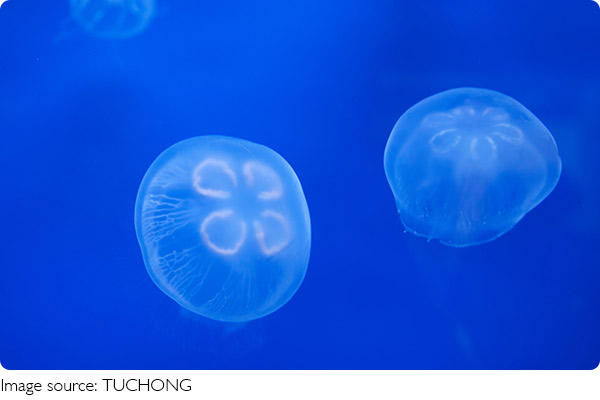
These gelatinous beings are typically bell-shaped or umbrella-shaped, with transparent, soft bodies composed primarily of water and a few basic types of cells. Despite their simplicity, jellyfish have remarkable survival abilities.
Johns Hopkins researchers study owl brains to understand attention disorders.
Koalas are known around the world for their unique looks and laid-back lifestyle.
Cattle egrets are fascinating birds that have adapted to a life closely related to herbivorous mammals.
Polar bears: Arctic kings facing a melting realm, calling for conservation action.
Adaptable foxes: cunning hunters, devoted parents, and masters of survival.
Camels: Nature's Desert Survivors.
They lack brains, hearts, and bones, yet they can swim freely through the ocean. Some species even possess the ability to be bioluminescent, producing light to attract prey or ward off predators.
The life cycle of jellyfish is complex and typically involves two main stages: the polyp stage and the medusa stage. During the polyp stage, jellyfish exist in a benthic form, attaching themselves to rocks or other hard surfaces on the seabed.
After a period of growth and development, polyps produce small jellyfish through a process called budding, transitioning them into the medusa stage. It is in this stage that jellyfish become the free-swimming organisms most commonly seen in the ocean.
They propel themselves through the water by rhythmically contracting their bell-shaped bodies. Jellyfish primarily feed on plankton, small fish, and other tiny marine organisms.
They capture and immobilize their prey using nematocysts, which are specialized cells on their tentacles capable of delivering a venomous sting.
Though they may seem simple, jellyfish play a crucial role in marine ecosystems. First and foremost, they serve as a vital food source for many marine animals, including turtles, certain species of fish, and birds.
Additionally, by preying on plankton, jellyfish help regulate plankton populations, thereby maintaining ecological balance in the ocean. However, jellyfish are also known to form large aggregations, commonly referred to as "jellyfish blooms" or "jellyfish tides."
While these blooms can sometimes negatively impact local fisheries and tourism, they also provide scientists with important insights into changes within marine ecosystems.
In recent years, the frequency of jellyfish blooms appears to be increasing, a phenomenon that has drawn significant attention from the scientific community. Several factors contribute to this trend, with climate change and human activities playing prominent roles.
Global warming has led to higher sea temperatures, creating environments more conducive to jellyfish growth and reproduction. Furthermore, overfishing has reduced the number of natural predators that help keep jellyfish populations in check, allowing their numbers to grow unchecked.
Scientists are actively studying these trends, seeking to understand the underlying causes and develop strategies to mitigate the impacts of jellyfish blooms on marine ecosystems and human industries.
Beyond their ecological importance, jellyfish also hold potential value in various human applications. For instance, certain species of jellyfish exhibit bioluminescence, a property that has been harnessed in scientific research.
One of the most notable breakthroughs is the isolation of green fluorescent protein (GFP) from jellyfish, a tool that has become indispensable in molecular biology. GFP is widely used to label and track cellular processes, enabling researchers to gain deeper insights into the workings of living cells.
Additionally, jellyfish are being explored for their potential in medical research. Some studies suggest that certain compounds found in jellyfish may have anti-aging properties or could be used to treat neurodegenerative diseases.
However, not all interactions between jellyfish and humans are benign. Some species, such as the infamous box jellyfish, possess venom that is highly toxic to humans and can even be fatal in severe cases.
Therefore, it is crucial to understand and prevent jellyfish-related injuries, particularly in coastal areas where encounters with these creatures are more likely.
To address this issue, scientists are working on methods to predict jellyfish blooms more accurately and develop more effective protective measures for swimmers and coastal communities.
As science advances, we will continue to uncover more secrets about jellyfish, understand their long-term survival on Earth, and explore the possibilities they may bring in the future. Jellyfish deserve further attention and study, both as research subjects and as part of nature.
Jellyfish predate dinosaurs. How have they survived so long? - David Gruber
Viedo by TED-Ed