Indian Peacock’s Secrets

Chris Isidore
14-11-2024
 · Animal Team
Dear Lykkers. The Indian peafowl, also known as the blue peafowl or simply the peacock, is one of the most iconic birds native to South Asia.
This bird, which is well-known for its brilliant colors and sparkling fan-like tail, is not only prized for its beauty but is also intricately entwined with Indian mythology and culture.
Habitat
Indian peafowl are indigenous to India, Bangladesh, and Sri Lanka. They thrive in moist and dry-deciduous forests below elevations of 5,900 feet, often adapting to a range of environments. This adaptability allows them to live comfortably in cultivated areas and even close to human settlements, where they are sometimes seen wandering around villages and farms.
Cheetahs: speed, strategy, and stunning agility make them the ultimate hunters of the savannah!
Four adorable cat breeds showcase unique personalities and charms, helping you find your perfect companion!
This squirrel looks like a monkey, but has the longest life span of any squirrel!
Peregrine Falcon: Nature's Speed Champion.
Exploring the Eurasian Jay: Mysterious and Wise Denizens of the Forest
The Painted Stork: A symbol of elegance in the avian kingdom, captivating with vibrant plumage and majestic flight.
Appearance
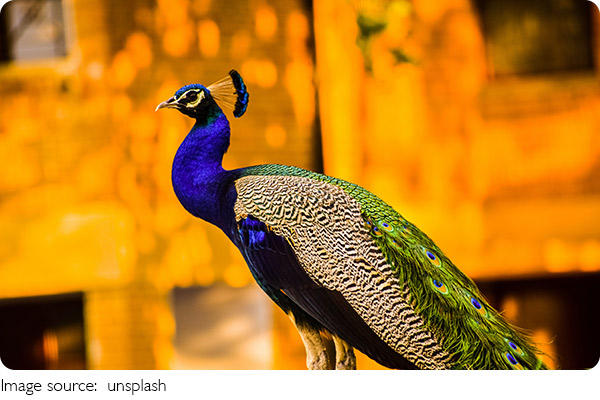
The Indian peafowl is a swan-sized bird known for its striking appearance. Both males and females have a fan-shaped crest of feathers on their heads and a distinctive white patch under the eye. Males, with their long, slender necks, can grow up to 46 inches tall and weigh between 9 and 13 pounds, while females are generally smaller, reaching about 38 inches in height and weighing around 6 to 9 pounds. The male’s long, iridescent tail feathers—often called a train—are one of nature’s most spectacular displays, filled with vibrant hues of green, blue, and gold.
Peacock Courtship | World's Weirdest
Video by Nat Geo Animals
Behavior
Indian peafowl are ground foragers that primarily search for berries and grains in small social groups. They are well-known for their distinctive calls, which can alert other animals and humans to the presence of a predator, especially in dense forest environments. Although they prefer to escape predators on foot, weaving through undergrowth, they are also capable of short flights and will roost in tall trees at night for safety.
Spiritual and Cultural Significance
In Hindu mythology, the Indian peafowl holds a revered status. It is associated with Kartikeya, who is often depicted riding on a peacock. This majestic bird is also believed to possess the ability to charm snakes and even addle their eggs, adding an air of mystique to its persona. This connection has made the peacock a symbol of protection and strength, as well as beauty and grace.
Spread Across the World
While native to South Asia, Indian peafowl have been introduced to many other parts of the world, where they have adapted well and, in some cases, even become feral. Their exotic beauty has made them a popular addition in parks, zoos, and gardens across various continents, further enhancing their iconic status globally.
The Indian peafowl is a bird that enthralls everyone it comes into contact with, thanks to its brilliant feathers and significant place in Hindu culture. These birds are a living representation of India's rich biodiversity and cultural legacy, whether they are gracing temple grounds or meandering through old woods.