The Himalayan Flameback

Declan Kennedy
28-10-2024
 · Animal Team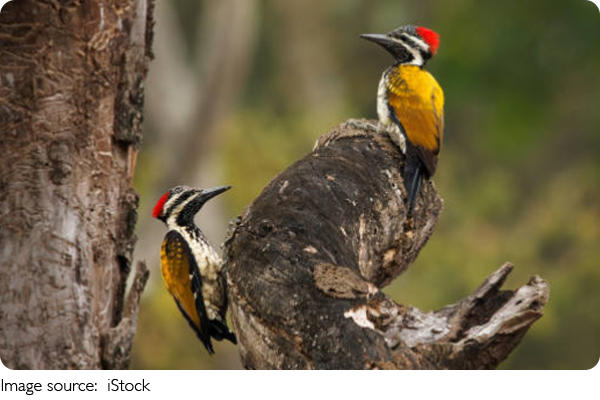
Welcome Lykkers! Have you ever seen a beautiful golden coloured woodpecker, scientifically known as Dinopium shorii, commonly known as the Himalayan Flameback or Black-rumped Flameback.
It is a medium-sized species of woodpecker found primarily in the foothills of the Himalayas and surrounding regions. This bird belongs to the family Picidae.
Which is characterized by their strong beaks and unique zygodactyl feet, ideal for gripping and climbing tree trunks. With its striking colouration and distinct call, the Himalayan Flameback stands out as a fascinating species for birdwatchers and researchers alike.
Physical Appearance
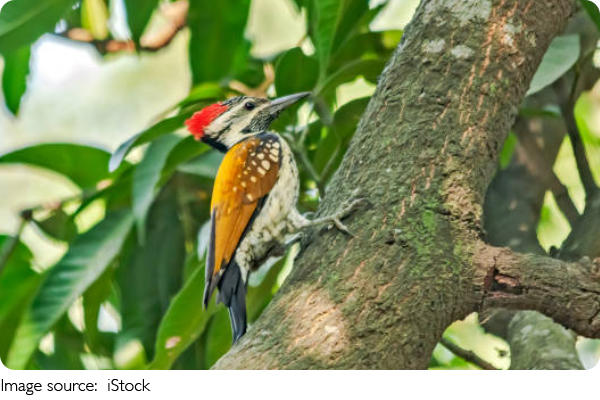
The Dinopium shorii is a visually stunning bird, easily recognizable by its vibrant plumage. The head and upper parts of the body are adorned with shades of gold or yellow, giving the bird its "flameback" name. Males typically have a bright red crest on top of their heads, while females may show a more muted, dark hue. The bird's underparts are pale, often off-white or light brown, with faint streaks, while the wings feature black patterns, adding contrast to the overall look.
Discover Why Kittens Make the Perfect Pets!
How Can We Help Protect Endangered Elephants Today?
Graceful and swift, these aerial wonders dance in the sky with a breathtaking display of agility and speed.
Amboseli National Park, Kenya: A Wildlife Paradise Explore Like Never Before!
Giraffes thrive in social groups, known as towers, where they find safety and companionship in numbers.
Curious to explore the captivating realm of jellyfish—nature's mesmerizing gelatinous wonders of the ocean?
A key characteristic of this species is the black patch on its lower back, giving it the "black-rumped" description in some references. This distinctive black area helps differentiate it from other similar species within the Dinopium genus, like the Common Flameback.
Distibution and Habitat
The Dinopium shorii is native to South Asia, with its primary range extending across the northern Indian subcontinent, particularly in the lower Himalayan ranges. The bird is found in parts of India, Nepal, Bhutan, and Bangladesh, preferring subtropical and temperate forests, wooded areas, and regions with plenty of old-growth trees. Its habitat choice is typically close to water sources such as rivers or lakes, where the forest cover is dense enough for nesting and feeding.
The Himalayan Flameback is particularly fond of forests with plenty of decaying or dead wood, as this is where it finds much of its food and where it often builds its nest.
Diet and Foraging Behavior
Like most woodpeckers, Dinopium shorii is an insectivore, feeding primarily on ants, termites, and other small invertebrates that it extracts from tree bark or wood. Using its strong, chisel-like beak, it taps and drills into decaying or damaged trees to locate insects living within. Additionally, it may occasionally consume fruits, seeds, and plant matter, especially when insect prey is scarce.
Dinopium shorii displays typical woodpecker behaviour, climbing tree trunks in a spiralling motion and using its stiff tail feathers as a prop for support. The bird's long tongue, equipped with barbs, is particularly well-suited to capturing insects hiding deep within trees.
Breeding and Nesting
The breeding season for the Himalayan Flameback usually takes place from March to June, aligning with the warmer months when food is abundant. During courtship, the male may perform drumming displays or emit a series of loud, sharp calls to attract a mate.
Nests are usually excavated in the trunks of dead or decaying trees, where the female lays 3-4 eggs. Both parents participate in incubating the eggs and feeding the chicks after hatching. The young typically fledge after about three weeks, though they may remain dependent on their parents for a short while longer as they learn to forage.
Conservation status
As of now, Dinopium shorii is not considered to be globally threatened. It is listed as "Least Concern" by the IUCN due to its relatively stable population and wide range. However, like many forest-dwelling species, it faces challenges from habitat destruction and deforestation, especially in the rapidly urbanizing and agricultural regions of South Asia.
Conservation efforts focusing on the protection of natural habitats and old-growth forests are crucial to ensuring the continued survival of the Himalayan Flameback.
Dinopium shorii, the Himalayan Flameback, is an impressive species that plays a crucial ecological role in the forests it inhabits. Feeding on wood-boring insects, it helps maintain the health of trees, and its striking appearance and behaviour make it a favourite among birdwatchers. While not currently endangered, ongoing conservation efforts are essential to preserving its natural habitat and ensuring that this flame-backed woodpecker continues to thrive in the wild.