Mystery of Rabbit Red Eyes

Owen Murphy
24-10-2024
 · Animal Team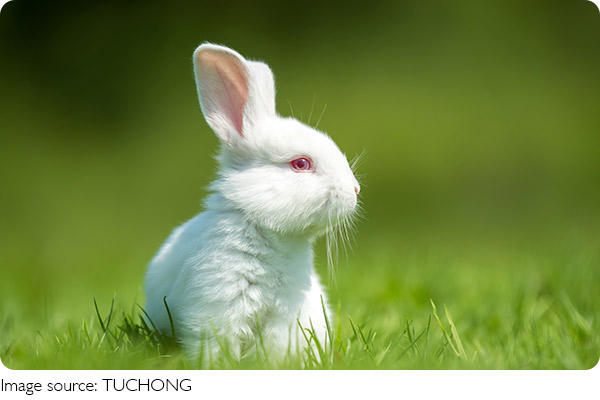
In the animal kingdom, rabbits are widely adored for their cute and docile appearance, as well as their fur, which comes in various colors.
Among these diverse rabbits, white rabbits often attract particular attention due to their striking red eyes.
This unique characteristic has sparked considerable curiosity and discussion. Why do only white rabbits have red eyes?
Firstly, let’s delve into how the color of a rabbit's eyes is determined. Eye color is primarily influenced by the pigment present in the iris. In most animals, this pigment is melanin.
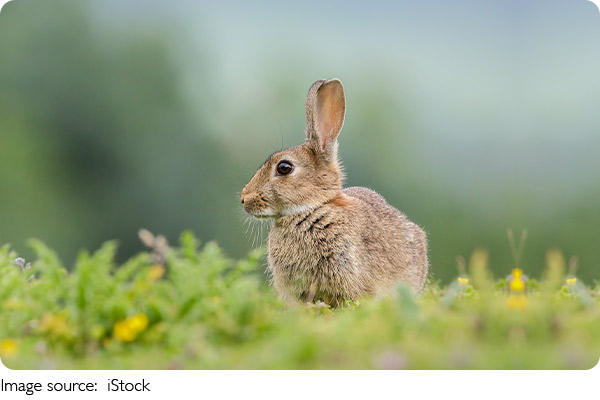
The amount and distribution of melanin dictate the depth of eye color, ranging from black and brown to blue and green. Rabbits are no exception. For most rabbits, melanin determines their eye color. However, white rabbits lack melanin in their eyes, resulting in their distinctive red eyes.
Prevent common cat diseases for a healthy feline friend.
The eagle is used as a national symbol for many countries.
Swift and agile antelopes outrun predators.
Cattle Egrets: The Fascinating Birds with a Symbiotic Relationship with Cattle.
Discover how bighorn sheep survive in harsh environments, using their agility and powerful horns.
Polar bears thrive in the Arctic cold through unique fur, black skin, massive size, and strategic behaviors.
The absence of melanin in white rabbits' eyes is linked to genetic mutations, specifically albinism. Albinism is a genetic condition that hinders the production of melanin. This condition affects not only the color of the skin and fur but also the eyes.
In albino rabbits, the eyes appear transparent due to the lack of melanin. The red appearance of their eyes is because the blood vessels within the eyes become visible through the transparent iris, giving the eyes their red hue.
Additionally, the red eyes of white rabbits can be explained through optical phenomena. When light enters a rabbit's eye, it typically gets absorbed by the pigment layer. In albino rabbits, however, the absence of this pigment layer allows light to pass through unimpeded.
This light then hits the retina and reflects, creating what is known as the "red-eye effect." This effect is similar to what humans experience when photographed with a flash in low-light conditions.
Albino rabbits exhibit this effect more prominently due to their lack of melanin, which would otherwise absorb some of the light, reducing the amount reflected and making the red color less pronounced.
From an evolutionary and natural selection perspective, the prevalence of red eyes in white rabbits can be further understood. Albinism is rare in the wild because animals lacking melanin are more easily spotted by predators, making them vulnerable.
Additionally, melanin in the eyes serves not only to give color but also to protect the retina by absorbing excess light. Without melanin, albino animals are more susceptible to vision problems and retinal damage from intense light.
Therefore, in natural settings, the albinism gene is less likely to be passed down through generations. However, in controlled breeding environments, humans can selectively breed rabbits to retain and propagate the albinism gene, leading to the white rabbits with red eyes that we commonly see.