Sea Urchin

Liam Reilly
15-10-2024
 · Animal Team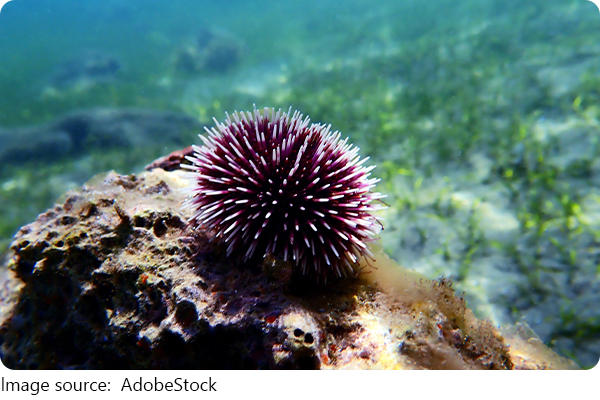
The sea urchin, an often-overlooked marine creature, is more than just a spiny inhabitant of the ocean floor. Its presence and behaviour offer profound insights into how life is perceived and understood.
As we delve into the world of the sea urchin, we encounter a creature whose seemingly mundane existence challenges conventional perspectives on life and its inherent complexity.
To understand how the sea urchin changes our perception of life, it is essential to first appreciate its unique anatomical features. Sea urchins are echinoderms, characterized by their radial symmetry and spiny exoskeletons.
They possess a hard, spherical shell covered in movable spines, which serve both as protection and a means of locomotion. Their mouth, known as Aristotle's lantern, is a complex structure used for feeding on algae and other organic matter.
Discover the remarkable African oryx, known for its striking appearance and survival skills in harsh desert environments.
If you have a baby, will you keep a cat as a companion for your little one? Make your decision after check this!
Discover the fascinating world of the common eland, one of Africa’s largest antelopes.
Sea stars have a decentralized nervous system, can move without a brain, and feed by evertng their stomach.
The male peacock has a colorful, brightly colored tail screen.
In general, cats are kept indoors. However, some cats are suitable to be taken for a walk outdoors.
The sea urchin's anatomy, while fascinating, is also a reminder of the diversity of life forms and their adaptations to various environments.
Unlike more familiar animals with bilateral symmetry, sea urchins exhibit a different approach to body organization, reflecting the vast range of evolutionary solutions to survival challenges. This deviation from the norm challenges our preconceived notions of what constitutes a "typical" organism and invites us to reconsider the diversity of life forms and their roles in ecosystems.
Sea urchins are not merely passive residents of their habitats; their behaviours have significant impacts on their surroundings. For instance, sea urchins are known for their grazing activities on kelp forests and other marine vegetation.
In large numbers, they can overgraze these critical habitats, leading to "urchin barrens" where kelp and other marine plants are drastically reduced or absent.
This ecological disruption highlights the delicate balance within marine ecosystems and the potential consequences of species imbalances. The sea urchin's impact on its environment forces us to confront the interconnectedness of life forms and the ripple effects that can arise from the actions of a single species. It challenges our perception of stability in ecosystems and underscores the complexity of ecological interactions.

The study of sea urchins has also significantly influenced our understanding of developmental biology and regenerative medicine. Sea urchins have been used as model organisms in research due to their relatively simple body plan and ease of observation.
Studies on sea urchin embryos and larvae have provided valuable insights into fundamental biological processes, such as cellular differentiation, development, and the mechanics of regeneration.
For instance, research on the regenerative abilities of sea urchins has advanced our knowledge of tissue repair and regeneration, with potential applications in human medicine. The ability of sea urchins to regenerate lost body parts challenges our understanding of biological limits and opens up new possibilities for medical science.
The sea urchin's role in challenging our perception of life extends beyond scientific and ecological considerations. Philosophically, the sea urchin represents the idea that life is not always as straightforward as it appears.
Its unique form and behaviour remind us that there are many ways to experience and interpret existence, each with its own set of rules and perspectives. It also forces us to confront the notion that there is no single way to be or to live.
Instead, the sea urchin's existence underscores the idea that life is a tapestry of varying experiences and adaptations, each contributing to the richness of the biosphere.