Whale Sharks

Kwame Johnson
09-10-2024
 · Animal Team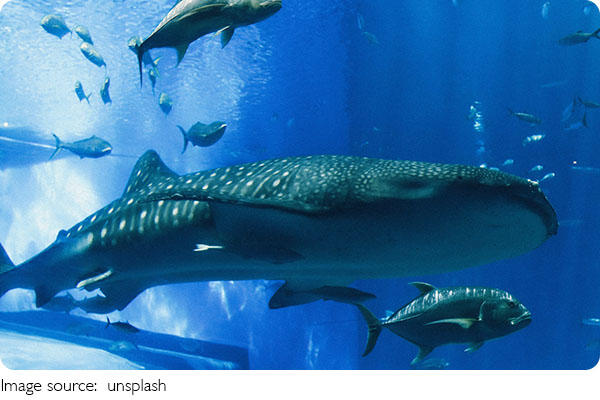
The whale shark (Rhincodon typus), the largest fish in the ocean, embarks on one of the most impressive global journeys in the animal kingdom.
These gentle giants, known for their calm demeanour and slow pace, travel vast distances across oceans, guided by seasonal changes and food availability.
Their global adventure takes them through tropical and warm-temperate seas, where they play a vital role in the ocean's ecosystems while captivating scientists and divers alike. Despite their massive size, much about their global migrations remains shrouded in mystery.
Whale sharks are highly migratory creatures, and their movement patterns are influenced by various environmental factors, such as water temperature, the availability of food, and ocean currents.
Starfish amaze with regeneration, and unique movement, thriving in ocean mysteries!
Jellyfish: These ancient, transparent creatures may lack brains, but their surprising power and efficiency are mesmerizing!
Explore the side of manta rays, which are not only majestic but also full of surprises and worthy of admiration and conservation.
The resilient guanaco thrives in South America's Andes, vital to ecosystems, culture, and economy. But what's a guanaco?
What are some adaptations of seals that allow them to survive and thrive in the marine environment?
Discover the captivating world of damselflies, nature's delicate aerial performers.
These factors lead to their extensive travels, often covering thousands of kilometres in a year. Their preference for warm, tropical waters makes them frequent visitors to regions like the Yucatán Peninsula in Mexico, the Maldives, the Philippines, and Ningaloo Reef in Australia.
However, these giant fish have been spotted in almost every tropical ocean, making their journeys truly global.
Whale sharks have been observed travelling great distances in relatively short periods. For example, some have been recorded swimming from Central America to the Indo-Pacific region, a journey of over 8,000 kilometres.
This impressive range highlights their ability to navigate vast expanses of the ocean, often driven by the need to find food and suitable breeding grounds.
One of the primary motivations behind the whale shark's global adventure is the food search. Despite their enormous size, whale sharks are filter feeders, subsisting mainly on plankton, small fish, and other microscopic organisms.
They rely on areas of the ocean where plankton blooms occur, following these seasonal events as they travel from one feeding ground to another. Their feeding habits closely mirror those of baleen whales, making them unique among sharks.
In places like the Gulf of Mexico and the Philippines, whale sharks gather in large numbers during plankton blooms, providing a rare opportunity for scientists and divers to observe them up close.
These feeding frenzies occur when nutrient-rich waters cause an explosion in the plankton population, drawing in whale sharks from various parts of the ocean. This phenomenon explains why whale sharks are often found in specific regions during certain times of the year.
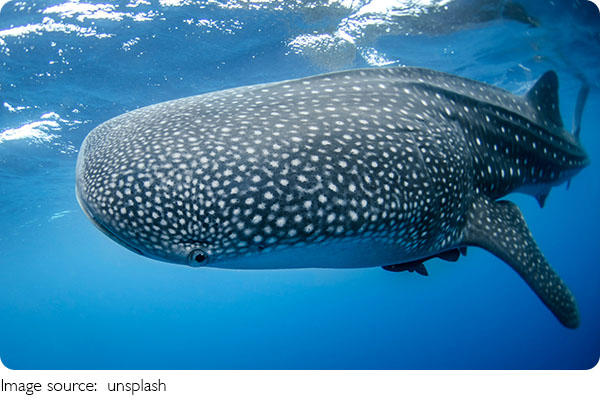
While whale sharks are known to roam vast distances, there are certain regions where they are more commonly seen. These "hotspots" are often rich in food and offer favourable conditions for whale sharks to thrive.
One of the most famous is the Ningaloo Reef in Western Australia, where whale sharks congregate between March and August. During this time, divers and tourists from around the world flock to the region to swim alongside these magnificent creatures.
The Yucatán Peninsula in Mexico is another popular destination on the whale shark's global tour. From June to September, hundreds of whale sharks gather in the waters off Isla Holbox and Isla Mujeres, feeding on the abundance of plankton and fish eggs in the area.
This event is considered one of the largest gatherings of whale sharks in the world, attracting marine biologists and eco-tourists alike.
In the Maldives, whale sharks are present year-round, particularly in the South Ari Atoll, where divers frequently encounter them. The clear waters and abundant marine life in the Maldives make it a prime location for whale shark sightings, contributing to the country's reputation as a diving paradise.