The Whale’s Silent Song

Finnegan Flynn
27-09-2024
 · Animal Team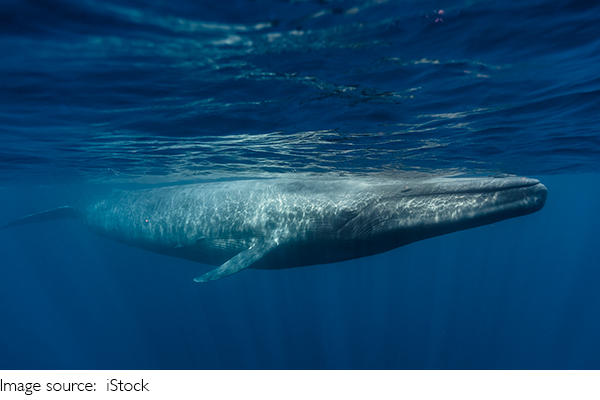
The blue whale stands as the largest and heaviest creature ever known on Earth.
An adult blue whale can reach a length of 30 meters and weigh more than 150 tons.
Its tongue can weigh up to 2.7 tons, and its heart is the size of a small car. The blue whale’s massive size and unique physiological structure make it a giant of the ocean, highlighting the incredible diversity and complexity of nature.
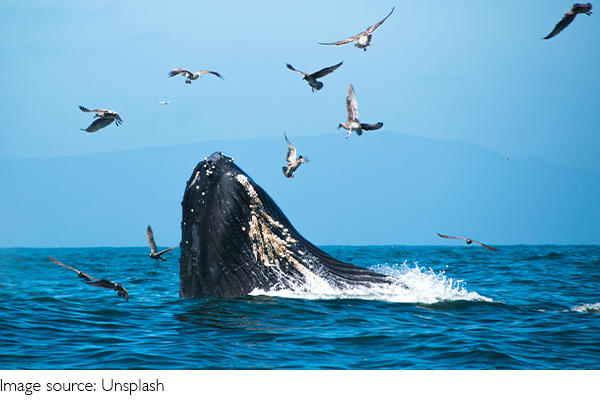
Blue whales belong to the baleen whale family. They do not have teeth; instead, they possess baleen plates. Blue whales feed on small crustaceans called krill and can consume up to 4 tons of krill per day. When feeding, they open their enormous mouths, taking in seawater along with the krill, then filtering the water through their baleen to retain the krill. This feeding method, called "filter feeding," is a key factor in the blue whale's enormous size.
The snowy egret, with its stunning white plumage and graceful elegance, plays a crucial role in wetland ecosystems.
Cats' near-sightedness sheds new light on their behavior, revealing their intriguing vision challenges.
The New Zealand red-billed gull is a unique seabird of ecological and cultural significance.
Birds worldwide showcase astounding diversity in form, behavior, and habitat, highlighting nature's wonder.
The Yellow-legged Gull, with its striking yellow legs, thrives from the Mediterranean to Northern Europe.
Bee-eaters: Colorful predators that play a vital role in controlling insect populations.
In addition to their size, blue whales are also known for having the loudest voice in nature. The low-frequency sound waves they emit can travel hundreds of kilometres and range between 10 to 40 hertz. Although these sounds are almost imperceptible to the human ear, blue whales use them to communicate over long distances.
Scientists believe that the singing behaviour of blue whales is closely tied to the breeding season, with male blue whales using sound waves to attract female companions. Furthermore, these sounds may help blue whales navigate and find food.
Blue whales are distributed across major oceans around the world, primarily inhabiting temperate and cold waters from the poles to the tropics. They are migratory animals, usually travelling to polar regions for feeding in the summer and migrating to warm tropical or subtropical waters for breeding in the winter.
Blue whales follow relatively fixed migration routes, relying on abundant krill resources to maintain their energy during these long journeys. Although blue whales inhabit oceans globally, they are highly sensitive to environmental changes. Climate change and human activities pose serious threats to their habitats.
Blue whales have a long breeding cycle. Female blue whales reach maturity at around 10 to 15 years old, with a gestation period of 10 to 12 months. A single calf is born at a time. A newborn blue whale is 7 to 8 meters long and weighs about 2.7 tons at birth.
The lactation period lasts for 6 months, with the calf gaining approximately 90 kilograms per day. The lifespan of a blue whale can reach 70 to 90 years. However, due to their slow reproductive rate, the population recovery of blue whales is relatively slow.
During the early 20th century, blue whales faced intense hunting. Due to their large size and the valuable whale oil that could be extracted from them, blue whales became a primary target for whalers. This hunting was especially intense from the 19th to the early 20th century, a time when whaling peaked historically.
It wasn't until 1966 that the International Whaling Commission (IWC) passed a hunting ban on blue whales, prohibiting their commercial hunting.
While this ban effectively reduced the number of blue whales killed, the recovery of their population has been slow. It is estimated that the current population of blue whales ranges between 10,000 and 25,000 individuals, significantly lower than historical numbers.
Human activities continue to pose serious threats to blue whales. Marine pollution, particularly the spread of plastic waste, has severely damaged the blue whale's habitat. Their filter-feeding method makes them especially vulnerable to accidentally ingesting plastic debris, which can damage their digestive systems.
Noise pollution also presents a major challenge. The noise from ship engines and sound waves generated by underwater resource exploration interferes with blue whale communication, affecting their ability to forage and reproduce.
Additionally, rising ocean temperatures and the reduction of krill populations, brought on by climate change, have worsened the blue whale's living conditions.
Efforts to protect blue whales have been made by the international community. Besides the hunting ban, many countries have established marine protected areas to limit human activities that harm blue whales.
Measures such as speed limits for ships and route restrictions help reduce the risk of collisions between vessels and blue whales. Additionally, scientists use satellite tracking and acoustic monitoring to study the behaviour and population dynamics of blue whales, providing valuable data for further protection efforts.
While blue whale populations remain low, their conditions are gradually improving thanks to global conservation efforts. However, the future remains uncertain, with climate change and marine pollution continuing to threaten their survival.
As one of the most magnificent creatures on Earth, the existence of blue whales is vital not only for the marine ecosystem but also for humanity's understanding and preservation of nature. Only through sustained international cooperation and ongoing environmental protection measures can we ensure that blue whales continue to swim freely in the oceans of the future.