The King Of Beasts

Kwame Johnson
20-08-2024
 · Animal Team
The lion, often referred to as the "King of Beasts," has long been a symbol of power, majesty, and authority across various cultures and civilizations.
This prestigious title is not just a product of folklore or myth but is rooted in the lion's physical prowess, social structure, and symbolic significance.
Let's explore the various reasons why the lion holds this esteemed position in the animal kingdom and human imagination.
Physical Prowess and Dominance
Lions are among the largest and most powerful predators on Earth. Male lions can weigh up to 500 pounds and grow up to 10 feet in length, including their tail. Their muscle composition, razor-sharp jaws and formidable palates have made them horrific predators. Lions have a bite force of around 650 PSI, which, while not the strongest among big cats, is more than sufficient to bring down large prey such as wildebeests, zebras, and buffaloes.
The mountain blue robin, the elf of the snow.
Discover starfish: ocean wonders with unique shapes, important roles, and amazing regenerative abilities!
Let's learn about the fastest land animal in the world—the cheetah!
With their grace and independence, cats enrich human lives and cultures in countless ways.
Small in size but bursting with personality! Just a few minutes to become their qualified owners!
Why the White Swan is the World's Most Enchanting Bird—You Won't Believe Your Eyes!
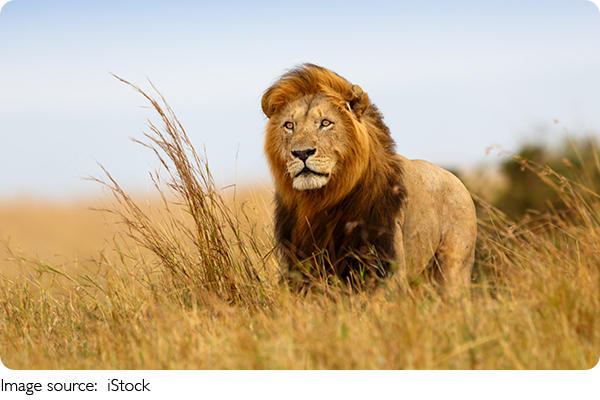
One of the key aspects of a lion's physical dominance is its impressive mane. The mane not only serves as a symbol of maturity and health but also provides protection during fights with other lions. The darker and fuller the mane, the more intimidating the lion appears to both rivals and potential mates.
Social Structure and Pride Dynamics
The social behavior of lions is quite distinctive among the large cats. They live in communities called prides, which usually are made up of affiliated female lions, their young offspring, and a few mature male lions. This social structure gives lions a significant advantage in terms of hunting and territory defense. Working together, lionesses can take down large prey that would be too difficult for a solitary predator. The cooperative nature of lion prides allows for efficient sharing of resources and protection of the young.
The male lions, while often perceived as lazy due to their propensity to rest and sleep for up to 20 hours a day, play a crucial role in protecting the pride. They defend their territory against intruders and rival males. Their presence alone can be a deterrent to potential threats. This division of labor within the pride showcases the lions' strategic and cooperative approach to survival, reinforcing their status as apex predators.
Cultural and Symbolic Significance
The lion's reputation as the "King of Beasts" is deeply embedded in human culture and history. Ancient civilizations, such as the Egyptians, Romans, and Greeks, revered lions for their strength and nobility. Lions were often depicted in art, literature, and mythology as symbols of courage, power, and royalty. The Sphinx in Egypt, with the body of a lion and the head of a pharaoh, epitomizes the lion's association with regal authority and guardianship.
In many cultures, the lion is also a symbol of divine power. Sometimes, the lion is associated with Narasimha, who embodies protection and righteousness. Similarly, in the other culture, the lion is symbolizing resurrection and triumph.
The lion's roar, which can be heard up to five miles away, further amplifies its kingly image. The sound is a powerful tool for communication, asserting dominance, and maintaining territory. This auditory display reinforces the lion's role as a dominant force in its environment.
Conservation and Modern Symbolism
Today, lions continue to captivate human imagination, although their numbers are dwindling due to habitat loss, poaching, and human-wildlife conflict. Conservation efforts are crucial to preserving this iconic species and maintaining the balance of their ecosystems.
Modern depictions of lions in logos, emblems, and media still draw upon their historical and cultural significance. Sports teams, luxury brands, and national emblems frequently use the lion as a symbol of strength, bravery, and excellence.
The lion's designation as the "King of Beasts" is a multifaceted accolade that encompasses its physical attributes, social dynamics, cultural symbolism, and historical significance. Its impressive physique, strategic social structure, and powerful presence in human culture all contribute to its regal status. As we continue to admire and protect these majestic creatures, we ensure that the legacy of the lion as the true king of the animal kingdom endures for generations to come.