Fearless Kingbird

Amit Sharma
06-08-2024
 · Animal Team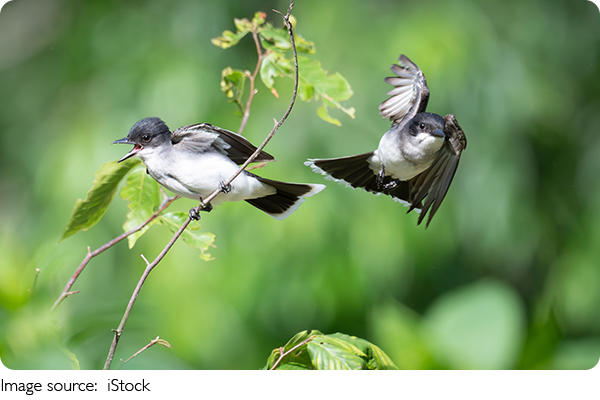
Discovering the Eastern Kingbird: Nature's Colorful Acrobat?
Hey there, Lykkers! Today, we're diving into the world of one of North America's most captivating birds: the Eastern Kingbird. With its striking appearance and impressive skills, this bird is a true gem of the avian world.
What's It Like?
The Eastern Kingbird is a small bird with a big personality. It measures about 7.5 to 8.5 inches long and is known for its bold color scheme.
Its head is a sleek black, contrasting sharply with its white belly and grayish back. The tail feathers, tipped in white, add a touch of elegance to its overall look. But the Eastern Kingbird isn't just about appearances; it's also an agile flyer. This bird is a master of aerial acrobatics, catching insects mid-flight with remarkable precision.
Do you know the secrets of rabbits?
Meet the Blue Jay, a bird with vibrant colors, clever mimicry, and mysterious habits!
Adélie penguins, iconic for their black-and-white feathers, thrive in Antarctica's harsh environment.
Tiny yet extraordinary, the smallest birds dazzle with their vibrant colors and unique adaptations.
Common kingfisher: Beauty of a water hunter.
Discover the Secrets of South America's Shy Speedsters: Vicuñas Revealed!
Where Can You Find It?
You'll find the Eastern Kingbird in a variety of habitats, making it a versatile resident of North America. It thrives in open fields, along the edges of forests, and even in urban areas. The adaptability of the Eastern Kingbird is one of its standout traits.
It builds its nests in trees or shrubs, and its choice of nesting sites often reflects its ability to adapt to different environments, including those impacted by human activity. Whether in a natural woodland or a city park, the Eastern Kingbird makes itself at home.
Fun Facts About the Eastern Kingbird
1. Tail Tricks: The Eastern Kingbird's tail feathers aren't just for show. The white tips on the tail are used as a signal to other birds. When the Kingbird feels threatened or wants to assert dominance, it spreads its tail feathers to make itself look larger and more intimidating. This behavior helps the bird defend its territory and protect its nest from intruders.
2. Aerial Insect Catcher: This bird's diet mainly consists of insects, which it catches while flying. The Eastern Kingbird is an expert hunter, capable of snatching flying insects such as beetles, flies, and bees with impressive skill. This ability not only highlights its agility but also plays a crucial role in controlling insect populations.
3. Long Migration: Every year, the Eastern Kingbird undertakes a remarkable migration journey. It travels from its breeding grounds in North America to its wintering habitats in Central and South America. This migration can cover distances of up to 3,000 miles, showcasing the bird's endurance and navigational skills. It's a long trip for such a small bird, but one that is essential for its survival and reproduction.
4. Protective Parents: During the breeding season, Eastern Kingbirds are fiercely protective of their nests. They will chase away much larger birds, including hawks and crows, to keep their eggs and chicks safe. This bold behavior is a testament to their dedication as parents and their commitment to ensuring the survival of their offspring.
Why It Matters
The Eastern Kingbird is more than just a pretty face in the bird world. Its presence is a positive indicator of a healthy and balanced ecosystem. These birds are adaptable and can thrive in various environments, but they still rely on well-preserved habitats to support their populations. By taking care of their natural environments and understanding their needs, we help ensure the continued success of these remarkable birds.

The Eastern Kingbird is a fascinating species with a combination of beauty, skill, and adaptability. So, next time you're out in the field or strolling through a park, keep an eye out for the Eastern Kingbird—it's a bird that truly stands out!