Sky Fishers
Ravish Kumar
18-07-2024
 · Animal Team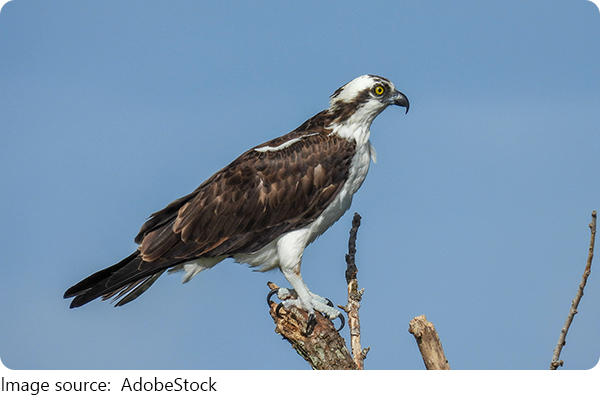
The osprey is a prominent fish-eating bird of prey, widely distributed across coastal regions, rivers, and lakes worldwide. Renowned for its distinctive fishing prowess and remarkable adaptability, the osprey holds a revered status in numerous cultures.
Here, Lykkers, we delve into the detailed exploration of its biological characteristics, behavioural patterns, ecological significance, and conservation status.
Biological Characteristics
The osprey is a medium-sized raptor, boasting an adult body length ranging from 50 to 66 cm, with an expansive wingspan reaching 127 to 180 cm. Both males and females exhibit similar body sizes, albeit females tend to be marginally larger.
Their plumage is predominantly a blend of dark brown and white, featuring dark brown backs and wings complemented by white heads, necks, and abdomens. A distinct black stripe runs atop their heads from the eyes to the nape, distinguishing their facial appearance.
Delving into rabbit eye color uncovers a rich tapestry of hues, dispelling myths and embracing their allure.
The Secrets of Desert Survival: Unveiling the Gemsbok’s Resilience
Have you ever seen a bioluminescent jellyfish?
Why do squirrels have a tail that is large compared to its body size?
Unlocking feline language: from vocalizations to scent marking, understand your cat's communication for a stronger bond.
Do Moose Really Have Four Stomachs?
Ospreys possess uniquely adapted talons equipped with barbed pads, facilitating their firm grasp on slippery fish. Their outer toes are notably rotatable, enhancing their ability to secure prey during hunting manoeuvres.
Behavioral Patterns
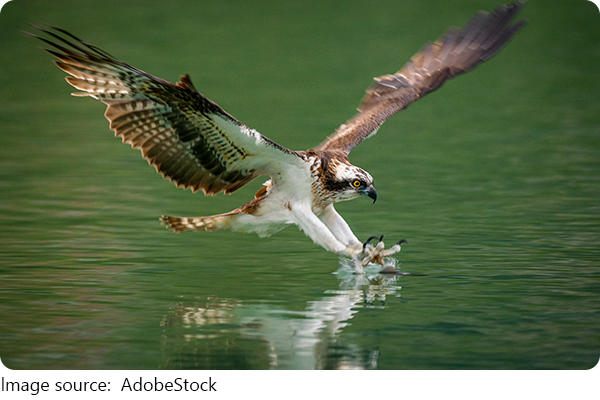
Primarily piscivorous, fish comprise more than 99% of the osprey's diet. They exhibit adept fishing skills, often observed hovering at altitudes ranging from 10 to 40 meters above water surfaces.
Upon spotting prey, ospreys execute rapid dives, swiftly seizing fish with their sharp talons before returning to their nests to consume their catch. Remarkably, ospreys achieve high success rates, typically capturing a fish within four to five attempts.
Ospreys are monogamous birds, forming lifelong pair bonds. They favour nesting sites located in elevated locations proximal to water bodies, such as tree tops, rocky cliffs, telephone poles, and artificial platforms.
Nests are typically constructed from branches, grasses, seaweeds, and assorted natural materials. During each breeding season, female ospreys lay clutches comprising 2 to 4 eggs, which undergo an incubation period lasting approximately 35 to 43 days.
Juvenile ospreys gain flight capability within 8 to 10 weeks post-hatching and attain sexual maturity between two to three years of age.
Ecological Significance
Ospreys play a pivotal role within ecosystems as apex predators, exerting regulatory influence over fish populations and contributing to the ecological equilibrium of aquatic environments. Additionally, osprey nests serve as vital habitats for various avian species, including smaller birds and insects.
Due to their sensitivity to environmental alterations, ospreys are regarded as sentinel species indicative of ecosystem health. Metrics such as reproductive success rates, population dynamics, and habitat preferences of ospreys furnish valuable insights for scientists assessing water body quality and ecosystem robustness.
Conservation Status
Historically, ospreys faced significant perils stemming from habitat degradation, pollution, and human-induced hunting pressures. However, concerted international efforts have yielded notable strides in osprey conservation, particularly following the prohibition of DDT, a pervasive pesticide. Numerous nations have afforded legal protection to ospreys, designating them as safeguarded species.
Nonetheless, ospreys continue to confront multifaceted challenges. Habitat loss, exacerbated by pollution—especially heavy metals and plastics—and the spectre of climate change, persist as formidable threats imperilling osprey survival.
Therefore, sustained conservation initiatives and widespread public education campaigns remain imperative.
The osprey—a raptor distinguished by its distinctive biological traits and ecological significance—commands global attention for conservation efforts. Collaborative endeavours have fostered improvements in osprey survival rates, yet confronting emerging environmental challenges mandates renewed commitment.
Safeguarding the osprey transcends protecting a singular species; it safeguards a vital component of our shared natural ecosystem. Hope that increased awareness and proactive conservation measures will secure a thriving future for this splendid and enchanting bird.